Seven Warning Signs That Your Car Tires Are Under-Inflated and Why Regular Maintenance Is Critical for Road Safety

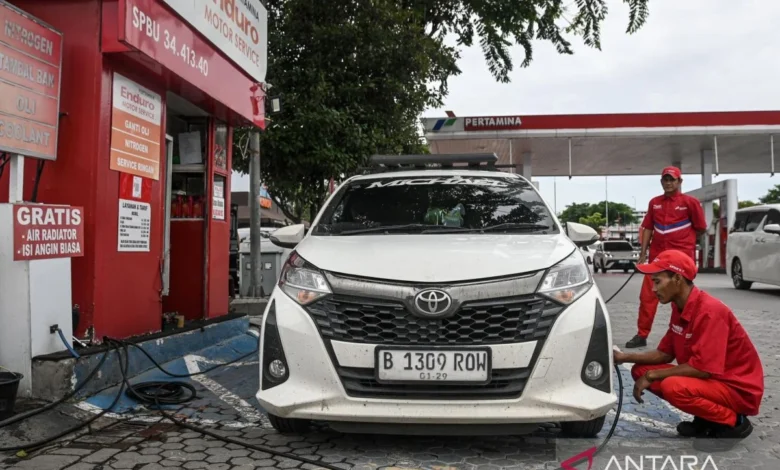
Maintaining the correct tire pressure is one of the most fundamental yet frequently overlooked aspects of vehicle ownership. While many motorists view tire maintenance as a secondary concern, the reality is that the interaction between the tire’s contact patch and the road surface is the primary determinant of a vehicle’s handling, braking efficiency, and fuel economy. When tire pressure drops below the manufacturer’s recommended specifications, the structural integrity of the tire is compromised, leading to a cascade of mechanical and safety issues. According to recent data from the National Highway Traffic Safety Administration (NHTSA), under-inflated tires are a significant contributing factor in thousands of weather-related and mechanical-failure crashes annually. Despite the simplicity of the task, a large percentage of drivers operate vehicles with improperly inflated tires, often failing to detect the subtle symptoms until a critical failure occurs.
The Physics of Under-Inflation and Structural Degradation
To understand why under-inflation is dangerous, one must consider the physics of the tire. A tire is designed to support the vehicle’s weight through the air pressure contained within its carcass. When that pressure decreases, the sidewalls flex excessively as the tire rotates under the load of the vehicle. This constant, high-frequency flexing generates internal friction, which manifests as heat. Michelin and other tire manufacturing giants have consistently warned that this heat buildup can lead to the degradation of the internal bonding agents that hold the rubber, steel belts, and fabric plies together.
Over time, this internal structural fatigue causes a phenomenon known as "heat separation." Once the internal structure begins to break down, the tire is susceptible to sudden catastrophic failure, or a blowout, especially during sustained high-speed driving on highways. Furthermore, under-inflated tires suffer from increased rolling resistance. As the tire deforms, it requires more energy from the engine to overcome the friction, directly translating into higher fuel consumption—a cost-inefficiency that compounds over the lifespan of the tire.
Seven Diagnostic Indicators of Low Tire Pressure
Detecting low tire pressure before it becomes a safety hazard requires an understanding of how a vehicle’s behavior changes when the contact patch is compromised.
1. Visual Distortions in the Tire Profile
The most immediate indicator is a visual change in the footprint of the tire. When pressure is low, the tire’s sidewalls bulge outward, and the shoulder of the tire bears more of the load than the center. While modern radial tires are designed to mask minor pressure losses visually, a significantly under-inflated tire will appear to have a "flatter" footprint. It is critical to note that visual inspection is not a substitute for a calibrated pressure gauge; a tire can be under-inflated by several PSI—enough to cause damage—without being visually obvious to the naked eye.
2. Increased Steering Effort and Handling Resistance
Drivers may notice a marked change in steering feedback. Because an under-inflated tire has a larger contact patch with the road, the friction between the rubber and the asphalt increases significantly. This results in "heavy" steering, where the driver must exert more force to turn the wheel, particularly at low speeds or during tight maneuvers. If a driver observes that the vehicle feels sluggish or unresponsive to steering inputs, the tire pressure should be the first component to be verified.
3. Diminished Vehicle Stability
Stability is the hallmark of a safe driving experience. Under-inflated tires alter the geometry of the vehicle’s road contact, which can lead to a "spongy" or "vague" feeling, particularly during cornering or lane changes. When the tires are not pressurized to the correct level, the vehicle’s suspension system struggles to compensate for the lack of rigidity in the tire carcass, leading to body roll and a loss of precision that can be dangerous in emergency avoidance maneuvers.
4. Unexplained Increases in Fuel Consumption
The relationship between tire pressure and fuel efficiency is documented by the U.S. Department of Energy, which estimates that for every 1 PSI drop in pressure across all four tires, a vehicle’s gas mileage can drop by approximately 0.2% to 0.4%. While this may seem negligible on a single trip, the cumulative effect over a year of driving represents a significant financial burden. If a vehicle experiences a sudden, unexplained decrease in fuel economy without a change in driving habits, the tires are a primary suspect.
5. Irregular Tread Wear Patterns
Tire tread is designed to wear evenly across the entire surface. When a tire is consistently under-inflated, the edges of the tire (the shoulders) carry the bulk of the load. This causes the edges to wear down significantly faster than the center, a condition known as "edge wear." Conversely, over-inflation causes the center to wear faster. Monitoring the tread depth across the entire width of the tire provides a diagnostic timeline of the vehicle’s maintenance health. If the shoulders are smooth while the center remains deep, the vehicle has likely been driven with insufficient pressure for an extended period.
6. Elevated Thermal Signature
Heat is the enemy of tire longevity. An under-inflated tire generates excessive heat through the internal deformation of the sidewalls. In some cases, a driver might notice a distinct rubber smell or find that the tire is physically hot to the touch after a long journey. If a tire is significantly hotter than its counterparts after driving, it is a warning sign of an imminent structural issue caused by pressure loss.
7. The Activation of the Tire Pressure Monitoring System (TPMS)
Modern vehicles are equipped with a Tire Pressure Monitoring System (TPMS), a safety technology mandated in many jurisdictions. The TPMS uses sensors to monitor the air pressure within each wheel. When the pressure falls below a specific threshold (typically 25% below the manufacturer’s recommended pressure), an amber warning light—usually shaped like a horseshoe with an exclamation point—illuminates on the dashboard. This is a non-negotiable directive for the driver to check the tires immediately.
The Broader Implications for Road Safety
The implications of ignoring these warning signs extend beyond the individual driver. Research indicates that vehicles with improperly inflated tires are more likely to be involved in accidents due to reduced hydroplaning resistance in wet conditions and increased stopping distances. Furthermore, the environmental impact of increased fuel consumption and the premature disposal of tires that have worn out due to neglect adds to the global waste footprint.
Industry experts emphasize that tire maintenance is not a "set and forget" task. Ambient temperature changes, for instance, significantly impact tire pressure; for every 10-degree Fahrenheit drop in outside temperature, tire pressure typically drops by about 1 PSI. This "seasonal deflation" is a common reason why drivers see TPMS warnings during the first cold snap of autumn.
Professional Recommendations for Tire Stewardship
To ensure maximum safety and longevity, motorists should adopt a structured maintenance protocol:
- Monthly Checks: Utilize a high-quality digital pressure gauge once a month. Relying solely on the TPMS is discouraged, as these systems only trigger when pressure is already critically low.
- Cold Pressure Measurement: Always check tire pressure when the tires are "cold"—meaning the vehicle has been stationary for at least three hours or driven less than a mile. Driving heats the air inside the tire, leading to an artificially high reading.
- Refer to the Door Placard: Do not rely on the "Max PSI" number molded onto the tire sidewall. That is the maximum pressure the tire can hold, not the recommended pressure for your vehicle. The correct specification is found on the sticker located on the driver’s side door jamb or in the owner’s manual.
- Check the Spare: Many drivers neglect the spare tire, only to find it flat during an emergency. Ensure the spare is included in the monthly inspection routine.
- Professional Inspection: If a tire requires frequent inflation, do not ignore it. This is a classic symptom of a slow leak, which could be caused by a puncture, a faulty valve stem, or corrosion on the rim. A professional tire technician should perform a leak test and, if necessary, a patch or plug repair in accordance with industry safety standards.
In conclusion, the health of a vehicle’s tires is directly linked to the safety of its occupants and other road users. By remaining vigilant and recognizing the early warning signs of under-inflation, drivers can mitigate the risk of failure, improve fuel economy, and ensure that their vehicle performs as the manufacturer intended. Maintenance is not merely an expense; it is a critical investment in the longevity of the vehicle and the safety of the journey ahead.
Related posts: