Ariana Grande Reflects on Creative Freedom and Personal Growth Following Management Transition

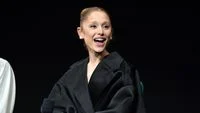
The global pop icon Ariana Grande has opened up about a profound shift in her professional life, revealing that her long-standing creative process was previously marred by an environment she described as lacking in safety and trust. In a candid appearance on the popular podcast Las Culturistas, the Grammy-winning artist disclosed that her tenure under former manager Scooter Braun and her previous management team created significant friction that hindered her ability to express herself fully. This revelation, which gained traction following a report by Page Six on Wednesday, November 25, underscores a pivotal chapter in Grande’s career, specifically during the transformative period surrounding her work on the cinematic adaptation of the Broadway hit Wicked.
The singer, who famously portrayed Glinda in the highly anticipated 2024 film, articulated that the transition away from her long-term management team in 2023 allowed for a fundamental restructuring of her artistic identity. According to Grande, the atmosphere surrounding the creation, marketing, and release of her previous musical projects was fraught with interpersonal dynamics that she now views as detrimental to her well-being.
A Chronology of the Management Transition
The dissolution of the professional partnership between Ariana Grande and Scooter Braun was one of the most high-profile management splits in the music industry. To understand the gravity of these recent comments, it is necessary to examine the timeline of their decade-long relationship and the subsequent fallout.
- 2013: Ariana Grande began her professional relationship with Scooter Braun, who played a significant role in her ascent to superstardom, overseeing the release of her debut album, Yours Truly.
- August 2023: After a ten-year partnership, reports surfaced that Grande had officially cut ties with Braun and his management firm, SB Projects. This news arrived amidst a wave of rumors regarding other high-profile clients—such as Demi Lovato and Justin Bieber—reportedly leaving Braun’s management, though these reports were met with varying levels of official confirmation.
- Late 2023 – 2024: During the production of Wicked, Grande began working with a revamped creative team. She officially moved to be managed exclusively by Brandon Creed of Good World Management.
- June 2024: Despite the split, it was confirmed that Grande’s team would maintain a business relationship with HYBE, the parent company of SB Projects, specifically regarding the logistics and growth of her beauty brand, R.E.M. Beauty.
- November 2025: In a revealing interview with The New York Times, Grande first hinted at the “broken” state of her relationship with music, citing the toxicity that had permeated her previous management structure.
The Psychology of Creative Safety
Grande’s comments regarding her current state of mind highlight a critical aspect of the modern entertainment industry: the link between artist mental health and creative output. In her discussion on Las Culturistas, she noted that the environment of a recording studio or a project set is not merely a place of work, but a space where an artist’s vulnerability is essential for quality production.
"When you are in a safe environment, your body feels it, and your instrument feels it," Grande explained. She further detailed that the anxiety she experienced during her earlier career stages stemmed from the individuals tasked with guiding her path. By removing those pressures, she has discovered a newfound ability to "start from scratch," a process she described as "beautiful."
This sentiment echoes her previous statements from November 2025, where she characterized the realization of her dreams as having a "dangerous side." She noted at the time that the intense machinery behind her career had effectively "stolen" much of the joy from her life as an artist. Her current approach, centered on her latest tour, The Eternal Sunshine Tour, is framed as a therapeutic reclamation of her art.
Industry Context and the "Braun Effect"
The scrutiny surrounding Scooter Braun has been a fixture of the music industry discourse for several years. Braun, who rose to prominence for managing Justin Bieber and later for his contentious acquisition of Taylor Swift’s master recordings, has long been a lightning rod for criticism regarding the ethics of talent management.
While Grande’s team has confirmed that she is now exclusively under the management of Brandon Creed, the continued professional intersection with HYBE regarding R.E.M. Beauty suggests a pragmatic approach to business. However, the contrast between her comments regarding her past team and her present collaborators suggests that Grande is prioritizing personal agency over historical industry alliances.
Industry analysts suggest that Grande’s public airing of these concerns serves as a warning to the broader entertainment sector regarding the power dynamics between artists and their representatives. When a performer of Grande’s caliber—who holds significant leverage in terms of marketability and record sales—publicly attributes her past unhappiness to her management, it forces a re-evaluation of the traditional "star-maker" model.
Data and Financial Implications
The business of Ariana Grande remains a juggernaut. With over 90 million monthly listeners on Spotify and a film presence in a global blockbuster, her influence is quantifiable. Her shift to a new management team coincided with the release of her seventh studio album, Eternal Sunshine, which debuted at the top of the Billboard 200 in early 2024.
The financial data supports the idea that the change in management has not hindered her commercial success; rather, it appears to have streamlined her focus. Her brand, R.E.M. Beauty, has seen a successful international rollout, and the box office performance of Wicked has solidified her transition into a credible cinematic lead. The strategic decision to retain HYBE for administrative duties while shifting creative management to Creed represents a "best of both worlds" strategy: utilizing institutional infrastructure while maintaining creative autonomy.
Official Responses and Future Outlook
As of late November 2026, representatives for Scooter Braun have been approached for comment by various media outlets, including Page Six, regarding the specific allegations of an unsafe work environment. To date, no formal statement has been issued by Braun or his representatives. The silence from the Braun camp is consistent with his past approach to high-profile industry disputes, favoring private resolution over public back-and-forth.
For Ariana Grande, the focus remains firmly on her current trajectory. Her remarks on the Las Culturistas podcast suggest a woman who is no longer willing to sacrifice her peace for the sake of professional conformity. By framing her recent work as an "experience that heals," she is effectively rebranding her narrative from that of a pop star managed by others to an auteur in control of her own destiny.
Broader Implications for the Music Industry
The implications of Grande’s testimony extend to how management contracts and artist-manager relationships are structured. There is a growing trend among A-list artists to seek more transparency, mental health support, and creative sovereignty in their contractual agreements.
The industry is currently witnessing a transition where the "old guard" of management is being challenged by a younger generation of representatives—like Brandon Creed—who emphasize the well-being of the artist as a priority for sustained commercial longevity. If an artist as successful as Ariana Grande can find herself in a position of "unsafe" creativity, it underscores the need for better oversight and more equitable power balances in artist-management relationships.
As Grande continues her tour and engages with new creative projects, the narrative of her "healing" will likely continue to resonate with fans and peers alike. The transition from a decade of high-pressure management to a period of self-directed creation serves as a case study in the necessity of healthy environments for artistic innovation. Her story is no longer just about the music; it is about the structural reforms required to protect the people who make it.
Related posts: