
Former Vice President Jusuf Kalla Defends Ugm Sermon Amid Blasphemy Allegations Citing Focus On Peace And Conflict Resolution
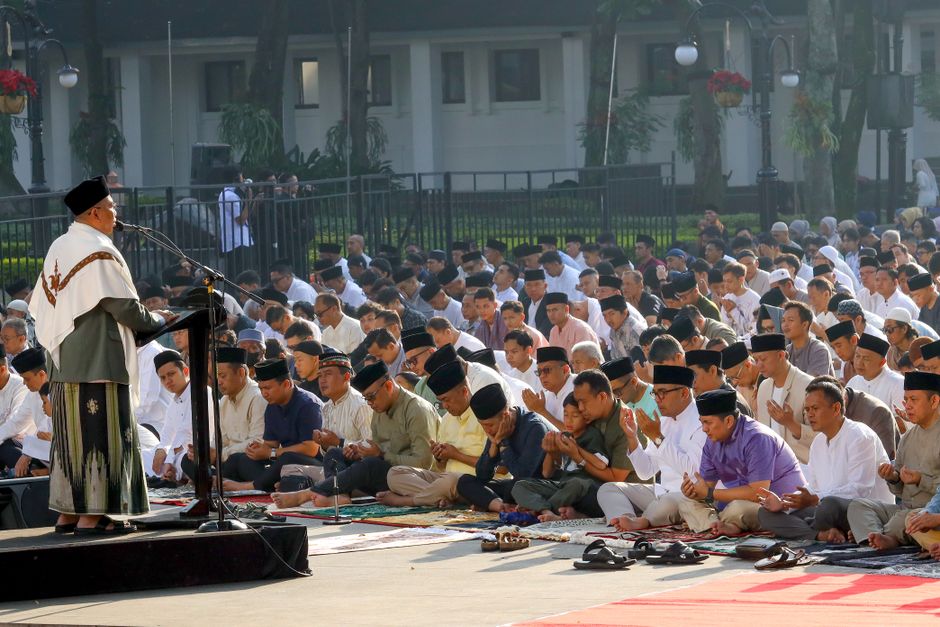
Jusuf Kalla Defends UGM Sermon Amidst Blasphemy Accusations, Emphasizing Peace and Conflict Resolution
Former Vice President Jusuf Kalla has firmly defended a sermon delivered at Universitas Gadjah Mada (UGM), a prominent Indonesian university, that has become the subject of blasphemy allegations. Kalla’s defense centers on the sermon’s core message of peace and conflict resolution, arguing that the accusations are misguided and detract from the vital importance of interfaith dialogue and understanding in a diverse society like Indonesia. The controversy arose from specific interpretations of the sermon, with some groups claiming it contained elements that were disrespectful to Islam. However, Kalla, a respected figure with extensive experience in national politics and diplomacy, asserts that the sermon’s context and intent were fundamentally about fostering harmony and mitigating potential conflicts, particularly in the current socio-political climate of Indonesia.
The sermon, delivered by a respected scholar, was part of an academic event at UGM, an institution known for its commitment to academic freedom and critical discourse. Kalla’s intervention in the ensuing debate is significant, given his stature and his history of advocating for moderate Islam and national unity. He pointed out that the speaker’s intention was to analyze religious texts and historical narratives through the lens of peace-building, a crucial endeavor in a nation that has historically grappled with religious intolerance and communal tensions. The allegations of blasphemy, Kalla argues, are often a response from individuals or groups who interpret religious pronouncements in a rigid and exclusionary manner, failing to appreciate the nuanced and contextual nature of theological discourse, especially when applied to social and political realities.
Kalla’s defense can be understood through the prism of Indonesia’s complex religious landscape. As the world’s largest Muslim-majority nation, Indonesia officially recognizes six religions, and interfaith relations are a constant subject of public attention and, at times, contention. The constitution guarantees freedom of religion, but the practical implementation of this freedom is often challenged by conservative interpretations and societal pressures. In this context, a sermon that aims to promote peace and understanding, even if it touches upon sensitive theological points, should be viewed as a positive contribution to societal cohesion. The accusations of blasphemy, on the other hand, risk stifling legitimate academic and religious discourse, creating an atmosphere of fear and self-censorship.
The former Vice President’s emphasis on conflict resolution is particularly relevant. Indonesia has a history of religiously motivated violence and discrimination. Initiatives that encourage dialogue and understanding between different religious communities are therefore not merely academic exercises but essential tools for maintaining social stability and preventing the escalation of grievances. Kalla’s stance suggests that those leveling blasphemy charges are prioritizing a narrow, dogmatic interpretation of religious doctrine over the broader societal imperative of peace. He appears to be advocating for a more mature and inclusive approach to religious discourse, one that recognizes the diversity of interpretations and the importance of promoting common ground.
Furthermore, Kalla’s defense highlights the role of educational institutions like UGM in fostering critical thinking and open discussion. Universities are intended to be spaces where ideas can be debated, challenged, and refined. When academic or religious discourse at such institutions is met with accusations of blasphemy, it undermines the very purpose of higher education and the free exchange of ideas. Kalla’s support for the UGM sermon, therefore, is also a defense of academic freedom and the right of scholars to engage in meaningful, albeit potentially challenging, discussions about faith and its role in society.
The specific content of the sermon, which has been interpreted as blasphemous by some, needs to be understood within its intended academic and peacemaking framework. While the exact details of the sermon are not provided in the prompt, it is reasonable to infer that it likely involved an examination of religious texts or historical events related to religious conflict. The speaker, in attempting to find lessons for contemporary conflict resolution, might have drawn parallels or made interpretations that, when decontextualized or viewed through a lens of strict adherence, could be misconstrued. Kalla’s defense implies that such interpretations are not only unfair but also counterproductive to the speaker’s stated goals of promoting peace.
The politicization of religious issues in Indonesia is a recurring phenomenon. Accusations of blasphemy have often been used as political weapons, targeting individuals or groups deemed to be rivals or threats. Kalla, having served at the highest levels of government, is acutely aware of these dynamics. His defense of the UGM sermon can be seen as an effort to de-escalate a potentially divisive issue and to steer the public discourse back towards constructive engagement with religious pluralism. He is likely urging a distinction between genuine religious offense and the weaponization of religious sensitivities for political gain.
Moreover, Kalla’s emphasis on conflict resolution resonates with his broader public persona and policy initiatives during his vice presidency. He has consistently championed interfaith dialogue and sought to promote a moderate and inclusive interpretation of Islam. His support for the UGM sermon is consistent with this established record and his ongoing commitment to building a more harmonious Indonesian society. He is not just defending an individual or an event; he is defending a principle – that religious discourse, particularly in an academic setting, should be directed towards building bridges, not walls.
The legal implications of blasphemy accusations in Indonesia are also a critical factor. The country has strict blasphemy laws, which have been criticized by human rights organizations for being used to suppress dissent and persecute religious minorities. Kalla’s defense implicitly critiques the overzealous application of these laws when they are used to silence discourse that, while potentially controversial, is intended to be constructive. He seems to be arguing that religious freedom should not be curtailed by accusations that are based on selective interpretations or a desire to enforce ideological conformity.
The ongoing debate surrounding the UGM sermon underscores the challenges of navigating religious pluralism in a developing democracy. While Indonesia has made significant progress in establishing democratic institutions, the legacy of religious intolerance and the influence of conservative religious ideologies continue to pose challenges. Kalla’s intervention serves as a crucial reminder that the promotion of peace and understanding requires courage and a commitment to open dialogue, even when it involves confronting difficult or sensitive issues. His defense of the sermon, rooted in the principles of peace and conflict resolution, is a testament to his enduring belief in the power of dialogue to build a more inclusive and harmonious future for Indonesia.
The implications of Kalla’s defense extend beyond the immediate controversy. By publicly supporting the UGM sermon and framing it within the context of peace and conflict resolution, he is setting a precedent for how religious discourse should be approached in Indonesia. He is implicitly encouraging a move away from knee-jerk accusations of blasphemy towards a more nuanced and contextual understanding of religious expression. This is vital for fostering a society where diverse beliefs can coexist and where academic and religious freedom are protected. His words carry weight, and his defense can embolden others to engage in similar dialogues without fear of reprisal.
In essence, Jusuf Kalla’s defense of the UGM sermon is a robust affirmation of the importance of constructive religious discourse focused on societal well-being. He is championing the idea that religious scholarship and engagement should serve as a force for unity and understanding, especially in a nation as diverse as Indonesia. By drawing a clear line between legitimate academic inquiry and malicious intent, and by highlighting the critical role of peace and conflict resolution, Kalla is urging a more mature and tolerant approach to navigating the complex intersections of faith, politics, and public life in Indonesia. His intervention is a significant contribution to the ongoing national conversation about religious harmony and the protection of freedoms within a pluralistic society.
