Jusuf Kalla Reasserts Pivotal Role in President Joko Widodo’s Political Ascendancy, Challenges Critics

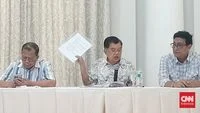
Former Vice President of Indonesia, Jusuf Kalla (JK), who served two terms as the nation’s second-highest official, has emphatically restated his foundational role in the political journey of President Joko Widodo (Jokowi), crediting himself with facilitating Jokowi’s rise from Solo Mayor to Jakarta Governor and ultimately to the presidency. Speaking to media at his residence in Kebayoran Baru, South Jakarta, on Saturday, April 18, Kalla did not mince words, directly addressing critics and online "buzzers" with a pointed reference to "termul-termul," a social media term often associated with "Ternak Mulyono," Mulyono being President Jokowi’s birth name. His remarks came amidst a broader clarification regarding a controversial sermon he delivered at Gadjah Mada University (UGM) during Ramadan, which had recently drawn criticism and even a police report alleging blasphemy.
The "Kingmaker" Narrative: Orchestrating Jokowi’s Jakarta Debut
Jusuf Kalla, a veteran statesman renowned for his pragmatic political maneuvering and extensive network, detailed his instrumental efforts in bringing Joko Widodo into the national political spotlight. According to Kalla, it was he who personally championed Jokowi’s candidacy for the Jakarta gubernatorial election in 2012, a critical stepping stone that would catapult Jokowi to national prominence. Kalla recounted how he brought Jokowi, then the relatively unknown Mayor of Solo, to the attention of Megawati Soekarnoputri, the powerful chairwoman of the Indonesian Democratic Party of Struggle (PDI-P).
"Who brought Jokowi to Jakarta? I brought him to Jakarta from Solo to become Governor. I brought him," Kalla asserted, recalling the initial reluctance from Megawati. "I went to Ibu Mega, ‘Ma’am, here is a good candidate, a PDI-P person.’ ‘Oh, no,’ she said. I came again, and finally, she agreed, and he became Governor." This narrative underscores Kalla’s perceived role as a political strategist and negotiator, capable of influencing key party decisions and identifying promising talent. The 2012 Jakarta gubernatorial election was a fiercely contested race, with Jokowi and his running mate Basuki Tjahaja Purnama (Ahok) eventually defeating the incumbent Governor Fauzi Bowo and his running mate Nachrowi Ramli. Jokowi’s victory in Jakarta, a major political and economic hub, was widely seen as a significant upset and a testament to his populist appeal and unique "blusukan" (impromptu visits) style of leadership. Kalla proudly noted that after his victory, Jokowi personally came to him to express gratitude, further cementing Kalla’s claim of mentorship. "What more could I have done?" Kalla posed, challenging any doubts about his contribution. "Tell all those ‘termul-termul’ that Jokowi became President because of me. Without being Governor, how could he become President?" he added, his voice reportedly rising in intensity.
The 2014 Presidential Bid: Megawati’s Condition for Kalla
Kalla’s account extends beyond the gubernatorial election to the pivotal 2014 presidential race. He revealed that Megawati Soekarnoputri had initially been hesitant to endorse Jokowi for the presidency, expressing concerns about his relative inexperience after only two years as Governor of Jakarta. Kalla claims Megawati made her endorsement conditional on his agreement to serve as Jokowi’s running mate. "He was Governor for two years [of DKI], okay, fine, I didn’t interfere, I never came during his time as Governor. Suddenly he was going to be President, I said, ‘Eh, not enough experience, don’t, it will damage this country.’ But Ibu Mega told me, she would not sign [the endorsement] unless I was his running mate [for the 2014 presidential election]," Kalla recounted.
According to Kalla, Megawati explicitly requested his presence on the ticket due to his extensive experience, asking him to guide and mentor Jokowi. At the time, Kalla expressed a desire to retire and return to his hometown of Makassar. "Oh, I wanted to go home to Makassar then, Ibu Mega said, ‘Don’t, Pak Yusuf, accompany him. I will not sign if it’s not Pak Yusuf.’ Yes, I didn’t ask for it, no," Kalla insisted, emphasizing that it was Megawati’s initiative. "Ibu Mega asked me to accompany him because he was inexperienced. Understand? So don’t even try. I apologize, tell all those buzzers. He wouldn’t have become Governor if it weren’t for me." The Jokowi-Kalla ticket ultimately won the 2014 presidential election, defeating the pair of Prabowo Subianto and Hatta Rajasa. They served for the 2014-2019 term, with Kalla providing crucial experience in governance, economic management, and international relations.
Contextualizing the Controversy: UGM Sermon and Diploma Claims
Jusuf Kalla’s assertive statements were not made in a vacuum. They arose as part of his clarification regarding a recent sermon delivered at the UGM mosque, which sparked controversy and led to a police report. Kalla explained that the polemic surrounding his sermon, which reportedly touched on his past successful efforts in resolving conflicts in Poso and Ambon, emerged shortly after he filed a police report against Rismon Hasiholan and publicly commented on the persistent issue of President Jokowi’s alleged fake diploma.
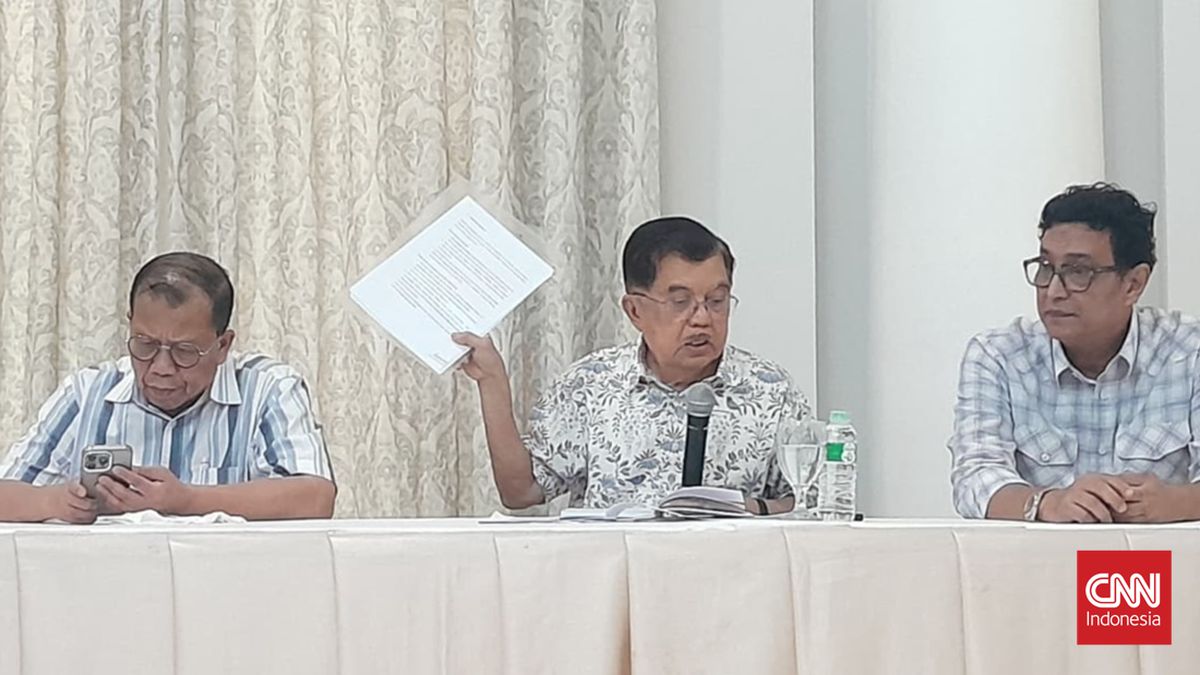
"I am not accusing it of being political, but it’s a reality that this [polemic] arose after I reported Rismon, and secondly, I said that for two years this nation has been in conflict, contradictory, accusing each other, shouting, demonstrating. Enough, Pak Jokowi, enough. Just show the diploma. That’s all," Kalla stated. He expressed his personal conviction that Jokowi’s diploma is authentic, but maintained that the President should publicly display it to quell public division and speculation. Kalla framed his advice as a senior politician offering guidance to a younger colleague. "I am older than him, so as a more senior person, I advise him, understand? Many people ask, what is wrong with Pak JK, what more could Pak Jokowi have done for Pak JK that he is like this? Am I accusing him? Am I opposing Pak Jokowi? No," said the former Golkar chairman, highlighting his long-standing role as a senior figure in Indonesian politics.
Jusuf Kalla’s Enduring Political Pedigree
Jusuf Kalla’s career spans decades, marked by significant roles in both business and politics. Before his vice presidencies, he was a successful businessman from South Sulawesi, deeply involved in trade and industry. His political career saw him serve as a minister in various capacities under different presidents, including Minister of Industry and Trade under Abdurrahman Wahid and Coordinating Minister for People’s Welfare under Megawati Soekarnoputri. He first served as Vice President alongside President Susilo Bambang Yudhoyono from 2004 to 2009, playing a critical role in post-tsunami reconstruction and peace processes, notably in Aceh. His return as Vice President alongside Jokowi in 2014 underscored his unique position as a political elder and a bridging figure between different political generations and factions.
Kalla’s mention of resolving conflicts in Poso and Ambon refers to his highly praised efforts in mediating peace agreements in these religiously charged communal conflicts in the early 2000s, demonstrating his capability as a skilled negotiator and conflict resolver. This background lends significant weight to his self-portrayal as a seasoned statesman offering sagely advice. His tenure as Chairman of the Golkar Party, one of Indonesia’s oldest and largest political parties, further solidified his influence and strategic acumen.
Joko Widodo’s Political Trajectory: A Timeline
Joko Widodo’s path to the presidency is often described as unconventional, marked by his rise from outside the traditional political elite.
- 2005-2012: Mayor of Surakarta (Solo). Jokowi gained widespread popularity for his clean governance, focus on public services, and direct engagement with citizens through his "blusukan" style.
- 2012: Elected Governor of Jakarta with Basuki Tjahaja Purnama (Ahok) as his running mate. His victory was a major upset, marking his entry into national-level politics.
- 2014: Elected 7th President of Indonesia, with Jusuf Kalla as his Vice President. This marked a significant shift in Indonesian politics, bringing a leader from a non-military, non-elite background to the highest office.
- 2019: Re-elected President for a second term, this time with Ma’ruf Amin, a senior Islamic cleric, as his Vice President. Kalla did not seek re-election.
- 2024: President Jokowi’s influence remained central, particularly with his eldest son, Gibran Rakabuming Raka, running as Vice President alongside Prabowo Subianto, who had previously been Jokowi’s rival in two presidential elections and later became his Minister of Defense. The Prabowo-Gibran ticket won the 2024 elections, signaling a continuation of Jokowi’s political legacy, albeit under a new administration.
Broader Implications and Political Dynamics
Jusuf Kalla’s recent statements carry significant weight within Indonesia’s dynamic political landscape. They highlight the intricate web of relationships, loyalties, and perceived grievances among the nation’s political elite.
- Jokowi-Kalla Relationship: While the 2014-2019 partnership was largely stable, the two leaders have increasingly distanced themselves since Jokowi’s second term, particularly with differing views on certain policies and political alignments. Kalla’s remarks can be interpreted as a public assertion of his historical contribution, possibly aimed at reminding the public and current political actors of his enduring influence.
- PDI-P and Megawati: Kalla’s claims about Megawati’s initial reluctance and subsequent insistence on his vice presidency could be seen as challenging the PDI-P’s official narrative, which often emphasizes the party’s strategic vision and Megawati’s ultimate leadership in selecting candidates. It also touches upon the complex relationship between Jokowi and his original party, PDI-P, which has become strained, especially during the 2024 election cycle.
- Post-2024 Election Dynamics: The timing of Kalla’s statements, following the recent presidential election where Jokowi’s son played a prominent role, is particularly noteworthy. It comes at a time of political realignment and introspection within various camps. Kalla’s comments might be a subtle critique of the current political trajectory or a reassertion of the principles he believes guided Jokowi’s initial success.
- Public Perception and Political Discourse: The use of terms like "termul-termul" directly engages with the online political discourse, signaling Kalla’s willingness to confront detractors head-on. Such direct language from a senior statesman can resonate strongly with the public, shaping narratives around political legitimacy and historical contributions. It also fuels discussions about the role of mentorship and kingmakers in Indonesian politics.
- The Diploma Controversy: By linking his current clarification to the ongoing diploma issue, Kalla brings attention back to a sensitive topic that has periodically surfaced, underscoring the persistence of certain allegations and the need for definitive resolution to maintain public trust.
In essence, Jusuf Kalla’s latest pronouncements are more than just a personal recollection; they are a calculated intervention in the ongoing political narrative, a reminder of his legacy, and a challenge to those who might overlook his pivotal role in shaping modern Indonesian leadership. His words serve as a testament to the complex, often intertwined, relationships that define the country’s political elite and their enduring impact on its trajectory.