PT Amman Mineral Internasional Tbk Successfully Completes State-Strategic Copper Smelter in West Sumbawa

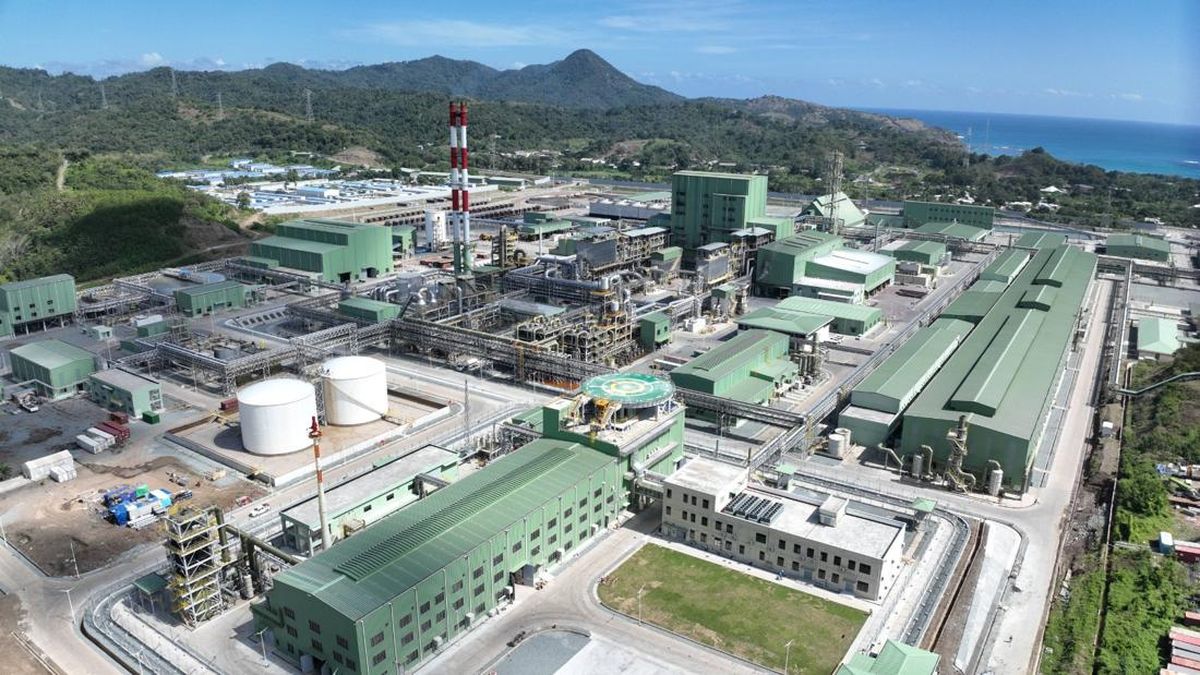
PT Amman Mineral Internasional Tbk (Amman) has officially finalized the construction of its copper smelter in West Sumbawa Regency, West Nusa Tenggara. This significant milestone marks a new chapter in strengthening Indonesia’s mineral downstreaming agenda and substantially increasing the value-added of the nation’s mined resources domestically. The completion of this National Strategic Project (PSN) underscores the company’s commitment to national development and its role in transforming Indonesia’s mineral processing capabilities.
A New Era of Mineral Downstreaming and Value Addition
The inauguration of the smelter represents a monumental achievement for Amman and a pivotal moment for Indonesia’s ambition to move beyond raw mineral exports. The facility, described as one of the most modern integrated copper and precious metals refining complexes globally, is expected to process up to 900,000 metric tons of copper concentrate annually. This concentrate will be sourced primarily from Amman’s Batu Hijau mine, with future supply anticipated from the Elang mine.
Arief Sidarto, President Director of Amman, emphasized that the successful completion is a testament to the robust collaboration between all stakeholders, including its dedicated employees and partners, who navigated numerous challenges during the construction and commissioning phases. "The completion of this smelter project is a significant accomplishment for Amman," Sidarto stated in a written release. "Behind it lies the hard work, resilience, and strong collaboration of all our employees and our partners in overcoming various challenges during the construction and commissioning process."
This state-of-the-art facility is poised to produce a range of high-value products, including copper cathodes, gold, silver, sulfuric acid, and selenium. These outputs are crucial components for a multitude of advanced industries, such as renewable energy, electric vehicles, digital technology, and high-tech manufacturing. By processing these minerals within Indonesia, the nation stands to gain considerably more economic benefit compared to simply exporting raw concentrates.
A Detailed Timeline of a Landmark Project
The journey to realizing the West Sumbawa smelter has been a long and complex undertaking, involving meticulous planning, significant investment, and overcoming various logistical and technical hurdles.
- Early Stages and Planning: The concept of a domestic smelter for Indonesia’s rich mineral resources has been a long-standing government objective, aimed at capturing greater value from its vast mineral wealth. For Amman, this translated into a strategic decision to invest in advanced processing capabilities. Initial feasibility studies and environmental impact assessments would have been conducted years prior to the commencement of physical construction.
- Construction Commencement: While the exact date of the groundbreaking is not specified in the provided text, the construction phase of such a large-scale industrial facility typically spans several years. This would have involved extensive site preparation, foundation laying, and the assembly of complex processing machinery.
- Partnership with NFC: A critical element of the project’s execution was the partnership with China Nonferrous Metal Industry’s Foreign Engineering and Construction Co., Ltd. (NFC). This collaboration brought essential engineering, procurement, and construction (EPC) expertise to the project, ensuring that the facility met international standards.
- Commissioning and Testing: Following the completion of physical construction, the smelter would have entered a rigorous commissioning phase. This involves bringing all systems online, testing individual components, and then integrating them into a fully operational process. This phase is critical for ensuring safety, efficiency, and the quality of the final products. It is during this period that performance guarantee tests are conducted to confirm the smelter’s operational capabilities.
- Completion and Acceptance: The official culmination of the construction and commissioning efforts was marked by the signing of the Completion and Project Acceptance Certificate (PAC). This significant event took place in Beijing, China, on July 18, 2026, between Amman and NFC. The PAC signifies that all contractual obligations regarding construction and commissioning have been met, and the project has successfully passed all performance guarantee tests.
- Entry into Long-Term Operation: With the PAC signed, the smelter officially transitions into its long-term operational phase. While the facility had been operating for over a year prior to this official sign-off, the PAC confirms its readiness for sustained, efficient production.
Economic and Strategic Implications for Indonesia
The establishment of the West Sumbawa copper smelter is far more than just an industrial project; it is a strategic move with profound economic and geopolitical implications for Indonesia.
- Enhanced Value Addition: Historically, Indonesia has been a major exporter of raw mineral concentrates, a practice that has limited the nation’s ability to capture the full economic potential of its resources. By processing these minerals domestically, Indonesia can significantly increase the value generated. The sale of refined copper cathodes, gold, silver, and other by-products commands higher prices on the global market than raw concentrates, leading to increased export revenues and foreign exchange earnings.
- Job Creation and Skill Development: Large-scale industrial projects like this smelter create a substantial number of direct and indirect jobs. This includes employment opportunities for engineers, technicians, operators, maintenance staff, and administrative personnel. Furthermore, the advanced technology employed in the smelter will necessitate specialized training, fostering the development of a skilled workforce within Indonesia, which can then be applied to other industrial ventures.
- Technological Advancement and Industrial Ecosystem: The presence of a world-class smelter facilitates the development of a broader industrial ecosystem. The by-products, such as sulfuric acid, can serve as essential inputs for other domestic industries, such as fertilizer production or chemical manufacturing. This fosters a more integrated and self-sufficient industrial base.
- Reduced Dependence on Imports: By producing essential materials like copper domestically, Indonesia can reduce its reliance on imported processed metals, enhancing national economic security and resilience.
- Attracting Further Investment: The successful completion of such a complex and strategic project signals Indonesia’s commitment to industrial development and its capacity to host large-scale foreign investment. This can pave the way for further investments in the mining and processing sectors, as well as related industries.
Government Support and Future Outlook
The Indonesian government has consistently prioritized the downstreaming of mineral resources, recognizing its critical role in national economic development. This smelter is categorized as a National Strategic Project (PSN), highlighting its importance to the country’s long-term economic agenda.
President Director Arief Sidarto reiterated Amman’s commitment to supporting the government’s national downstreaming agenda. He expressed hope for continued strengthening of the policy ecosystem that supports the competitiveness of domestic processing and mining industries. "Moving forward, we hope that the policy ecosystem that supports the competitiveness of domestic processing and mining industries can be further strengthened so that Indonesia can maximize the benefits of downstreaming and remain competitive amidst global dynamics," Sidarto stated.
This sentiment reflects a shared vision between the government and the private sector to maximize the economic benefits derived from Indonesia’s abundant natural resources. The success of the West Sumbawa smelter is expected to serve as a blueprint and an impetus for similar downstreaming projects across other mineral sectors in Indonesia.
Global Context and Competitiveness
The global demand for copper is projected to rise significantly in the coming decades, driven by the transition to renewable energy sources and the proliferation of electric vehicles, both of which are highly copper-intensive. By establishing advanced smelting capabilities, Indonesia is positioning itself to be a key player in supplying this crucial commodity to the global market.
However, maintaining competitiveness in the global market requires continuous innovation, efficiency improvements, and adherence to stringent environmental standards. The success of the Amman smelter will depend on its ability to operate efficiently, produce high-quality products, and adapt to evolving market demands and regulatory landscapes. The company’s commitment to environmental stewardship and sustainable practices will also be crucial for its long-term viability and reputation.
The signing of the PAC between Amman and NFC is more than just a contractual milestone; it represents the culmination of years of dedicated effort and a significant leap forward for Indonesia’s industrial capabilities. The West Sumbawa copper smelter stands as a tangible symbol of the nation’s growing ambition to transform its resource wealth into tangible economic prosperity and technological advancement.
Related posts: