Luhut Binsar Pandjaitan Discusses Whoosh High-Speed Train Debt Restructuring and Future Expansion with Chinese Officials

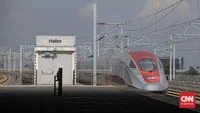
The ongoing discussions regarding the financial restructuring and debt-repayment mechanisms of Indonesia’s flagship high-speed rail project, the Jakarta-Bandung Whoosh, have reached a critical juncture following high-level diplomatic engagements in Beijing. Luhut Binsar Pandjaitan, Chairman of the National Economic Council (DEN), formally addressed the intricacies of the debt structure during a bilateral meeting with Zheng Shanjie, Chairman of China’s National Development and Reform Commission (NDRC). The dialogue underscores Jakarta’s proactive approach to resolving fiscal obligations associated with Southeast Asia’s first high-speed railway, ensuring that the project remains economically viable while maintaining robust strategic ties with Beijing.
The meeting between Pandjaitan and Zheng Shanjie took place during the former’s diplomatic and working visit to China, spanning from September 15 to September 18. Pandjaitan’s itinerary was extensive, including high-profile engagements at the China Economic and Social Forum 2026 in Hangzhou, Zhejiang province, alongside strategic consultations with Chinese Foreign Minister Wang Yi, Wang Dongfeng, Secretary-General of the National Committee of the Chinese People’s Political Consultative Conference (CPPCC), and NDRC Chairman Zheng Shanjie. He also delivered a comprehensive public lecture at Tsinghua University. These discussions provided a multifaceted platform to address bilateral economic cooperation, technology transfer, and infrastructure financing.
Addressing the Financial Mechanics of the Whoosh Project
During his discussion with the NDRC chairman, Pandjaitan emphasized that managing the financial obligations of the Jakarta-Bandung high-speed rail cannot be left unattended, noting that unresolved structural issues would ultimately result in domestic economic disadvantages. Pandjaitan stressed the importance of rigorous technical follow-ups to refine the debt payment structure. Drawing from his extensive experience overseeing the project during his tenure as Coordinating Minister for Maritime Affairs and Investment, Pandjaitan highlighted that coordination among key Indonesian stakeholders remains seamless.
According to Pandjaitan, the financial adjustments and debt restructuring frameworks have been communicated to and acknowledged by Coordinating Minister for Economic Affairs Airlangga Hartarto, President Prabowo Subianto, and the Ministry of Finance, including Deputy Minister Suahasil Nazara. Pandjaitan expressed high optimism that all institutional mechanisms required to streamline the Whoosh debt settlement are now fully integrated. He noted that President Prabowo Subianto has already given the green light for execution, with the National Economic Council acting as a bridge to accelerate coordination with Chinese counterparts, facilitated by established interpersonal and diplomatic relationships.
Significantly, Pandjaitan claimed that the Chinese authorities have raised no objections to the proposed debt payment mechanisms. This reassurance is vital as Indonesia navigates the macroeconomic implications of large-scale infrastructure financing. Beyond financial restructuring, the discussions also touched upon the transformative socio-economic impact of the Whoosh service on everyday Indonesian life. Pandjaitan pointed out how the high-speed railway has fundamentally altered commuter patterns, enabling professionals to reside in Jakarta while conveniently traveling to Bandung for midday commitments.
Expansion Proposals and Institutional Leadership
The proven success of the Jakarta-Bandung corridor has naturally spurred discussions regarding potential network extensions. Pandjaitan revealed that during his meetings in Beijing, he formally broached the possibility of extending the high-speed rail network further eastward to Surabaya, East Java, transforming the transportation landscape across the island of Java.
However, realizing such ambitious long-term infrastructure projects requires dedicated institutional oversight and continuity. Pandjaitan suggested that President Prabowo Subianto should formally designate a specific coordinating minister to spearhead the future phases of the high-speed rail development. He noted that leadership figures, such as Coordinating Minister for Infrastructure and Regional Development Agus Harimurti Yudhoyono (AHY) or another designated cabinet member, must assume direct responsibility to ensure the seamless execution and long-term sustainability of the broader rail network expansion.
Background and Context of the Jakarta-Bandung High-Speed Railway
The Jakarta-Bandung High-Speed Railway, branded as Whoosh, represents a monumental milestone in Indonesia’s modern transportation history. Developed under the Belt and Road Initiative (BRI) and executed by PT Kereta Cepat Indonesia China (KCIC)—a joint venture between Indonesian state-owned enterprises and Chinese railway corporations—the project aimed to slash travel time between the capital city and West Java’s provincial capital from over three hours to approximately 45 minutes.
Despite its technological success and overwhelming public popularity, the project has faced continuous scrutiny regarding its initial cost overruns, financing structures, and long-term debt servicing capabilities. The total cost of the project escalated beyond initial projections, necessitating additional loans from China Development Bank (CDB) to cover the funding gap. Consequently, the Indonesian government has had to carefully balance the strategic benefits of modern public transit against fiscal prudence, prompting successive administrations to negotiate favorable restructuring terms to mitigate the burden on the state budget.
Debt Restructuring Framework and Equity Acquisition
The financial strategy surrounding the Whoosh project has undergone several adjustments to ensure fiscal sustainability. Former Finance Minister Purbaya Yudhi Sadewa previously outlined the parameters of the debt restructuring plan for the Jakarta-Bandung High-Speed Railway project. Under the proposed framework, the debt would be restructured utilizing an annual installment scheme of approximately Rp1 trillion per year, spread across an extended tenor of up to 80 years.
Financial analysts and government officials have evaluated this restructured burden as manageable and significantly lighter than initial worst-case projections, confirming that the Ministry of Finance possesses the fiscal capacity to absorb the obligations without destabilizing the national budget.
Concurrently, the Indonesian government has moved forward with strategic corporate restructuring. Plans are currently underway for the Indonesian government to acquire a controlling 60 percent equity stake in PT Kereta Cepat Indonesia China (KCIC). Historically, this majority stake was managed by a consortium of Indonesian state-owned enterprises under PT Pilar Sinergi BUMN Indonesia (PSBI). Meanwhile, the remaining 40 percent equity ownership will continue to be held by the Chinese consortium, Beijing Yawan HSR Co. Ltd.
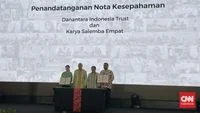
The Ministry of Finance is currently conducting comprehensive due diligence and asset valuation reviews regarding the transfer of PSBI’s shares. Institutional continuity remains a priority amidst administrative transitions. Rosan Roeslani, Chief Executive Officer (CEO) of Danantara Indonesia, confirmed that the transition and eventual takeover of KCIC’s management by the Ministry of Finance remain completely on track, proceeding smoothly despite recent shifts in cabinet leadership, including the transition involving former Finance Minister Purbaya Yudhi Sadewa and Suahasil Nazara.
Broader Economic Implications and Future Outlook
The ongoing negotiations and institutional restructuring of the Whoosh project carry profound implications for Indonesia’s macroeconomic stability and future foreign direct investment in infrastructure. By successfully negotiating an extended repayment tenor and restructuring annual liabilities to roughly Rp1 trillion, the Indonesian government demonstrates a pragmatic approach to managing sovereign debt derived from mega-infrastructure projects. This fiscal maneuver prevents the high-speed rail initiative from becoming a chronic drain on state finances, transforming a potential fiscal liability into a sustainable public asset.
Furthermore, the potential expansion of the high-speed rail corridor from Bandung to Surabaya signals a long-term vision for national connectivity. If realized, a trans-Java high-speed railway could drastically reduce logistics costs, stimulate regional economic hubs, and foster a more integrated labor market across Indonesia’s most populous island. However, the success of such future endeavors will heavily depend on transparent governance, rigorous financial oversight, and meticulous project management by the designated coordinating ministries.
As the Ministry of Finance finalizes its due diligence and Danantara Indonesia oversees the institutional consolidation of KCIC, the collaborative diplomatic efforts spearheaded by figures like Luhut Binsar Pandjaitan reaffirm Jakarta’s commitment to honoring its financial commitments while fostering cooperative bilateral relations with Beijing. The resolution of the Whoosh debt mechanism thus serves as a critical litmus test for Indonesia’s capacity to manage complex, cross-border infrastructure financing in an era of global economic uncertainty.
Related posts: