Prabowo Subianto inaugurates 204 new TNI units during the 81st Armed Forces Day commemoration in Jakarta

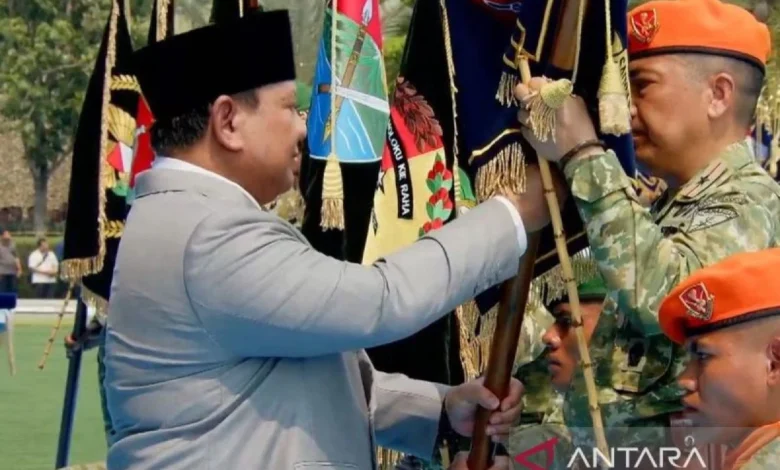
President Prabowo Subianto officially inaugurated 204 new units of the Indonesian National Armed Forces (TNI) on Monday, October 5, 2026, marking a historic milestone during the celebration of the military’s 81st anniversary. The ceremony, held at the PRIMA Field of the TNI Headquarters in Jakarta, signifies a massive structural expansion aimed at bolstering the nation’s defense posture and operational reach across the archipelago. This strategic reorganization represents one of the most significant military expansions in Indonesia’s modern history, reflecting the current administration’s commitment to modernizing the military’s organizational structure to meet contemporary geopolitical challenges.
The Magnitude of the Structural Expansion
The inauguration, which involved 3,378 personnel from the Army (TNI AD), Navy (TNI AL), and Air Force (TNI AU), serves as a centerpiece of the 81st-anniversary celebrations. The 204 new units are designed to enhance the TNI’s presence in strategic, underdeveloped, and border regions, ensuring that the military can react swiftly to internal and external threats.
The expansion is categorized by service branch, with the Army receiving the most significant influx of new organizational structures. This includes the establishment of six new Military Area Commands (Kodam), which are fundamental to territorial defense and civil-military coordination. Furthermore, the army’s combat capability was boosted by the addition of 30 Territorial Development Infantry Brigades and 150 Territorial Development Infantry Battalions. Complementing these are three new Combat Support Battalions, specifically tailored for cavalry, field artillery, and air defense artillery operations.
The Navy and Air Force also saw substantial growth. The Indonesian Navy added one Marine Infantry Brigade and four Marine Infantry Battalions, enhancing the nation’s amphibious warfare capabilities. Meanwhile, the Air Force received a modernized push with the establishment of the Pasgat (Special Forces Corps) II Parako Division, a new Parako Brigade, three Parako battalions, two new Air Squadrons, two Radar Units, and an Air Force Education Squadron.
Chronology of the Event and Official Proceedings
The ceremony began with the arrival of President Prabowo Subianto, who was greeted with full military honors. The highlight of the morning was the formal inauguration process, where the President pressed a siren button, signaling the official activation of the 204 units. The activation was underscored by a traditional "Armed" cannon salute, a gesture symbolizing the readiness and firepower of the newly formed entities.
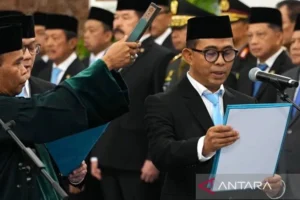
Following the general activation, the President proceeded to the formal induction of the new commanders. In a symbolic act of authority, he presented the command batons and unit flags to the six newly appointed Pangdam (Military Area Command Commanders). This was followed by the distribution of ceremonial unit emblems to seven representative leaders of the new units, solidifying the chain of command and the professional standards expected of these freshly minted organizations.
The ceremony also showcased the inclusivity of the modern TNI, with the parade including not only active-duty combat personnel but also members of the Reserve Component (Komponen Cadangan) and representatives of the Indonesian Scout movement (Pramuka). This participation highlights the "Total People’s Defense" doctrine that remains the bedrock of Indonesia’s security policy—a philosophy frequently championed by President Prabowo, who has long emphasized that the military’s strength is inextricably linked to its bond with the citizenry.
Strategic Context and Defense Policy Implications
The expansion of the TNI’s organizational structure does not occur in a vacuum. Since the beginning of his administration, President Prabowo has underscored the necessity of a "strong and agile" defense force. Analysts suggest that the addition of 204 units is a calculated move to decentralize defense assets, ensuring that military response times are minimized in a country comprising over 17,000 islands.
The creation of new Kodams is particularly significant. Historically, Kodams have served as the backbone of regional stability, not just for defense, but also for disaster response, rural development, and coordination with local governments. By increasing the number of Kodams, the government is effectively extending its administrative and security reach into regions that were previously underserviced by centralized command structures.
Moreover, the emphasis on Territorial Development Infantry Battalions suggests a shift toward a more proactive stance on internal security and development. These units are likely tasked with bridging the gap between the central government’s development goals and the realities of remote, border-adjacent communities.
Voices from the Leadership
During his address, President Prabowo reiterated the core mission of the Indonesian military: to remain a "People’s Army" (Tentara Rakyat). He stated that the honor of the nation and the welfare of its citizens rest upon the shoulders of the TNI. "The TNI must always remain close to the people," the President remarked, stressing that military modernization should not be viewed merely as an acquisition of hardware, but as an evolution of the institution’s capacity to protect the sovereignty of the Republic.
Defense observers note that the inauguration of these units aligns with the broader "Blue Book" of Indonesian defense planning, which seeks to achieve the "Minimum Essential Force" (MEF) goals while simultaneously preparing for future-oriented threats, such as cyber warfare and maritime boundary disputes. While the logistics of manning 204 new units will require sustained budget increases and intensive training cycles, the government appears prepared to prioritize these investments over the coming fiscal years.
Fact-Based Analysis of the Expansion
The scale of this reorganization is unprecedented in the last two decades. To put the 204 units into perspective, this expansion represents a nearly 15% increase in the total number of major tactical and territorial units within the TNI. The financial implications are substantial, involving not only the costs of personnel recruitment and training but also the construction of new barracks, command centers, and logistical hubs.
However, the strategic benefits are equally significant. By diversifying the deployment of the Marine Corps and the Pasgat, the TNI is effectively creating a more flexible "rapid reaction" capability. The two new Air Squadrons and radar units are critical to closing the "blind spots" in Indonesia’s vast airspace, which has historically been a challenge for the Air Force.
Critics and analysts alike are watching to see how the TNI will manage the human resource requirements of such a large-scale expansion. The success of these 204 units will depend heavily on the quality of leadership within the newly formed commands and the ability of the Ministry of Defense to sustain the necessary technological and maintenance support for these units.
Conclusion and Future Outlook
The 81st anniversary of the TNI will be remembered as the moment the Indonesian military transitioned into a more decentralized and highly specialized force. As the units begin their deployment, the focus will likely shift to integration exercises and operational readiness assessments.
For the international community, this expansion sends a clear signal of Indonesia’s determination to play a more proactive role in regional security. By strengthening its own territorial control and maritime capabilities, Indonesia is asserting its position as a key regional power capable of safeguarding its interests in the Indo-Pacific.
The ceremony concluded with a parade that underscored the synergy between the military and the state. As the units settle into their new commands, the long-term impact of this reorganization will be measured by the military’s efficiency in maintaining peace and order across the nation’s diverse and challenging geography. With the full backing of the current administration, the TNI enters its 82nd year with a modernized structure, expanded presence, and a clear mandate to remain the shield of the Republic.