Robert Pattinson Embraces Villainy in Christopher Nolan’s ‘The Odyssey’ and ‘Dune: Part Three,’ Championing Subverted Expectations

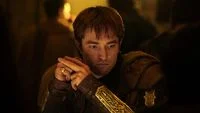
Jakarta, Indonesia (July 18, 2026) – In a significant turn that underscores his evolving career trajectory, acclaimed actor Robert Pattinson has openly expressed profound enjoyment in portraying antagonists, particularly in Christopher Nolan’s highly anticipated cinematic reimagining of The Odyssey and Denis Villeneuve’s upcoming Dune: Part Three. Pattinson, known for his diverse and often challenging roles post-“Twilight” fame, articulated a personal philosophy of "lowering expectations" before delivering impactful performances, a principle he finds uniquely applicable to villainous characters. His candid remarks offer a fascinating glimpse into his acting process and his strategic approach to character development, cementing his status as one of Hollywood’s most versatile and unpredictable talents.
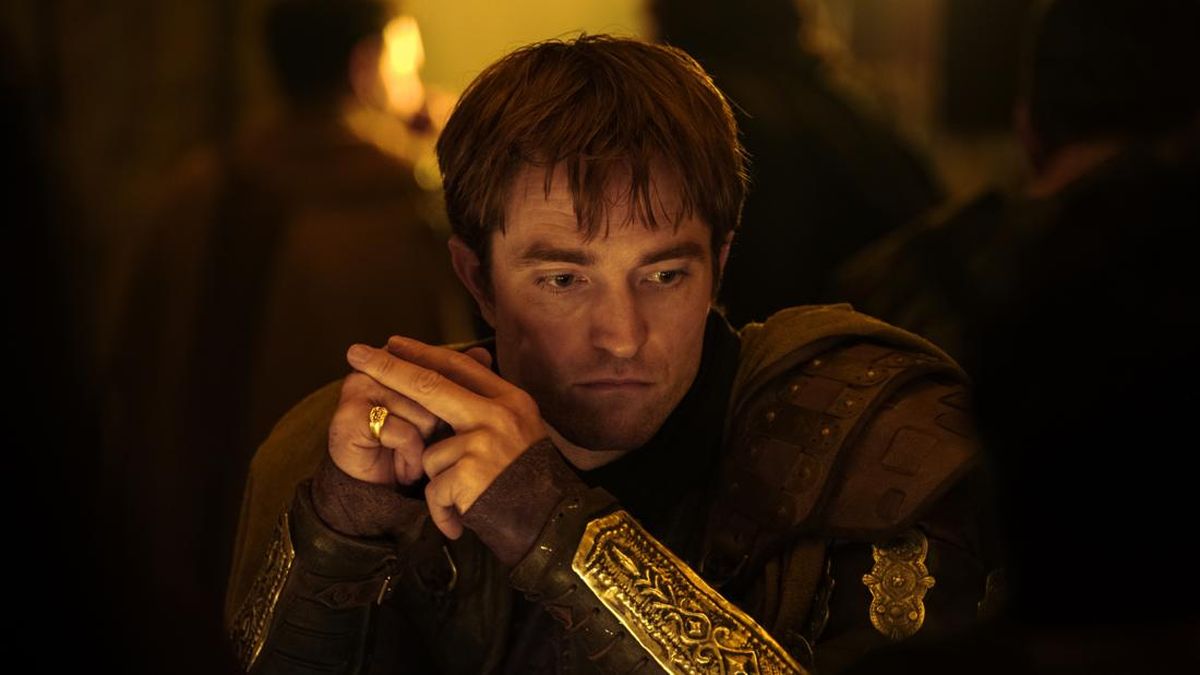
Pattinson, who takes on the role of Antinous in Nolan’s The Odyssey, a character infamous for his ruthless pursuit of Penelope and the usurpation of Odysseus’s throne, revealed his affinity for roles that allow him to surprise audiences. "I love it. I love lowering people’s expectations. That’s always been my favorite thing, it’s always been the best place for me," Pattinson told People on July 10, echoing a sentiment that resonates with his career choices over the past decade. He elaborated on this personal motto, stating, "Don’t over-promise at the beginning, but deliver results that are much better – that’s my motto." This strategic mindset appears to be a driving force behind his selection of complex, often morally ambiguous characters, allowing him to consistently defy audience preconceptions and deliver performances rich in nuance and depth.
Antinous: A Modern Reinterpretation of Ancient Villainy
Christopher Nolan’s The Odyssey is poised to be a visually stunning and narratively intricate adaptation of Homer’s epic poem, a hallmark of Nolan’s directorial style. While specific plot details remain under wraps, it is understood that the film will delve into the psychological complexities of its characters, pushing beyond traditional heroic narratives. Pattinson’s Antinous is presented not merely as a one-dimensional villain but as a character driven by ambition, desire, and perhaps a skewed sense of entitlement, mirroring contemporary power struggles. Antinous, historically depicted as the most arrogant and manipulative of Penelope’s suitors, embodies the corrupting influence of unchecked power and the precariousness of leadership in the absence of a rightful ruler. His relentless efforts to claim Odysseus’s wife and kingdom in Ithaca represent a fundamental challenge to the established order and a direct threat to the homecoming hero.
Pattinson’s personal take on Antinous is particularly intriguing, revealing a method actor’s deep immersion into his character’s psyche. Despite Antinous’s cruel actions and intricate political machinations, Pattinson admits to perceiving the character through a somewhat sympathetic lens, almost as if viewing a unique romance rather than pure villainy. "Actually, it’s funny. I don’t think Antinous seems that bad. I’m a little worried now. Maybe if I watch it with an audience, I’ll be like, ‘Oh my God, that’s horrifying,’" Pattinson shared with TODAY. He humorously added, "But because I watched it (alone), I thought, ‘He’s just a regular guy.’" This perspective underscores Pattinson’s talent for humanizing even the most reprehensible figures, searching for the underlying motivations and complexities that drive their actions, rather than simply playing them as archetypal evil. This approach promises an Antinous that is less a caricature and more a reflection of human frailty and ambition, making his villainy all the more compelling and unsettling.
The Craft of Character: From Innerwear to Outer Persona
Beyond the psychological depth, Pattinson’s commitment to embodying Antinous extended to the most granular details of his character’s presentation. He collaborated closely with the costume department to ensure that every aspect of Antinous’s attire, down to his undergarments, exuded an aura of privilege and opulence. This meticulous attention to detail highlights Pattinson’s dedication to his craft, believing that even unseen elements contribute to the overall portrayal. "Shortly after reading the script, I was like, ‘I want to have cheetah print underwear.’ I think Antinous is that kind of guy. He has a certain sensuality about him, ‘I just love satisfaction,’" Pattinson confessed, chuckling. "And because of that, I thought he must want to have the most luxurious underwear he could get. This sounds really ridiculous, but it’s my job to think like that."
This anecdote, while lighthearted, offers significant insight into the actor’s process. It reveals a desire to understand and project the character’s inner world through external choices, even if those choices are only implicitly perceived by the audience. For Antinous, the cheetah print underwear symbolizes a character driven by indulgence, a taste for the extravagant, and a confident, almost arrogant, sensuality. Such details, though seemingly minor, contribute to building a fully realized character that is both believable and memorable, allowing the actor to fully inhabit the role from the inside out. It’s this level of commitment that distinguishes Pattinson’s performances and has earned him critical acclaim.
Robert Pattinson’s Ascent: A Career Defined by Complexity
Pattinson’s embrace of villainous roles is not an isolated incident but rather a deliberate and consistent thread in his post-“Twilight” career, signaling a calculated move away from the teen heartthrob image that initially catapulted him to global fame. Following his tenure as Edward Cullen, Pattinson actively sought out independent films and auteur projects that challenged him as an actor. Films like David Cronenberg’s Cosmopolis (2012), James Gray’s The Lost City of Z (2016), and the Safdie brothers’ Good Time (2017) showcased his willingness to portray complex, often morally compromised characters, earning him critical praise for his versatility and intensity. His transformative performance in Robert Eggers’ The Lighthouse (2019) further solidified his reputation as an actor unafraid of darkness and psychological depth.
His casting as Bruce Wayne/Batman in Matt Reeves’ The Batman (2022) was initially met with skepticism by some, but Pattinson delivered a gritty, introspective, and melancholic portrayal of the Caped Crusader, redefining the character for a new generation. Batman, while a hero, is inherently a dark and tormented figure, existing in the moral grey areas, which aligns perfectly with Pattinson’s stated preference for complex roles. Nolan himself previously worked with Pattinson in the mind-bending sci-fi thriller Tenet (2020), where Pattinson played Neil, a character whose ambiguous loyalties and mysterious background allowed him to navigate the narrative with a captivating blend of charm and enigma. This prior collaboration likely played a pivotal role in Nolan’s decision to cast Pattinson as Antinous, recognizing his ability to bring depth and intrigue to morally complex characters.
Beyond Ithaca: Scytale in ‘Dune: Part Three’
Pattinson’s current "villainous streak" extends beyond The Odyssey to another highly anticipated blockbuster: Dune: Part Three. In this third installment of Denis Villeneuve’s epic science fiction saga, Pattinson will portray Scytale, a character from Frank Herbert’s Dune universe. Scytale is a Tleilaxu Face Dancer, a master shapeshifter and genetic manipulator, central to intricate plots to destabilize the galactic empire and undermine Paul Atreides, played by Timothée Chalamet. The Face Dancers are known for their ability to perfectly imitate any person, not just physically but also psychologically, making them formidable and terrifying antagonists. They are often at the heart of political intrigue and assassination plots, embodying a subtle, insidious form of villainy.
The casting of Pattinson as Scytale is particularly exciting, given the character’s inherent duplicity and the actor’s proven capability to convey layers of deception and hidden motives. Scytale’s role is crucial in the unfolding saga, representing a persistent existential threat to Paul Atreides’s reign and the future of humanity. His ability to mimic others makes him a psychological weapon, sowing distrust and confusion. This role will allow Pattinson to explore a different facet of villainy – one that is less about overt aggression and more about manipulative intelligence and existential threat. The contrast between Antinous’s direct, ambitious villainy and Scytale’s subtle, shapeshifting menace further highlights Pattinson’s range and his commitment to exploring diverse forms of antagonism.
Christopher Nolan’s Vision and the Modern Epic
Christopher Nolan’s decision to adapt The Odyssey is a significant cinematic event, promising a unique take on one of the foundational texts of Western literature. Known for his non-linear narratives, intricate plots, and philosophical undertones, Nolan is expected to bring a fresh perspective to Homer’s epic. His films often explore themes of time, memory, identity, and the nature of reality, which could lend themselves profoundly to the tale of Odysseus’s arduous journey home and the challenges awaiting him. By casting an actor of Pattinson’s caliber and allowing him to imbue Antinous with such depth, Nolan signals an intention to move beyond a simplistic hero-villain dynamic, instead crafting a narrative rich in moral ambiguity and human complexity.
Nolan’s previous films, such as Inception, Interstellar, and Oppenheimer, have consistently pushed the boundaries of storytelling and visual effects, earning him a reputation for creating intellectually stimulating blockbusters. The Odyssey presents an opportunity for Nolan to explore ancient themes through a modern lens, potentially incorporating elements of psychological thriller or even a historical drama with contemporary relevance. The film is likely to be a spectacle, but one grounded in compelling character work and profound thematic exploration, characteristics that align perfectly with Pattinson’s acting philosophy.
The Appeal of the Complex Antagonist in Contemporary Cinema
Robert Pattinson’s current roles reflect a broader trend in contemporary cinema: the increasing appeal and development of complex antagonists. Audiences and critics alike are increasingly drawn to villains who are not simply evil for evil’s sake but possess understandable, albeit twisted, motivations, internal conflicts, or even a degree of charm. Characters like Thanos in the Marvel Cinematic Universe, Arthur Fleck in Joker, or even Kylo Ren in the Star Wars sequels, exemplify this shift, offering narratives that explore the origins and psychology of villainy rather than just its consequences.
This trend allows actors to delve into richer character arcs, moving beyond stereotypical portrayals. For Pattinson, embracing these roles offers a continued pathway for artistic growth and differentiation. It allows him to leverage his brooding intensity and nuanced emotional range to create characters that resonate with audiences long after the credits roll. His willingness to humanize his villains, even if it makes him "a little worried" upon reflection, is precisely what makes his performances so compelling and memorable.
Anticipation and Implications
The combined anticipation for Christopher Nolan’s The Odyssey and Denis Villeneuve’s Dune: Part Three, both featuring Robert Pattinson in pivotal antagonistic roles, signals a significant moment for the actor and the industry. These high-profile projects are expected to draw massive global audiences, further solidifying Pattinson’s position as a leading man capable of both heroic and villainous turns. His strategic choice of roles, focusing on depth and subverting expectations, ensures that his career remains dynamic and creatively fulfilling.
The implications for Pattinson’s career are clear: he is no longer defined by a single role but by a diverse portfolio of challenging performances that showcase his exceptional range. For Hollywood, his success in these complex villainous roles reinforces the value of intricate character development and the audience’s appetite for narratives that explore the darker, more nuanced aspects of human nature. As these films prepare for release, Pattinson’s Antinous and Scytale are poised to become iconic figures in the pantheon of cinematic antagonists, testament to an actor’s unwavering commitment to his craft and his ingenious philosophy of delivering more than promised.