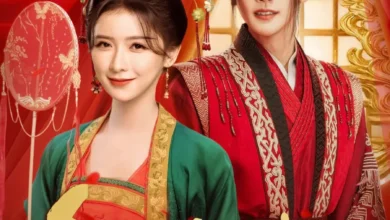
The landscape of contemporary Chinese television drama continues to evolve, with the November 5, 2026, premiere of the romantic series When I Meet the Moon marking a significant entry in the genre. Broadcast on major streaming platforms iQIYI and Youku, the 27-episode drama brings together two of China’s most prominent young acting talents, Lu Yuxiao and Lin Yi. The production, adapted from the critically acclaimed web novel Folding Moon by author Zhu Yi, explores the complex intersection of personal growth, the challenges of social anxiety, and the enduring nature of unresolved past relationships. Directed by Elson Chang, the series offers a nuanced look at how digital-age career pressures and deep-seated childhood trauma shape the trajectory of modern romance.
Cast Dynamics and Production Background
When I Meet the Moon stands out as a focal point for viewers interested in the evolving synergy between emerging stars and established icons. Lu Yuxiao, who recently garnered attention for her performance in Love Between Lines, takes on the role of Yun Li, a character defined by her struggle with social anxiety and her desire for independence. Opposite her is Lin Yi, a household name in the Asian entertainment industry, best known for his breakout role in the 2019 hit Put Your Head on My Shoulder.
The casting choice is deliberate, aiming to leverage the distinct screen presence of both leads. Lu Yuxiao’s portrayal of a reserved, intellectually driven woman provides a grounded contrast to Lin Yi’s depiction of Fu Shize, a character whose brilliant mind in the realm of virtual reality (VR) technology is matched only by his emotional rigidity. The chemistry between these two performers serves as the anchor for a narrative that transitions from the awkwardness of academic environments to the high-stakes world of professional technology development.
Narrative Arc: A Chronology of Emotional Development
The series is structured around three distinct phases: the re-emergence of a dormant connection, the inevitable clash of perspectives, and the long road to redemption and reconciliation.
The narrative begins in the city of Nanwu, where Yun Li enrolls in a postgraduate program. This move is presented as a pivotal moment in her life, symbolizing a break from paternal oversight and a search for individual identity. Her career trajectory intersects with her personal history when she accepts a position as a video creator at a local VR center, leading to a chance encounter with Fu Shize—her high school sweetheart.
The middle arc of the series focuses on the evolution of their relationship. Encouraged by a new circle of friends, Yun Li begins to overcome her social barriers, successfully bridging the emotional distance between her and the traditionally stoic Shize. However, the progression of their romance is hindered by deep-seated psychological barriers. Shize carries the burden of a traumatic past, specifically the unresolved death of a close associate, which complicates his ability to maintain intimacy.
The climax of the first half of the series occurs when the accumulation of these psychological pressures leads to a significant fracture in their partnership. The ensuing separation is depicted as a turning point, with Yun Li opting to pursue her studies abroad, effectively leaving the Chinese academic and social landscape behind. This departure serves as a catalyst for Shize’s own internal transformation, as he is forced to confront the trauma he had previously suppressed.
Contextualizing Modern Chinese Romance Dramas
The release of When I Meet the Moon is reflective of a broader trend in the Chinese entertainment industry where "healing" dramas are increasingly replacing standard melodramas. Unlike historical dramas or pure fantasy epics, this series belongs to the "modern-realistic" sub-genre, which prioritizes character development and mental health themes.
Industry analysts note that the popularity of stories like Folding Moon stems from the audience’s desire for narratives that address the "post-graduation struggle." By depicting characters who must balance career success in specialized fields like VR technology with the maintenance of interpersonal relationships, the drama taps into the anxieties of young professionals in urban China. The focus on social anxiety as a core character trait also aligns with a growing societal discourse regarding mental health awareness in the country.
Technical and Industry Implications
With 27 episodes, the series is positioned as a mid-length production, a format that has gained favor among streaming services to maximize viewer retention without the "filler" often associated with longer 50+ episode dramas. The involvement of iQIYI and Youku underscores the competitive nature of the Chinese streaming market. By investing in high-production-value dramas with established stars, these platforms are effectively battling for dominance in the global Asian-content market.
The adaptation of web novels has become a standard procedure for production houses looking to mitigate risk. Because Folding Moon already possesses a loyal readership, the producers of When I Meet the Moon benefit from a built-in audience, which helps stabilize initial viewership metrics upon release. Director Elson Chang has been noted for his commitment to maintaining the integrity of the source material while adjusting the pacing to suit television consumption.
The Path to Reconciliation
The final act of the drama, which takes place years after the initial separation, highlights themes of maturity and self-actualization. Shize’s rise to prominence as a leader in his research field serves as a metaphor for his personal growth; he moves from a state of emotional stagnation to one of professional and personal readiness.
When Yun Li returns to her hometown, the narrative shifts from one of trauma and separation to one of intentional reconnection. The series suggests that while past misunderstandings were the result of youthful insecurity and unaddressed grief, the reunion is made possible only through the characters’ individual maturation. Critics have pointed out that the show avoids the "destined-to-be" trope, instead framing the couple’s potential future as an active choice made by two people who have learned to communicate effectively.
Conclusion and Broader Impact
When I Meet the Moon is more than a romance; it is a case study in the challenges of personal growth in the modern era. By exploring the intersection of professional ambition and internal emotional states, the series provides a mirror for its audience. The production underscores the fact that in the current landscape of Chinese television, the most compelling stories are often those that deal with the quiet, internal struggles of the individual.
As the series continues its run through November and into the coming weeks, it is expected to maintain high engagement levels, driven by the strong social media presence of its leads and the thematic relevance of its plot. Whether it sets a new benchmark for romantic dramas remains to be seen, but it is clear that the project represents a sophisticated evolution in how the industry approaches the adaptation of modern literature for the digital screen. Through the lens of Yun Li and Fu Shize, the audience is invited to consider the possibility that while the past cannot be erased, it can be reconciled, provided both parties are willing to face the shadows they once tried to leave behind.