The Electric Motorcycle Surge in Indonesia: Stylish Designs and Advanced Technology Drive 2026 Market Expansion

Jakarta, Indonesia – The Indonesian electric motorcycle market is experiencing a significant surge in popularity, driven by a confluence of factors including increasingly sophisticated and stylish designs, substantial operational cost savings, and a growing commitment to environmental sustainability. As the nation hurtles towards 2026, manufacturers are poised to introduce a wave of new models that seamlessly blend aesthetic appeal with cutting-edge technology and advanced features, catering to a discerning consumer base. This evolving landscape presents a dynamic opportunity for both consumers and the burgeoning electric vehicle industry in Indonesia.
Beyond the allure of sleek aesthetics, prospective buyers are now meticulously evaluating a comprehensive suite of performance metrics. Key considerations include motor power, real-world range capabilities, battery capacity and charging times, integrated safety features, and the availability and quality of after-sales service. The expanding array of choices available in the Indonesian market empowers consumers to select electric motorcycles that precisely align with their daily commuting needs and lifestyle preferences, marking a significant shift in consumer purchasing decisions.
This report delves into six prominent stylish electric motorcycle models that are anticipated to capture significant market attention in 2026, offering a glimpse into the future of two-wheeled personal transportation in Indonesia.
Top Electric Motorcycle Picks for 2026: A Blend of Style and Substance
The Indonesian market in 2026 is set to be a vibrant battleground for electric motorcycle manufacturers, with innovation and design taking center stage. Here are some of the leading contenders that exemplify the trend towards stylish, technologically advanced, and user-friendly electric two-wheelers:
1. ALVA Cervo: Premium Performance Meets Futuristic Design
The ALVA Cervo stands out as a premium electric motorcycle, distinguished by its sporty and futuristic design language. This model is engineered for riders who demand both high performance and a contemporary aesthetic, making it an ideal choice for urban mobility. Its technological prowess is evident in the fully digital instrument panel, offering riders clear and immediate access to vital information. Multiple riding modes allow for adaptable performance, catering to different riding conditions and preferences, from eco-conscious cruising to more spirited acceleration.
Furthermore, the ALVA Cervo integrates advanced connectivity features through a dedicated mobile application. This allows for seamless monitoring of the vehicle’s condition, including battery status, charging progress, and riding history, providing riders with enhanced control and awareness. This integration of smart technology underscores ALVA’s commitment to offering a holistic riding experience that extends beyond the physical machine. The Cervo’s robust performance capabilities, coupled with its striking visual appeal, positions it as a strong contender in the premium segment of the Indonesian electric motorcycle market. Its suitability for the demanding urban environment, characterized by stop-and-go traffic and the need for agile maneuvering, further solidifies its appeal.
2. Honda CUV e: Elegance and Efficiency for Urban Commuting
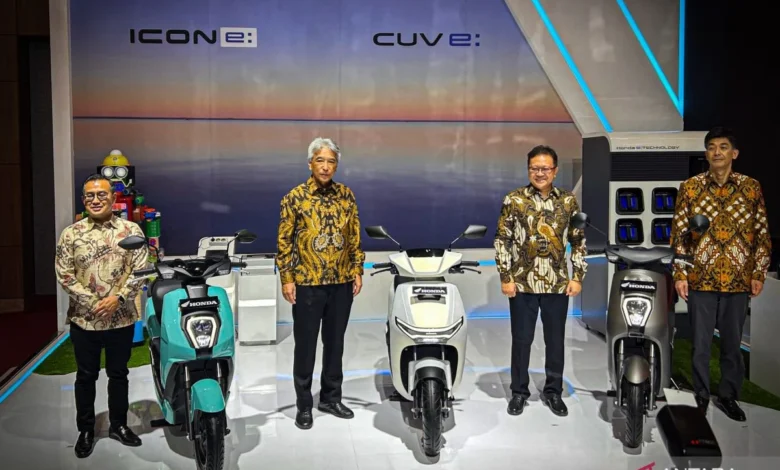
Honda, a titan in the automotive industry, is making a significant statement in the electric two-wheeler segment with the CUV e:. This model adopts a design reminiscent of modern automatic scooters, exuding an air of understated elegance. The CUV e: is engineered to provide a smooth and efficient mobility solution for daily urban commutes. Its battery technology is optimized to support consistent daily usage, offering reliable range and reasonable charging times.
Reflecting Honda’s long-standing reputation for safety, the CUV e: incorporates advanced safety features that are a hallmark of the brand’s product philosophy. These may include robust braking systems, integrated lighting for enhanced visibility, and potentially advanced rider assistance systems, depending on the final production specifications. The compact and agile design of the CUV e: makes it exceptionally well-suited for navigating the often congested streets of Indonesian cities. Its maneuverability and ease of handling in tight spaces are significant advantages for urban dwellers. The integration of Honda’s engineering expertise with the demands of electric mobility promises a compelling package for consumers seeking a reliable and stylish urban transport solution.
3. Polytron Fox-R: Aggressive Styling Meets Energy Efficiency
The Polytron Fox-R commands attention with its aggressive and futuristic design, embodying a bold statement in the electric motorcycle segment. This model is packed with modern digital features, including a comprehensive digital display that provides all necessary ride information at a glance. The advanced LED lighting system ensures superior visibility, both for the rider and for others on the road, enhancing safety during nighttime or low-light conditions. The Fox-R is designed to offer a comfortable riding posture, making it suitable for extended daily use without compromising on rider fatigue.
Polytron has positioned the Fox-R as a popular choice by successfully merging an eye-catching design with a strong emphasis on energy efficiency. This balance appeals to consumers who are not only looking for a visually appealing vehicle but also a cost-effective and environmentally conscious mode of transportation. The model’s performance characteristics are tuned to provide an engaging riding experience, while its efficient energy management system helps to maximize range and minimize charging frequency. The Fox-R represents a significant step forward for Polytron in the competitive electric motorcycle market, offering a blend of performance, style, and practicality.
4. Yadea Velax: Contemporary Lines and Enhanced Riding Comfort
Yadea, a global leader in electric two-wheelers, introduces the Velax, a model characterized by its modern design and sharply defined body lines. The Velax is meticulously crafted to offer an enhanced riding experience, incorporating a range of features designed to maximize rider comfort and convenience. These features aim to make every journey, whether short or long, as pleasant as possible. The motor’s performance is optimized for urban environments, providing adequate power for city traffic and everyday errands.
Beyond its functional attributes, the Velax stands out for its diverse color palette. This variety allows consumers to express their personal style and choose a vehicle that resonates with their aesthetic preferences. The combination of a contemporary design, comfort-oriented features, and personalization options makes the Yadea Velax an attractive proposition for riders who prioritize both form and function. Its performance is tailored to the realities of city driving, offering a responsive and enjoyable ride.
5. United TX1800: Understated Modernity and Ergonomic Design
The United TX1800 presents a compelling option for consumers seeking an electric motorcycle that balances simplicity with modern sophistication. Its design is understated yet contemporary, conveying a sense of refined elegance. The TX1800 is engineered with daily commuting in mind, featuring an ergonomically designed riding position that promotes comfort and reduces strain during prolonged use. The operational aspects are designed for practicality and ease of use, ensuring that everyday riding is as seamless as possible.
This model serves as a practical alternative for users who desire an electric vehicle that offers a clean, elegant aesthetic without unnecessary embellishments. The focus on ergonomic design and straightforward operation makes it an accessible choice for a wide range of riders, including those new to electric motorcycles. The United TX1800 demonstrates that efficiency and modern design can be achieved through thoughtful simplicity, offering a dependable and stylish option for daily mobility needs.
6. Smoot Zuzu: Compact Agility with a Minimalist Appeal
The Smoot Zuzu embodies a compact and minimalist design philosophy, making it an exceptionally agile option for navigating crowded urban landscapes. Its diminutive size allows riders to maneuver effortlessly through traffic, offering a level of convenience that is highly valued in busy city environments. Despite its compact form, the Zuzu boasts an appealing aesthetic that is particularly attractive to younger demographics.
A significant advantage of the Smoot Zuzu is its reputation for relatively economical operational costs. This cost-effectiveness, combined with its urban agility and stylish appearance, makes it an ideal daily commuter vehicle. The Zuzu represents a smart choice for budget-conscious consumers who do not want to compromise on style or practicality. Its efficient energy consumption and low running costs contribute to its appeal as a sustainable and affordable personal transportation solution.
Navigating the Electric Motorcycle Landscape: Key Considerations for Buyers
As the electric motorcycle market in Indonesia continues to mature, consumers are presented with an unprecedented range of choices. To make an informed decision, prospective buyers are strongly advised to meticulously consider several critical factors that extend beyond initial aesthetic appeal. This careful evaluation process ensures that the chosen electric motorcycle not only meets immediate desires but also aligns with long-term needs and expectations.
Performance and Range: The Heart of Electric Mobility
The performance of an electric motorcycle is primarily determined by its motor’s power output, which directly influences acceleration and top speed. For urban commuting, a motor that offers responsive acceleration from a standstill is crucial for navigating traffic safely and efficiently. Beyond raw power, range is arguably the most significant factor for any electric vehicle owner. Potential buyers must realistically assess their daily travel distances and compare them against the advertised range of different models. It is important to note that advertised ranges are often achieved under ideal conditions; real-world range can be affected by factors such as rider weight, riding style (aggressive acceleration and braking consume more energy), terrain (inclines require more power), ambient temperature, and the use of accessories like lights and charging ports. Understanding these variables allows for a more accurate prediction of how far a motorcycle can travel on a single charge.
Battery Capacity and Charging Infrastructure
The battery capacity, typically measured in kilowatt-hours (kWh), is the primary determinant of an electric motorcycle’s range. Larger battery capacities generally translate to longer ranges but also often mean heavier vehicles and longer charging times. Consumers should consider the trade-offs between range and weight/charging convenience. Equally important is the charging infrastructure available to the rider. This includes the speed at which the motorcycle can be charged (e.g., Level 1, Level 2 charging) and the availability of charging stations in their regular routes or at home. Many electric motorcycles offer fast-charging capabilities, which can significantly reduce downtime, but this often requires access to specialized charging equipment or public fast-charging networks. The prevalence and accessibility of these networks in Indonesia are crucial considerations.
Safety Features: Protecting the Rider
Safety is paramount in any vehicle, and electric motorcycles are no exception. Modern electric motorcycles are equipped with a range of safety features designed to protect the rider. These include robust braking systems, such as anti-lock braking systems (ABS), which prevent wheels from locking up during hard braking, significantly reducing the risk of skidding. Integrated lighting systems, including LED headlights, taillights, and turn signals, enhance visibility to other road users, especially in challenging light conditions. Some higher-end models may also incorporate advanced rider assistance systems (ARAS), though these are less common in the current Indonesian market but are expected to grow in prevalence. A thorough review of the safety specifications and any available crash test ratings or independent safety assessments is highly recommended.
Technology and Connectivity: Enhancing the Riding Experience
The integration of technology and connectivity is rapidly transforming the electric motorcycle experience. Many models now feature digital instrument clusters that provide clear, customizable displays of speed, battery status, range, navigation, and other essential information. Smartphone connectivity through Bluetooth or dedicated apps is becoming increasingly standard, allowing riders to monitor vehicle diagnostics, track rides, receive notifications, and even remotely control certain functions. Features like keyless ignition, integrated GPS tracking for anti-theft purposes, and customizable riding modes further enhance convenience and personalization. Prospective buyers should evaluate which technological features are most important to their riding style and daily needs.
After-Sales Service and Maintenance: Long-Term Support
While electric motorcycles generally require less maintenance than their internal combustion engine counterparts (fewer moving parts, no oil changes, etc.), after-sales service and maintenance remain critical considerations. Potential buyers should investigate the availability and reputation of authorized service centers for their chosen brand. Understanding the warranty coverage for the vehicle, particularly for the battery (which is often the most expensive component), is essential. Inquiries about the availability of spare parts and the cost of routine maintenance can help paint a clearer picture of the long-term ownership experience. A strong dealer network and reliable after-sales support can significantly contribute to owner satisfaction and the longevity of the vehicle.
Cost of Ownership: Beyond the Purchase Price
The total cost of ownership for an electric motorcycle extends beyond the initial purchase price. While the upfront cost might be higher than comparable gasoline-powered scooters or motorcycles, the savings in operational costs can be substantial. Electricity is generally cheaper than gasoline, and electric motorcycles have fewer moving parts, leading to lower maintenance expenses. Consumers should calculate the potential savings on fuel and maintenance over the expected lifespan of the vehicle. Government incentives, such as tax breaks or subsidies for electric vehicle purchases, can also play a significant role in reducing the overall cost of ownership and should be thoroughly investigated. The resale value of electric motorcycles is also an emerging factor to consider as the market matures.
Broader Implications: The Electric Revolution in Indonesian Mobility
The accelerating adoption of electric motorcycles in Indonesia is not merely a trend; it signifies a fundamental shift in the nation’s approach to personal transportation. This transition holds profound implications across economic, environmental, and social spheres.
Environmental Benefits and Urban Air Quality
Indonesia, particularly its densely populated urban centers, faces significant challenges related to air pollution. The widespread adoption of electric motorcycles offers a tangible solution to mitigate these issues. By replacing gasoline-powered vehicles, electric motorcycles contribute to a substantial reduction in tailpipe emissions of pollutants such as nitrogen oxides (NOx), particulate matter (PM), and carbon monoxide (CO). This reduction directly translates to improved urban air quality, leading to better public health outcomes, including a decrease in respiratory illnesses and associated healthcare costs. The shift towards electric mobility aligns with Indonesia’s broader environmental commitments and its aspirations to become a more sustainable nation. The long-term impact on the country’s carbon footprint will be significant as the electric vehicle fleet grows.
Economic Opportunities and Industrial Development
The burgeoning electric motorcycle market is a catalyst for economic growth and industrial development in Indonesia. The increased demand for electric motorcycles spurs investment in local manufacturing, assembly, and component production. This creates new employment opportunities across various skill levels, from factory workers to engineers and technicians. The development of a robust domestic electric vehicle ecosystem can also foster innovation and technological advancement, positioning Indonesia as a key player in the global transition to sustainable transportation. Furthermore, the reduced reliance on imported fossil fuels can lead to significant savings in foreign exchange reserves, bolstering the national economy. Government policies and incentives aimed at promoting local production and research and development will be crucial in maximizing these economic benefits.
Consumer Empowerment and Shifting Lifestyles
The growing availability of stylish, efficient, and technologically advanced electric motorcycles empowers Indonesian consumers with more choices for their daily mobility needs. This shift encourages a move towards more sustainable and cost-effective transportation solutions. As consumers become more accustomed to the benefits of electric riding, such as quieter operation, lower running costs, and reduced environmental impact, it is likely to influence broader lifestyle choices and increase demand for other forms of electric mobility, including electric cars and public transportation powered by renewable energy. The perception of electric motorcycles is rapidly evolving from niche to mainstream, driven by their increasing practicality and appeal.
Challenges and Future Outlook
Despite the promising trajectory, challenges remain. The development of a comprehensive and accessible charging infrastructure across the archipelago is a significant undertaking. Battery technology, particularly regarding lifespan, cost, and recycling, requires continued innovation. Consumer education and awareness campaigns are also vital to address any lingering misconceptions or concerns about electric vehicle performance and reliability. However, with continued government support, industry investment, and technological advancements, the future of electric motorcycles in Indonesia appears exceptionally bright, promising a cleaner, more efficient, and more sustainable mode of personal transportation for millions. The year 2026 is poised to be a pivotal moment in this transformative journey.
Related posts: