XLSmart Launches ByeByeBox Initiative to Tackle Growing E-Waste Crisis and Promote Circular Economy in Indonesia

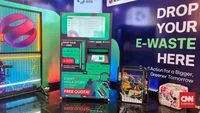
The escalating global challenge of electronic waste has prompted telecommunications provider XLSmart to take decisive action within the domestic market. Driven by the observation that millions of obsolete mobile phones, chargers, tablets, and computer peripherals remain indefinitely hoarded in households rather than being recycled, the company has officially introduced a pioneering e-waste collection and management initiative dubbed the ByeByeBox.
Unveiled during a high-profile launch event held at the Institut Teknologi Bandung (ITB) in West Java, the campaign seeks to bridge the gap between consumer habits and sustainable environmental practices. By leveraging cutting-edge technology such as artificial intelligence and automated sorting mechanisms, XLSmart aims to intercept electronic waste before it ends up in municipal landfills or contributes to environmental degradation. The initiative not only addresses the environmental hazards associated with improper e-waste disposal but also introduces a rewarding incentive structure designed to encourage public participation on a broad scale.
The Phenomenon of Rapid Device Turnover and the Hoarding Culture
At the core of the ByeByeBox initiative is a pressing consumer trend: the accelerating rate at which individuals replace their personal electronic devices. According to Merza Fachys, Director and Chief Regulatory Officer at XLSmart, the average Indonesian consumer upgrades their mobile phone every two to three years. This frequent hardware turnover generates a massive, continuous influx of older devices into the domestic ecosystem.
While a substantial portion of these discarded devices successfully finds a second life through Indonesia’s thriving secondary market, a significant remainder does not. Devices that are severely outdated, physically damaged, or economically unviable for resale are frequently relegated to domestic storage. Consumers routinely tuck away broken smartphones, obsolete tablets, tangled charging cables, and legacy computer keyboards in drawers, closets, and attics. Over time, these idle electronics accumulate alongside household clutter, entirely isolated from formal recycling networks.
This persistent hoarding culture poses severe environmental and economic challenges. Electronic devices contain a complex matrix of materials, ranging from precious metals like gold, silver, copper, and palladium to hazardous substances such as lead, mercury, cadmium, and lithium-ion battery components. When electronics are left indefinitely in storage or improperly discarded alongside regular municipal waste, these valuable materials remain locked away and unavailable for reuse. Furthermore, if improperly disposed of, toxic elements can leach into soil and water tables, presenting profound risks to public health and ecological stability.
Chronology and Deployment of the ByeByeBox Campaign
The launch of the ByeByeBox represents a carefully coordinated effort between corporate innovation and academic partnership. The initiative commenced on September 14, 2026, with the official rollout at the prestigious Institut Teknologi Bandung.
To maximize accessibility and foster community engagement, the initial deployment phase has positioned the smart collection unit directly on the ITB campus, where it will remain operational until September 28, 2026. Following this initial two-week trial period, the ByeByeBox is scheduled to embark on a comprehensive nationwide tour. The automated collection bins will travel across various public events, urban centers, and major academic institutions throughout Indonesia, ensuring that citizens outside the primary rollout zones have ample opportunity to participate.
In terms of immediate operational goals, XLSmart, in collaboration with its environmental technology partner REMIND, has established a clear quantitative target. Through the conclusion of the initial rollout phase in November 2026, the organizers aim to collect approximately 600 kilograms of electronic waste. This milestone will serve as a baseline for scaling the program into a permanent nationwide infrastructure network in the subsequent calendar years.
Cutting-Edge Technology: How the ByeByeBox Operates
To streamline the collection process and ensure accurate tracking of materials, the ByeByeBox integrates advanced hardware and software technologies. The user experience is designed to be seamless, transparent, and highly efficient.
When a consumer deposits an unused small electronic device into the ByeByeBox, the unit initiates an automated intake protocol. The device is immediately scanned and validated utilizing high-resolution cameras integrated with artificial intelligence (AI) algorithms. This AI-driven visual inspection system accurately identifies the type, model, and physical condition of the deposited item, categorizing it within the REMIND database.
Simultaneously, the device is subjected to automated weighing systems. The precise mass of the electronic waste is recorded and logged into the user interface, serving as the basis for calculating environmental impact metrics and user rewards.
Once secured inside the collection unit, the aggregated e-waste undergoes a multi-layered sorting and evaluation process. Contrary to conventional recycling models where all collected electronics are immediately shredded or smelted for raw material recovery, the XLSmart and REMIND partnership incorporates a circular evaluation protocol. Collaborating closely with academic experts from the engineering faculties at ITB, technical specialists inspect the collected hardware to determine whether specific units can be salvaged through repair, component upgrading, or refurbishment.
"Not everything will be destroyed or stripped down for its baseline materials," Merza Fachys explained during the launch proceedings. "Our colleagues from the engineering department at ITB will evaluate whether these devices can still be refurbished, repaired, upgraded, enhanced, and restored to functional utility."
Through this meticulous triage process, functional or repairable devices are diverted away from destructive recycling and reintroduced into extended lifecycle channels. Meanwhile, items that have exhausted their operational potential are routed to certified recycling facilities where precious metals and base materials are safely extracted, purified, and reintegrated into manufacturing supply chains in alignment with circular economy principles.
Incentivizing Sustainability: The Reward Mechanism for Consumers
Recognizing that consumer participation is vital to the success of any e-waste management program, XLSmart has structured a compelling incentive scheme tied directly to mobile data benefits. The rewards are scaled proportionally based on the total weight of the electronic waste deposited into the ByeByeBox.
Under the current campaign structure, subscribers of XL, AXIS, and Smartfren who deposit their obsolete electronics receive tiered data quotas:
- For e-waste weighing less than 1 kilogram, participants receive a primary bonus data quota of 500 MB.
- For e-waste weighing between 1 and 2 kilograms, the bonus quota increases to 1 GB.
- For e-waste exceeding 2 kilograms, participants are awarded a maximum bonus quota of 1.5 GB.
All data quotas issued through this initiative carry a validity period of one day from the time of crediting. Furthermore, to ensure inclusivity and encourage non-subscribers to participate in environmental preservation, individuals who do not currently use XLSmart network services are rewarded with complimentary starter packs, subject to stock availability at each collection point.
Broader Industry Implications and the Circular Economy in Indonesia
The introduction of the ByeByeBox arrives at a critical juncture for Indonesia’s telecommunications and technology sectors. As the nation experiences rapid digital transformation and expanding smartphone penetration, the volume of electronic waste generated domestically is projected to surge exponentially over the coming decade.
Historically, e-waste management in Indonesia has been dominated by the informal sector, characterized by unregulated dismantling, open burning of cables, and hazardous acid baths used to extract precious metals. These informal practices not only result in low recovery rates for valuable resources but also expose informal workers and surrounding communities to severe occupational and environmental hazards.
By establishing a formal, technology-enabled collection channel backed by a major telecommunication conglomerate and academic institutions, XLSmart sets a progressive corporate precedent. Initiatives like the ByeByeBox demonstrate how large enterprises can leverage their logistical networks and subscriber bases to drive behavioral change among consumers.
From an economic perspective, integrating circular economy models into the technology sector reduces reliance on virgin mining for rare earth elements and precious metals, stabilizing supply chains amid global commodity fluctuations. Environmentally, diverting toxic heavy metals away from municipal waste streams mitigates long-term pollution risks.
As the ByeByeBox continues its scheduled tour across Indonesian campuses and public venues through late 2026, industry observers will closely monitor its efficacy in shifting public attitudes toward electronic disposal. If successful, the collaborative framework established by XLSmart, REMIND, and ITB could serve as a scalable blueprint for national e-waste governance, proving that corporate responsibility and consumer incentives can effectively unite to address one of the modern era’s most persistent environmental challenges.
Related posts: