Transforming Numeracy: How Gamified Learning Apps Are Revolutionizing Mathematics Education for Children

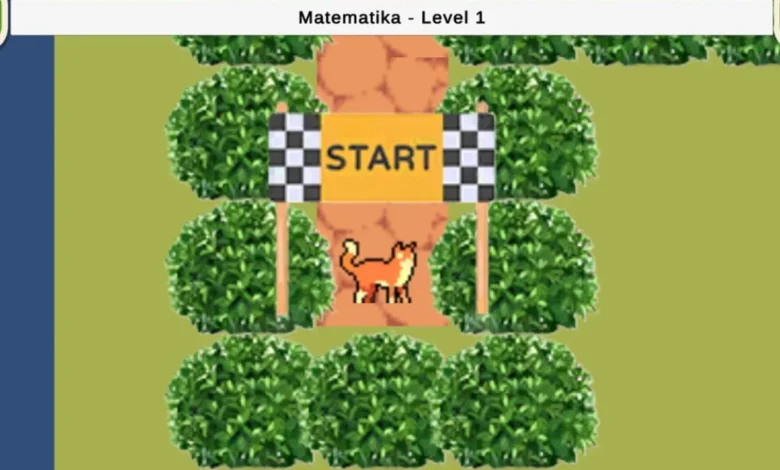
Jakarta, Indonesia – For countless children worldwide, the mere mention of mathematics often conjures images of daunting equations, abstract formulas, and tedious problem sets, frequently leading to disengagement and a perceived inability to grasp fundamental concepts. This pervasive sentiment of math anxiety and boredom poses a significant challenge in education, especially given that numerical literacy is a critical foundational skill indispensable for academic success, future careers, and everyday life in an increasingly data-driven world. However, the rapid evolution of technology, particularly in mobile application development, is now offering a vibrant and interactive solution, fundamentally altering how children perceive and interact with mathematical concepts. By leveraging the power of gamification, smartphones and tablets are no longer just sources of entertainment but potent educational tools, transforming what was once a dreaded subject into an enjoyable and eagerly anticipated adventure.
The Persistent Challenge of Math Aversion
Traditional methods of mathematics instruction, often characterized by rote memorization, repetitive drills from textbooks, and abstract theoretical explanations, have historically struggled to capture the imagination of young learners. This conventional approach can inadvertently create barriers to understanding, leading many children to lose interest quickly or develop a negative association with the subject. Studies, including those from organizations like the Programme for International Student Assessment (PISA), frequently highlight disparities in mathematical proficiency globally, underscoring the urgent need for more effective and engaging pedagogical strategies. The abstract nature of numbers and symbols, without a tangible connection to real-world applications or interactive experiences, can make math seem inaccessible and irrelevant to a child’s immediate world. Educators and child psychologists have long recognized "math anxiety" as a genuine phenomenon, where fear of failure or perceived difficulty can severely impede a child’s learning process and long-term mathematical development.
Gamification: A Paradigm Shift in Learning
The advent of smartphones and tablets has ushered in a new era for educational technology, providing platforms for innovative learning tools. Gamification, the application of game-design elements and game principles in non-game contexts, has emerged as a particularly effective strategy in education. By embedding mathematical problems within interactive narratives, challenge-based scenarios, and reward systems, these applications tap into children’s natural inclination for play and exploration. This approach moves beyond simply digitizing worksheets; it creates immersive experiences where learning is an intrinsic part of achieving game objectives. The visual appeal, immediate feedback, adaptive difficulty levels, and a sense of accomplishment inherent in game design contribute significantly to sustained engagement and deeper cognitive processing. Children are motivated to solve problems not out of obligation, but out of a desire to progress in a game, unlock new levels, or earn virtual rewards, thereby internalizing mathematical concepts without consciously feeling the burden of "studying."
Key Pedagogical Principles in Math Gaming Apps
The most successful math learning apps are designed with sound pedagogical principles in mind. They often incorporate:
- Adaptive Learning: The difficulty adjusts to the child’s individual pace and proficiency, ensuring challenges are neither too easy nor too frustrating.
- Immediate Feedback: Children receive instant notification of correct or incorrect answers, allowing for immediate correction and understanding.
- Scaffolding: Concepts are introduced incrementally, building upon previously learned skills.
- Multisensory Engagement: Combining visual graphics, auditory cues, and interactive touch elements caters to diverse learning styles.
- Intrinsic Motivation: The joy of play and discovery drives the learning process, rather than external pressures.
- Progress Tracking: Both children and parents can monitor learning trajectories, identify areas of strength, and pinpoint areas needing more practice.
This shift represents a significant departure from traditional methods, offering a personalized and dynamic learning environment that was previously unimaginable.
Spotlight on Leading Math Game Applications
Several innovative applications stand out for their ability to make mathematics accessible and enjoyable. Each app employs unique methodologies to engage children, cater to different age groups, and address various mathematical skills.
1. King of Maths: Foundational Skills Through Adventure
King of Maths is a highly regarded application designed to reinforce fundamental mathematical skills through an engaging adventure narrative. Targeted primarily at elementary school-aged children, this game skillfully integrates various mathematical domains, including basic algebra, geometry, and division, into a quest-based format. Players select a character and embark on a journey where challenges manifest as mathematical problems. For instance, children might need to find missing numbers in sequences or solve simple equations to unlock paths or defeat mythical creatures. This innovative concept not only hones calculation skills but also sharpens logical reasoning and attention to detail—crucial cognitive abilities that extend beyond arithmetic. The app’s success lies in its ability to camouflage learning within a compelling storyline, making children eager to solve problems to advance their character, rather than viewing them as tedious academic tasks. Its availability across multiple platforms, often for free, makes it an accessible resource for many families.
2. Math Tango: Immersive Worlds and Skill Building
Math Tango transports children to a vibrant, magical island, guided by the charismatic character Uncle Fibonacci. This imaginative setting serves as the backdrop for dozens of interactive math lessons, where children engage in missions that involve solving mathematical problems to collect gems. These gems are not merely decorative; they serve as currency to unlock new characters and expand their fantastical world. The game’s narrative-driven approach, coupled with its visually rich environment, encourages continuous play and learning. From basic addition and subtraction to more complex multiplication and division, Math Tango provides a structured yet playful curriculum. By allowing children to build and customize their virtual world as they master mathematical concepts, the app creates a powerful incentive for sustained engagement, transforming abstract numbers into tangible progress and creative expression.
3. Math Puzzle Games: Cultivating Logic and Analytical Thinking
Diverging slightly from narrative-driven adventures, Math Puzzle Games is specifically designed to hone a child’s logical and analytical thinking skills. This application presents a variety of challenging numerical puzzles and brain teasers that require focused concentration and problem-solving prowess. The learning process is conceptualized as solving interactive puzzles, which inherently makes it more dynamic and less monotonous than traditional drills. The diverse range of puzzles ensures that children encounter different types of mathematical challenges, stimulating various cognitive functions. This game is particularly beneficial for parents seeking a structured routine for their children’s learning, as regular engagement can significantly improve concentration spans and reinforce numerical abilities through a methodical yet enjoyable approach. Its puzzle-based format encourages children to experiment with numbers and strategies, fostering a deeper understanding of mathematical relationships.
4. Math Duel: Fostering Speed and Competitive Learning
For children who thrive on competition and quick thinking, Math Duel offers an exhilarating challenge. This game focuses on developing mental math speed and accuracy by requiring players to rapidly combine number cards and mathematical operations to form correct equations. The competitive nature of Math Duel, whether against a computer opponent or another player, provides a strong incentive for children to enhance their mental arithmetic skills. The pressure to quickly formulate correct answers without relying on external aids helps build confidence and fluency in calculations. This fast-paced environment makes learning engaging and prevents monotony, pushing children to improve their speed and precision in a fun, dynamic setting. The thrill of outsmarting an opponent or beating one’s own record serves as a powerful motivator, transforming what could be mundane practice into an exciting intellectual contest.
5. Prodigy Math Game: RPG Elements for Comprehensive Curriculum Coverage
Prodigy Math Game stands out as one of the most widely adopted and comprehensive math applications, renowned for its immersive Role-Playing Game (RPG) format. It meticulously integrates curriculum content from Grade 1 through Grade 8 into an expansive fantasy adventure. As children explore magical worlds, battle monsters, and complete quests, they are required to solve math problems aligned with educational standards to progress. The game’s adaptive learning engine is a key feature, personalizing the difficulty level to match each child’s proficiency, ensuring optimal challenge without frustration. This individualized approach is particularly effective in addressing diverse learning needs. Furthermore, Prodigy offers robust parental monitoring features, allowing guardians to track their child’s progress, identify strengths and weaknesses, and gain insights into their learning journey through detailed reports. This blend of engaging gameplay and strong pedagogical alignment makes Prodigy a powerful tool for sustained math development.
6. Monster Math: Engaging Missions for Core Math Skills
Designed for children aged 6 to 10, Monster Math covers an impressive range of over 67 mathematical skills, from basic arithmetic operations to more complex concepts like decimal numbers. The game’s premise involves children embarking on exciting missions, such as defeating monsters and rescuing friends, all while solving math problems. This narrative provides a compelling context for learning, making the practice of math skills an integral part of a heroic quest. The vibrant graphics and engaging character designs appeal directly to the target age group, making complex topics more digestible. Similar to Prodigy, Monster Math also provides weekly progress reports, empowering parents to monitor their child’s performance and identify specific areas where additional support might be beneficial. This structured feedback loop is invaluable for tailoring the learning experience and celebrating achievements.
7. Todo Math: Inclusivity and Multisensory Learning
Todo Math distinguishes itself with its inclusive design and child-friendly interface, catering to children aged 3 to 8. This application offers a holistic learning experience that addresses various educational needs, including features specifically designed for children with dyslexia (e.g., dyslexia-friendly fonts) and left-handed modes. Its strength lies in its multisensory approach, which combines visual cues, auditory instructions, and interactive touch elements to introduce mathematical concepts. This comprehensive engagement ensures that children with different learning styles can grasp concepts effectively. By making the introduction to math a joyful and accessible experience, Todo Math aims to build a strong foundation and foster a positive attitude towards numbers from a very young age. The app’s commitment to inclusivity ensures that a wider range of children can benefit from its engaging educational content.
The Broader Impact: Data and Expert Perspectives
The proliferation of these gamified math applications is more than just a passing trend; it signifies a significant shift in educational methodologies with tangible impacts. Data from market research firms indicate a substantial growth in the educational app market, with math apps consistently ranking among the most popular categories. User engagement metrics often show high retention rates and consistent usage, far exceeding traditional homework completion. Anecdotal evidence from parents and educators frequently points to a noticeable increase in children’s confidence and enthusiasm for mathematics.
Educational experts widely acknowledge the potential of these tools. Dr. Sarah Miller, a child development psychologist, suggests, "By reframing mathematical challenges as achievable game objectives, these apps significantly reduce math anxiety. Children are more likely to persevere through difficulties when the learning environment is playful and rewards effort, not just correctness." Similarly, curriculum specialists emphasize the apps’ ability to complement classroom instruction by offering personalized practice and immediate reinforcement that a single teacher cannot always provide in a large class setting. Developers, often in collaboration with pedagogical experts, continuously refine these apps based on user data and educational research, ensuring they remain relevant and effective.
Addressing Concerns: Screen Time and Parental Guidance
While the benefits of educational gaming apps are substantial, concerns regarding excessive screen time are valid and must be addressed. It is crucial to differentiate between passive screen consumption (e.g., watching mindless videos) and active, educational screen engagement. Gamified learning falls into the latter category, but moderation and parental involvement remain paramount. The original article rightly emphasizes the indispensable role of parents in supervising screen usage and guiding their children.
Parents are encouraged to:
- Set Clear Time Limits: Establish reasonable daily or weekly limits for app usage to prevent overuse.
- Engage Actively: Play alongside their children, discuss the math concepts, and help them articulate their problem-solving strategies.
- Balance with Other Activities: Ensure a healthy mix of digital learning with outdoor play, reading, creative arts, and social interaction.
- Monitor Progress: Utilize the parental dashboards and reports offered by many apps to track learning outcomes and identify areas for intervention.
- Choose Quality Content: Select apps that are not only engaging but also pedagogically sound and age-appropriate.
With thoughtful guidance and responsible usage, these apps can become powerful allies in a child’s educational journey, rather than a source of distraction. They are tools designed to supplement, not replace, the invaluable human interaction of teachers and parents.
The Future of Ed-Tech and Math Learning
Looking ahead, the landscape of educational technology is poised for even greater innovation. The integration of Artificial Intelligence (AI) promises hyper-personalized learning paths, where apps can dynamically adapt to a child’s unique learning style, predict areas of struggle, and offer targeted interventions. Augmented Reality (AR) and Virtual Reality (VR) could create even more immersive and tactile mathematical experiences, allowing children to manipulate virtual objects and visualize abstract concepts in three-dimensional space. The convergence of these technologies, combined with ongoing research in cognitive science, will likely lead to even more effective and engaging learning solutions.
Ultimately, the goal of these gamified math applications extends beyond merely improving test scores; it is about cultivating a genuine love for learning and nurturing a generation that is confident and proficient in numerical literacy. By transforming the perception of mathematics from a chore to an adventure, these digital tools are paving the way for a brighter, more numerically capable future for children across the globe. The strategic adoption and responsible integration of these technologies, coupled with active parental and educational support, hold the key to unlocking every child’s full mathematical potential.
Pewarta: Putri Atika Chairulia
Editor: Suryanto
Copyright © ANTARA 2025
Related posts: