
Trump Colorado Supreme Court
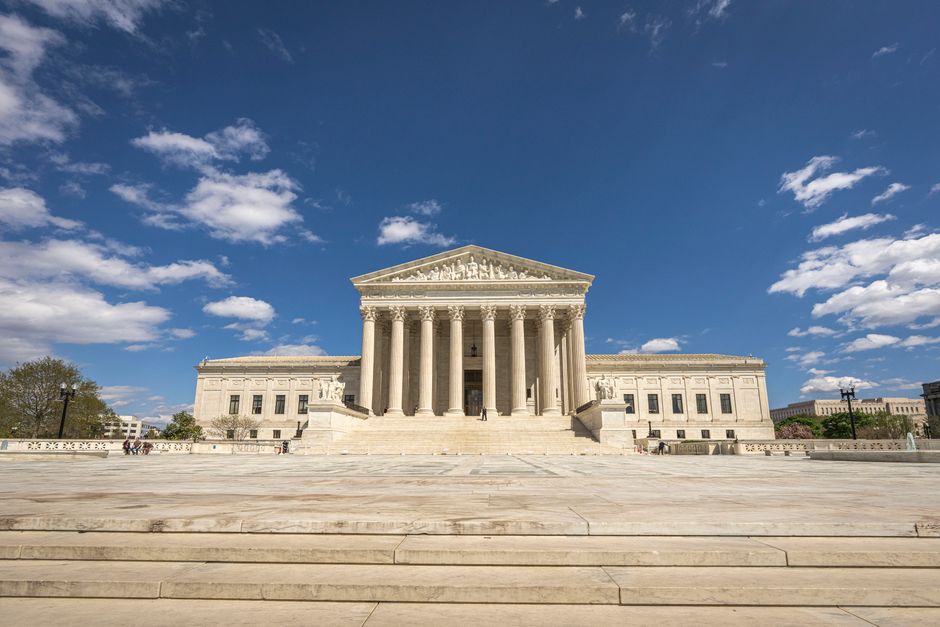
Trump Colorado Supreme Court: The Legal Battle and its Ramifications
The Colorado Supreme Court’s decision to disqualify Donald Trump from the state’s presidential primary ballot, citing his ineligibility under Section 3 of the Fourteenth Amendment, represents a pivotal moment in American constitutional law and the ongoing political landscape. This ruling, the first of its kind by a state supreme court against a major presidential candidate, has ignited intense legal debate, sparked widespread public discourse, and will undoubtedly have significant reverberations for the 2024 election cycle and beyond. The core of the Colorado Supreme Court’s decision hinges on an interpretation of the Disqualification Clause of the Fourteenth Amendment, which prohibits any person who has "heretofore taken an oath… as a member of Congress, or as an officer of the United States," and has subsequently "engaged in insurrection or rebellion against the same, or given aid or comfort to the enemies thereof," from holding any office, civil or military, under the United States.
The Colorado Supreme Court, in a 4-3 decision, found that Trump’s actions on and leading up to January 6, 2021, constituted engagement in an insurrection. The court’s majority opinion meticulously detailed a timeline of events, focusing on Trump’s rhetoric, his challenges to the 2020 election results, and his presence and statements at the rally on Capitol Hill. The justices examined evidence presented to them, including Trump’s own public statements and statements made by witnesses. The court’s legal reasoning focused on whether Trump qualified as an "officer of the United States" for the purposes of the Fourteenth Amendment. While Trump was not an elected official at the time of the events in question, the court concluded that the President of the United States falls under the definition of an "officer of the United States" as contemplated by the amendment. This interpretation is a crucial element of the ruling, as it broadens the scope of the Disqualification Clause beyond those explicitly listed as members of Congress or holding specific appointed offices. The court’s analysis then moved to the "insurrection" prong. The justices applied a legal standard to determine if Trump’s conduct met the definition of insurrection, concluding that his efforts to overturn the election and his role in the events of January 6th did indeed qualify. The court did not find it necessary for Trump to have been criminally convicted of insurrection, as the Fourteenth Amendment’s disqualification provision is a civil matter, not contingent on a criminal proceeding.
The dissenting justices offered strong counterarguments. Their primary objections centered on the procedural grounds and the interpretation of the Fourteenth Amendment. One key point of contention was whether Section 3 of the Fourteenth Amendment could be self-executing, meaning it could be applied without explicit legislation passed by Congress to define its enforcement. The majority ruled that it could, while the dissent argued that such a significant constitutional disqualification required legislative action. Furthermore, the dissent questioned the court’s interpretation of "officer of the United States" in this context and expressed skepticism about whether the events of January 6th legally constituted an "insurrection" as defined by the amendment, particularly in relation to Trump’s direct actions. The dissent also raised concerns about due process, arguing that Trump was not afforded a full and fair trial as would be expected in a matter of this gravity. This divergence in judicial interpretation highlights the complex legal questions at play and sets the stage for potential appeals.
The immediate fallout from the Colorado Supreme Court’s decision was profound. Donald Trump was formally removed from the state’s presidential primary ballot, effective immediately. This meant that any votes cast for him in the Colorado primary would be considered invalid. The Trump campaign immediately announced its intention to appeal the ruling to the U.S. Supreme Court. This appeal would place the ultimate decision on Trump’s eligibility in the hands of the nation’s highest court, which has the authority to review state supreme court decisions on matters of federal constitutional law. The U.S. Supreme Court’s willingness to take up the case, and its subsequent ruling, would set a national precedent and have far-reaching implications for the 2024 presidential election and the interpretation of the Fourteenth Amendment for generations to come. The speed at which the case progressed through the Colorado judicial system, culminating in a swift ruling by the state supreme court, underscored the urgency and high stakes associated with the challenge.
Beyond Colorado, the decision triggered a cascade of similar legal challenges in other states. Activist groups and individuals filed lawsuits in numerous states, seeking to disqualify Trump from their respective primary ballots on similar grounds, invoking Section 3 of the Fourteenth Amendment. These challenges, while varying in their legal arguments and the evidence presented, were all rooted in the precedent set by the Colorado ruling. The outcome of these challenges in other states would depend on their individual state laws, court interpretations, and the specific evidence presented. This widespread litigation indicated a coordinated effort to leverage the Fourteenth Amendment as a tool to prevent Trump from appearing on the ballot, reflecting a deep division within the electorate and the legal community regarding his eligibility.
The legal arguments presented in the Colorado case, and subsequently in similar cases across the country, revolve around several key constitutional and legal principles. Central to the debate is the interpretation of Section 3 of the Fourteenth Amendment. This provision, ratified in the aftermath of the Civil War, was intended to prevent former Confederate officials from returning to power. Its application to a modern-day presidential candidate, particularly one who has not been convicted of insurrection, presents novel legal territory. Lawyers for the plaintiffs in Colorado argued that Trump’s actions met the criteria for engaging in insurrection, while Trump’s legal team contended that he was not an "officer of the United States" in the sense intended by the amendment, that his actions did not constitute insurrection, and that Section 3 was not self-executing and required congressional action for its enforcement. The concept of "insurrection" itself became a point of intense legal scrutiny, with debates over its definition and whether it could be applied to political activities challenging election results.
The political ramifications of the Colorado Supreme Court’s decision were immediate and significant. Trump’s campaign seized upon the ruling as evidence of political persecution and weaponization of the justice system, a narrative that resonated with his base and amplified his claims of a "rigged" system. His supporters viewed the disqualification as an undemocratic attempt to disenfranchise voters and prevent him from running. Conversely, opponents of Trump saw the ruling as a necessary and legally sound measure to uphold democratic principles and constitutional integrity, arguing that a candidate who engaged in insurrection should not be permitted to hold public office. The decision injected an unprecedented level of legal uncertainty into the presidential race, with the potential for similar rulings in other states to create a fragmented and chaotic election landscape. The U.S. Supreme Court’s intervention was seen by many as essential to provide clarity and prevent widespread electoral disruption.
The U.S. Supreme Court’s decision on Trump’s eligibility was ultimately crucial. The justices agreed to hear the appeal, signaling the immense national importance of the case. Their ruling would not only determine Trump’s immediate ballot access but also set a powerful precedent for the future application of the Fourteenth Amendment’s Disqualification Clause. The Supreme Court’s decision to allow Trump back on the ballot in Colorado, and by extension in other states with similar challenges, came with a 6-3 vote, with the conservative majority joining three liberal justices. The majority opinion, authored by Chief Justice John Roberts, found that individual states did not have the authority to enforce Section 3 of the Fourteenth Amendment against federal candidates. Instead, the Court stated that such enforcement would require action by Congress. This decision effectively reversed the Colorado Supreme Court’s ruling and allowed Trump to remain on the ballot in Colorado and any other state that might have attempted to remove him based on Section 3. The Court’s reasoning focused on the idea that enforcing Section 3 against a federal candidate was a power reserved for Congress. The dissenting justices, while agreeing that states might not have the power to enforce Section 3 against federal candidates, argued that the majority was too broad in its ruling and that states should have some ability to address such issues.
The implications of the U.S. Supreme Court’s ruling are multifaceted. For the 2024 election, it removed a significant legal obstacle for Donald Trump, allowing him to compete in all states. Politically, it was a victory for Trump and his campaign, allowing them to focus on campaigning rather than protracted legal battles over ballot access. Legally, the decision significantly narrowed the application of Section 3 of the Fourteenth Amendment, making it much more difficult for states to disqualify federal candidates based on its provisions without explicit congressional action. This outcome means that future attempts to use Section 3 to bar candidates would likely require Congress to pass specific legislation outlining the process and standards for disqualification. The ruling also raised questions about the extent to which the Fourteenth Amendment can be used to address political misconduct without clear legislative guidance. The U.S. Supreme Court’s decision ultimately prioritized a uniform national standard for ballot access over state-by-state interpretations of a Civil War-era constitutional provision. This outcome solidified the path for Trump’s participation in the 2024 presidential election, while leaving a complex legacy of legal interpretation for the Fourteenth Amendment. The events surrounding the Colorado Supreme Court’s decision and its subsequent reversal by the U.S. Supreme Court will be a significant chapter in American constitutional and electoral history, highlighting the ongoing tension between constitutional principles, political realities, and the enduring challenges of defining the boundaries of eligibility for public office. The debates and legal challenges spurred by this case underscore the dynamic nature of constitutional interpretation and its profound impact on the functioning of American democracy.
