Petanque, a sport originating from France, may appear deceptively casual at first glance, requiring only the act of throwing a metal ball onto a sand or gravel court. However, beneath this seemingly simple technique lies a game that demands meticulous strategy, pinpoint accuracy, and unwavering composure. To excel in Petanque, players must thoroughly understand its established rules and fundamental techniques, a discipline governed by the Fédération Internationale de Pétanque et Jeu Provençal (FIPJP). This article delves into the intricacies of how to play Petanque and its official regulations, offering a comprehensive guide to this captivating sport.
Understanding the Essence of Petanque
At its core, Petanque is a sport where players aim to throw a metal boule, or ball, as close as possible to a smaller target ball known as a jack, or cochonnet. The beauty of Petanque lies in its adaptability; it can be played on a variety of surfaces, from soft sand and loose gravel to hard-packed earth. The very name "Petanque" is derived from the French expression "pieds tanqués," which translates to "feet planted." This etymology directly references the fundamental rule dictating that a player’s feet must remain firmly within a designated throwing circle and cannot move outside it until the thrown ball has touched the ground. This foundational rule emphasizes the importance of stability and control in every throw, setting the stage for a game that is as much a mental challenge as a physical one.
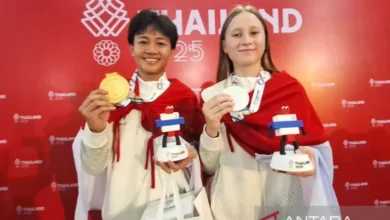
The sport’s global appeal has seen it gain traction in various international competitions, including national championships and even continental games. For instance, recent reports indicate the ongoing prowess of national teams, with specific mentions of teams advancing to finals in international tournaments, highlighting the competitive landscape of Petanque. Furthermore, domestic events like the PON (National Sports Week) have showcased the growing popularity and competitive spirit of Petanque within certain regions, with Aceh emerging as a dominant force in past editions, underscoring the sport’s regional significance and the dedication of its athletes. The sport’s accessibility, requiring minimal specialized equipment and adaptable playing fields, contributes to its widespread adoption and the cultivation of local talent.
The Official Framework: Rules Governing Petanque
The Fédération Internationale de Pétanque et Jeu Provençal (FIPJP) meticulously outlines the rules that govern the sport, ensuring fair play and a consistent competitive environment. These regulations cover every aspect of the game, from equipment specifications to scoring and player conduct.
Ball Specifications and the Jack
Petanque is played with hollow metal boules, each possessing a diameter ranging from 7.05 cm to 8 cm and weighing between 650 grams and 800 grams. These dimensions are crucial for players to grip and throw effectively. The target, the jack or cochonnet, is a smaller sphere, typically made of wood or a synthetic material, measuring 30 mm in diameter and weighing between 10 and 18 grams. A distinctive feature of the jack is that it must not be attracted to a magnet, differentiating it from the metal boules and ensuring it remains a distinct target.
The Playing Arena
A standard Petanque court, often referred to as a "terrain," must measure a minimum of 12 meters by 3 meters. The boundaries of the court can be clearly demarcated using ropes or stakes. Any boule or jack that travels outside these defined limits is considered "dead" and is no longer in play for that round, emphasizing the importance of precise ball placement within the designated area. The FIPJP specifies that these terrains can vary in surface but must adhere to size regulations to ensure fair competition.
Team Formations
Petanque can be played in various team formats, catering to different player preferences and event structures. The common configurations include:
- Singles (Tête-à-tête): One player against another, with each player using three boules.
- Doubles (Doublette): Two players per team, with each player using three boules.
- Triples (Triplette): Three players per team, with each player using two boules.
The Triples format is often considered the most strategic and is frequently featured in major international competitions, requiring intricate coordination and diverse skill sets among teammates.
Determining Victory
A Petanque match is divided into several "ends" or rounds. Points are awarded at the conclusion of each end to the team that has demonstrated superiority in that round. The ultimate victory in a match is achieved by the team that first accumulates a cumulative score of 13 points. This scoring system rewards consistent performance throughout the game, encouraging teams to maintain focus and strategic execution from start to finish.
The Throwing Circle
The designated throwing zone is a circle with a diameter of 35 to 50 cm. If a pre-fabricated, ready-to-use circle is employed, its diameter must be 50 cm. Crucially, this circle must be positioned at least 1 meter away from any obstacle, ensuring an unobstructed throwing arc for each player. This spatial requirement is vital for maintaining the integrity of the throw and preventing any external interference.
Player Stance and Foot Position
The rule regarding foot position is central to the spirit of Petanque. When releasing the boule, both of a player’s feet must remain entirely within the throwing circle. Furthermore, neither foot is permitted to be lifted or to leave the circle until the thrown boule has made contact with the ground. This strict adherence to the "pieds tanqués" principle emphasizes balance, stability, and a controlled release, contributing to the sport’s unique technical demands.
Initiating the Game: The Jack Toss
The team that wins the initial coin toss has the privilege of throwing the jack to start the game. However, if this initial throw of the jack is deemed invalid according to FIPJP regulations, the right to throw passes to the opposing team. A jack is considered valid if it meets specific criteria:
- It must be thrown at least 6 meters and at most 10 meters from the throwing circle.
- It must land at least 1 meter from any obstacle on the court.
- It must be visible from the throwing circle.
These conditions ensure that the jack is placed in a challenging yet fair position, setting the stage for strategic play.
The Art of Boule Throwing
Once the jack has been validly placed, the first team throws its boule. The boule that lands closest to the jack after this initial throw is considered the point-holder. The opposing team then takes its turn to throw. The fundamental rule of play dictates that the team whose boule is currently furthest from the jack must continue to throw. They persist with their throws until they successfully position a boule closer to the jack than any of the opponent’s boules, or until they exhaust their supply of boules. This strategic imperative continues until all players have thrown their boules. At the end of each end, the team with the boule closest to the jack is declared the winner of that end and earns points accordingly.
Calculating the Points
The scoring in Petanque is precise and based on proximity. Points are awarded based on the number of a winning team’s boules that are closer to the jack than the closest boule of the opposing team. Sophisticated measuring tools are often employed to ensure accuracy, and the opposing team always has the right to scrutinize and verify the measurements. This meticulous approach to scoring underscores the game’s emphasis on precision.
Subsequent Ends
Each new end begins from the final resting position of the jack from the previous end. The team that emerged victorious in the preceding end is granted the right to throw the jack to commence the new end. This continuity ensures a dynamic and evolving game, where the positioning of the jack can significantly influence subsequent strategies.
Mastering the Game: A Practical Guide to Playing Petanque
Beyond understanding the rules, mastering Petanque involves developing specific skills and employing effective strategies.
Pre-Game Preparation
Before a match officially begins, players engage in crucial preparation:
- Familiarize with the Terrain: Understanding the nuances of the playing surface—its texture, slope, and any potential irregularities—is vital for adjusting throwing techniques.
- Equipment Check: Ensuring that boules are clean and the jack is in good condition contributes to smooth gameplay.
- Team Strategy Discussion: Especially in doubles and triples, teams will discuss their initial approach, player roles, and preferred throwing styles.
Commencing the Match
The initial stages of a Petanque match involve:
- The Coin Toss: As mentioned, this determines who throws the jack first.
- Establishing the Throwing Circle: A suitable circle is marked or a pre-made one is placed on the court, adhering to FIPJP regulations.
- Throwing the Jack: The first team throws the jack, aiming for a strategic position that offers an advantage.
Strategic Throwing and Counter-Throws
The core of Petanque gameplay revolves around a dynamic exchange of throws:
- Pointing (Tirer ou Pointer): This involves throwing a boule with the intention of getting it as close as possible to the jack. Players develop different techniques for pointing, including a gentle lob or a more direct rolling throw, depending on the terrain and distance.
- Shooting (Tirer): This is an offensive maneuver where a player attempts to knock an opponent’s boule out of play or dislodge the jack. Successful shooting can dramatically shift the balance of an end.
- Strategic Substitution of Throws: Within a team, players who have not yet thrown can strategically replace a teammate if the initial throws are not yielding the desired results or are not securing the point. This substitution continues until the boules are exhausted or a decisive point is secured. This dynamic allows for tactical adjustments mid-end, emphasizing the importance of team communication and adaptability.
Winning an End
An end is won by the team that, after all boules have been thrown, has at least one boule closer to the jack than any of the opponent’s boules. The number of points awarded is equal to the number of their boules that are closer to the jack than the opponent’s best boule. This detailed scoring system rewards superior positioning and strategic play.
The Broader Implications and Appeal of Petanque
Petanque is more than just a game; it’s a cultural phenomenon deeply rooted in French tradition, embodying a spirit of camaraderie and friendly competition. Its accessibility, requiring relatively inexpensive equipment and the ability to be played in diverse settings, makes it a popular pastime for people of all ages and fitness levels. The sport’s emphasis on strategy, precision, and mental fortitude, rather than sheer physical strength, makes it an inclusive activity.
The FIPJP’s continued efforts to standardize rules and promote the sport globally have contributed to its growing international recognition. As demonstrated by national sporting events incorporating Petanque and international teams vying for supremacy, the sport is carving out a significant niche in the global sporting landscape. The increasing number of amateur leagues and organized tournaments worldwide suggests a bright future for Petanque, as more individuals discover the subtle complexities and engaging challenges of this classic French game. The sport’s inherent simplicity in its basic mechanics, coupled with its deep strategic possibilities, ensures its enduring appeal and continued growth for years to come.
Related posts: