Iran’s Currency Under Global Scrutiny Amidst Geopolitical Tensions and Economic Policy Shifts

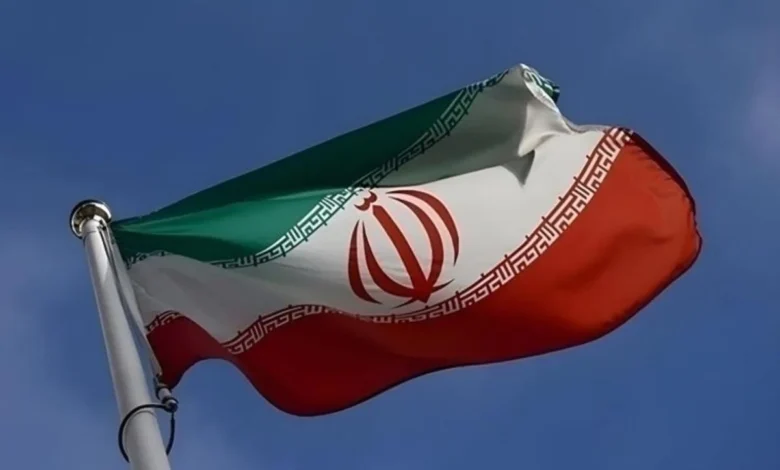
The Iranian currency has recently found itself at the center of global attention, a consequence of escalating geopolitical tensions and shifting global economic policies. The United States, under President Donald Trump’s administration, has implemented stringent measures, including imposing tariffs of up to 25 percent on nations maintaining business ties with Iran. This assertive stance has reverberated through the international economic landscape, prompting a range of reactions and significantly impacting Iran’s economic condition, most notably its national currency, the rial.
Recent reports indicate that the Iranian rial has reached historic lows when converted into the euro, a stark reflection of the immense pressure on Iran’s economy. This decline is largely attributed to a protracted period of sanctions and persistent inflation, creating a challenging environment for the nation’s financial stability. However, a peculiar dichotomy emerges when one observes daily transactions within Iran. Despite the rial’s official status and its prominent role in financial documentation, the term "rial" is rarely uttered in bustling traditional markets or modern shopping centers. Instead, locals predominantly use the term "toman" when discussing prices for goods and services.
This linguistic shift is not arbitrary; it is a direct response to the country’s exceptionally high inflation rate. To simplify price discussions and circumvent the cumbersome task of using excessively large numbers, the Iranian population has adopted an alternative counting system based on the toman. This practice, while informal, has become deeply ingrained in everyday economic life, creating a unique situation for both domestic consumers and international observers.
Understanding the nuances of Iran’s currency system requires a deeper dive into the official currency, the rial, and the informal yet ubiquitous toman, exploring the fundamental differences that often confuse tourists and international economic analysts alike. This comprehensive review aims to elucidate the intricacies of Iran’s monetary landscape, drawing from various credible sources.
The Official Status of the Iranian Rial
Legally and administratively, the Iranian rial (IRR) is unequivocally designated as the nation’s official currency. All official banking transactions, government documentation, and price listings in modern commercial establishments are conducted and denominated in rials. The international standard code for the rial is IRR. This official recognition underscores its fundamental role in the country’s formal financial architecture.
Rial vs. Toman: Decoding the Iranian Currency Conundrum
Despite the rial’s official standing, its practical application in daily transactions is remarkably scarce. Iranians almost universally eschew the term "rial" in their everyday commerce, preferring the more manageable "toman." This preference spans from the vibrant chaos of traditional bazaars to the more ordered environment of smaller retail shops.
The widespread adoption of the toman stems from its significantly simpler numerical representation. One toman is equivalent to 10,000 Iranian rials. In essence, the toman is the rial with four zeros removed. This simplification is a direct consequence of runaway inflation, which had rendered prices in rials astronomically high, making them unwieldy for everyday use. The toman system provides a practical workaround, enabling smoother and more intuitive price negotiations and transactions without the need for lengthy numerical strings.
While the rial remains the legally recognized tender, evidenced by its presence on banknotes and in all official financial records, the persistent pressure of inflation has driven the populace towards this pragmatic simplification. The fundamental relationship is straightforward: one toman represents ten units of the "old" rial, a colloquialism often used to distinguish the current inflated rial from a hypothetical, more stable past.
For instance, if a merchant quotes a price of 60,000 tomans, the actual amount to be paid in rials is 600,000. This significant discrepancy in quotation methods is a common source of confusion for foreign visitors upon their initial arrival in Iran. The distinction between the official unit and the commonly used unit presents a unique challenge for understanding the true value of transactions.
Towards a Unified Currency: Iran’s Redenomination Plan
To address this long-standing confusion and to streamline the national financial system, the Iranian government, through the Central Bank of Iran (CBI), initiated a currency redenominasi policy. This process, aimed at simplifying the monetary system and enhancing its stability, began its rollout in 2020 and is slated for broader and more systematic implementation between 2025 and 2026.
Under this ambitious policy, Iran is officially transitioning its primary currency unit from the rial to a new version of the toman, effectively removing four zeros from the existing rial. This scheme revalues the currency such that 10,000 old rials will be equivalent to 1 new toman. The new toman is further subdivided into 100 smaller units called "qiran." This move is intended to bring Iran’s currency into a more manageable and internationally comparable denomination.
During this transitional phase, existing rial banknotes continue to be valid and circulate alongside the new currency. However, newly issued banknotes are designed with smaller nominal values and often feature a faint representation of the removed zeros, serving as a visual cue to the ongoing system change and facilitating a gradual adjustment for the public. This phased approach aims to minimize disruption and allow for widespread public adoption of the new system.
Underlying Factors Contributing to the Weakening of the Iranian Currency
The persistent weakness of the Iranian rial is not an isolated phenomenon; it is deeply intertwined with a complex web of domestic and international factors. The imposition of severe economic sanctions by the United States, particularly following the latter’s withdrawal from the Joint Comprehensive Plan of Action (JCPOA) in 2018, has had a devastating impact on Iran’s economy. These sanctions have severely curtailed Iran’s ability to export oil, its primary source of foreign revenue, and have restricted its access to international financial markets.
The withdrawal of the U.S. from the JCPOA was a significant turning point. Prior to this, international sanctions had been eased, leading to a period of economic recovery and a strengthening of the rial. However, the reimposition of stringent sanctions, coupled with secondary sanctions targeting countries and entities doing business with Iran, has choked off vital trade and investment. This has led to a sharp decline in foreign currency reserves and a significant depreciation of the rial.
Beyond external pressures, Iran faces considerable internal economic challenges. High inflation, a chronic issue for the country, has been exacerbated by the sanctions. The government’s reliance on printing money to finance its budget deficit has further fueled inflationary pressures. Structural inefficiencies within the Iranian economy, including a significant reliance on state-owned enterprises and a lack of diversification, also contribute to its vulnerability.
The geopolitical instability in the wider Middle East region also plays a role. Tensions with neighboring countries and the broader international community create an atmosphere of uncertainty, deterring foreign investment and impacting trade flows. This perception of risk further weakens the rial and makes it more susceptible to speculative attacks.
The interplay of these factors – stringent international sanctions, domestic economic mismanagement, high inflation, and regional geopolitical risks – has created a perfect storm for the Iranian currency. The economic consequences are profound, affecting the purchasing power of ordinary citizens, increasing the cost of imported goods, and hindering the country’s overall economic development.
The impact of the U.S. tariffs, as mentioned in the initial report, adds another layer of complexity. By penalizing countries that continue to trade with Iran, the U.S. aims to isolate Iran further and pressure it to alter its behavior. However, this policy also has broader implications for global trade and can disrupt established supply chains, potentially leading to unintended consequences for other nations. The statement from the Iranian Foreign Ministry, warning of the repercussions of these U.S. tariffs on global trade, underscores the far-reaching effects of such economic policies.
The reactions from other Gulf Arab states, urging the U.S. not to attack Iran, highlight the delicate geopolitical balance. Any further escalation of tensions could have severe repercussions for regional stability and the global economy, further impacting currency markets and investor confidence.
The Broader Economic Implications of Currency Weakness
The sustained depreciation of the Iranian rial has far-reaching economic consequences, both domestically and internationally. For the Iranian population, the most immediate impact is the erosion of purchasing power. As the rial weakens, imported goods become significantly more expensive, leading to increased prices for everything from food and medicine to consumer electronics. This disproportionately affects lower-income households, exacerbating social inequalities.
Inflation, already a significant problem, is further fueled by a weaker currency. The cost of raw materials and intermediate goods imported by Iranian businesses rises, which is then passed on to consumers in the form of higher prices. This creates a vicious cycle of inflation and currency depreciation, making it difficult for businesses to plan and invest.
For the Iranian government, a weaker currency complicates fiscal management. The cost of servicing foreign debt increases, and the government’s ability to fund essential public services can be compromised. While a weaker currency can theoretically make exports cheaper and more competitive, this benefit is often negated by the overall economic instability, lack of investment, and the difficulty in accessing international markets due to sanctions.
Internationally, the volatility of the Iranian rial contributes to global financial uncertainty. For countries that maintain trade relations with Iran, the fluctuating exchange rate poses significant risks and complexities in financial planning and transactions. The efforts by countries like Indonesia to monitor the situation and assess the need for potential evacuations of their citizens underscore the perceived risks associated with the current climate.
The redenominasi plan, while a necessary step to simplify the currency, does not address the fundamental issues driving the rial’s weakness. Until the underlying causes – sanctions, inflation, and structural economic problems – are effectively addressed, the long-term stability of the Iranian currency remains precarious. The success of the redenominasi will ultimately depend on the broader economic reforms and the easing of geopolitical tensions that have plagued the nation for years. The timeline for this economic recovery remains uncertain, contingent on complex political and economic developments both within Iran and on the global stage. The world continues to watch as Iran navigates these challenging economic waters, with its currency serving as a critical barometer of its fortunes.