Southeast Asian Games (SEA Games) 2025: Thailand Hosts the 33rd Edition Amidst Evolving Regional Sports Landscape

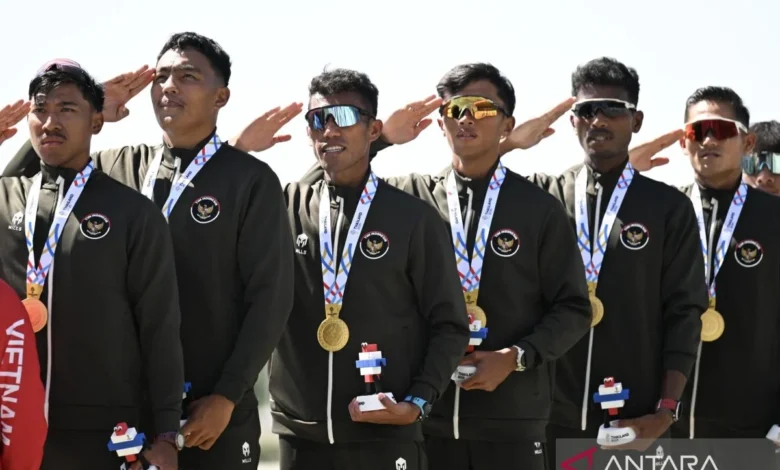
The 33rd Southeast Asian Games (SEA Games) are set to commence from December 9th to December 20th, with Thailand assuming the prestigious role of host nation. This quadrennial multi-sport event, a cornerstone of regional athletic competition, brings together athletes from across ASEAN member states, fostering camaraderie, national pride, and the pursuit of sporting excellence. Under the auspices of the Southeast Asian Games Federation (SEAGF) and with the oversight of the International Olympic Committee (IOC) and the Olympic Council of Asia (OCA), the SEA Games represent a significant platform for the development and promotion of sports within the Southeast Asian region.
The upcoming edition in Thailand will feature a robust program of 50 sports, showcasing a diverse range of athletic disciplines. The Games will be spread across three key locations: the bustling capital of Bangkok, the coastal province of Chonburi, and the southern province of Songkhla, a strategic decision aimed at maximizing logistical efficiency and distributing the economic and cultural impact of the event across different regions of the host country.
A Rich History: From SEAP Games to SEA Games
The genesis of the SEA Games can be traced back to the mid-20th century, a period marked by burgeoning national identities and a desire for closer regional cooperation in Southeast Asia. The concept of a regional sporting event was first articulated by Laung Sukhumnaipradit, then Vice President of the Thailand Olympic Committee, in 1957. His vision was rooted in the belief that sports could serve as a powerful conduit for strengthening fraternal bonds among nations in Southeast Asia. Furthermore, Sukhumnaipradit aspired to create a regional sporting spectacle that mirrored the standards and organizational prowess of established international events like the Asian Games and the Olympic Games, thereby elevating the level of athletic development across the ASEAN bloc.
This pioneering idea was subsequently shared with Dave Kitcher, the then-coach of the Thailand Athletics Association. Kitcher, recognizing the merit of Sukhumnaipradit’s proposal, took the initiative to further develop and discuss the concept. In February 1958, he engaged in discussions with representatives from Cambodia and Vietnam, who readily offered their support for the ambitious undertaking. This collaborative spirit culminated in a pivotal meeting of the Thailand Olympic Committee on February 22, 1958. Representatives from Thailand, Cambodia, Vietnam, Myanmar, Laos, and Malaysia convened, laying the groundwork for what would become a defining moment in regional sports history.
During this landmark meeting, a consensus was reached to officially launch the Southeast Asian Peninsular Games (SEAP Games) in Bangkok, Thailand, in December 1958. The participating nations also agreed to a biennial schedule for the event and established the SEAP Games Federation Committee, marking the formal institutionalization of the regional games. Thailand, Vietnam, Malaysia, Cambodia, Myanmar, and Laos were thus recognized as the founding nations of the SEAP Games.
The inaugural SEAP Games were held in Bangkok from December 12th to 17th, 1959. While initially intended to include Cambodia, the nation’s participation was unfortunately not realized in this first edition. Singapore, however, stepped in to fill the void and officially joined the SEAP Games membership in the same year, marking its entry into the regional sporting fraternity.
The evolution of the SEAP Games continued through the 1970s. At the 8th SEAP Games in 1975, the Federation Committee made a significant decision to expand its membership by inviting Indonesia, Brunei Darussalam, and the Philippines. These nations officially joined the organization in 1977. This expansion necessitated a renaming of the governing body and the event itself. In 1977, the SEAP Games Federation was officially rebranded as the Southeast Asian Games Federation (SEAGF), and consequently, the SEAP Games were renamed the SEA Games, the moniker that has endured to this day. The most recent expansion saw Timor-Leste join the SEA Games in 2003, bringing the total number of participating nations to eleven, a testament to the enduring appeal and inclusivity of the event.
The Unique Allure of the SEA Games: Local Flavors and Cultural Exchange
One of the defining characteristics that sets the SEA Games apart from other major international sporting events, such as the Olympics, is the flexibility afforded to host nations in selecting their sports programs. This policy allows host countries to incorporate traditional sports and disciplines that hold significant cultural importance within their borders. This unique feature serves a dual purpose: it not only provides a platform for local athletes to showcase their talents in familiar disciplines but also offers a valuable opportunity for the host nation to promote its cultural heritage and unique identity to a regional and international audience.
This adaptive approach has led to the inclusion of a fascinating array of sports throughout the history of the SEA Games. For instance, in 2003, Vietnam introduced cyclo racing and pencak silat, showcasing aspects of their local transport and martial arts traditions. The Philippines, hosting in 2019, featured obstacle course racing, a testament to their adventurous spirit. More recently, at the 2023 SEA Games, Cambodia proudly presented Bokator, a traditional Khmer martial art, highlighting its rich cultural legacy. These inclusions enrich the competitive landscape and offer spectators a glimpse into the diverse cultural tapestry of Southeast Asia.
Economic and Social Implications of Hosting the SEA Games
Hosting the SEA Games is a significant undertaking that carries substantial economic and social implications for the host nation. Beyond the immediate logistical and infrastructural demands, the event acts as a catalyst for urban development and tourism. Investments are typically channeled into upgrading sporting venues, improving transportation networks, and enhancing accommodation facilities, leaving a lasting legacy for the host city and country.
The influx of athletes, officials, media personnel, and spectators generates considerable economic activity. This includes revenue from tourism, hospitality, retail, and local services. Furthermore, the Games can provide a significant boost to the sports industry, encouraging greater investment in athlete development, sports science, and grassroots programs.
Socially, the SEA Games foster a sense of national pride and unity. The collective effort involved in hosting and participating in such a large-scale event can bring communities together. It also provides a valuable platform for cultural exchange, allowing participants and visitors to experience the unique customs, traditions, and hospitality of the host nation. For young athletes, the opportunity to compete on a regional stage is an invaluable experience, fostering sportsmanship, resilience, and a spirit of international friendship.
Looking Ahead: SEA Games 2025 in Thailand
As Thailand prepares to host the 33rd SEA Games, the nation is poised to once again demonstrate its capacity for organizing world-class sporting events. The selection of Bangkok, Chonburi, and Songkhla as host venues suggests a well-thought-out strategy to leverage existing infrastructure while also potentially stimulating development in different regions. The commitment to staging 50 sports indicates a comprehensive program designed to appeal to a wide range of athletic interests and to highlight the diverse sporting capabilities within Southeast Asia.
The success of the SEA Games is not solely measured by the medals won but also by its ability to transcend sport and contribute to regional understanding and cooperation. The 2025 edition in Thailand holds the promise of being another significant chapter in the ongoing narrative of Southeast Asian athletic achievement and camaraderie. The event will undoubtedly draw considerable attention from regional media, sports enthusiasts, and policymakers, providing valuable insights into the current state and future trajectory of sports development in one of the world’s most dynamic regions.
The preparations for the SEA Games 2025 are likely to be met with keen interest from neighboring countries, with national Olympic committees already strategizing for optimal performance. The performance of athletes, the efficiency of the organization, and the overall impact of the Games will be closely scrutinized, serving as benchmarks for future hosting bids and regional sports initiatives. The SEA Games continue to be a vital platform for showcasing the sporting prowess and the spirit of unity that defines Southeast Asia.
Related posts: