Meaning of "We Hug Now" by Sydney Rose: A Deep Dive into Platonic Grief, Viral Success, and its Cultural Resonance


The poignant track "We Hug Now" by Sydney Rose has emerged as a significant cultural touchstone, resonating deeply with a generation grappling with the complexities of modern relationships and the often-unacknowledged pain of platonic loss. Published on May 24, 2026, this analysis explores the profound lyrical narrative, the intricate musicality, and the far-reaching impact of a song that has captivated millions, transcending digital platforms to articulate a universal human experience. At its core, "We Hug Now" is a raw, introspective account of the profound sorrow that accompanies the dissolution of a cherished teenage friendship, a sentiment that has propelled it to viral fame on TikTok and amassed over 100 million streams globally.
The Genesis of a Contemporary Anthem of Loss
Sydney Rose’s journey to creating "We Hug Now" is rooted in a deeply personal moment of vulnerability that many in the digital age can relate to. The song, which would eventually become a phenomenon, was born from an intimate, solitary experience. As reported by Genius, Rose herself explained that the impetus for the track was the raw pain of losing a close friend. The emotional catalyst struck one evening in her bedroom as she scrolled through social media. According to Songfacts, it was an Instagram post from her former friend, depicting a seemingly joyful life with new companions, that ignited the creative spark for the song’s most emotionally charged section, the bridge. This seemingly innocuous digital encounter triggered a cascade of reflections on a bond that had irrevocably changed.
Released on February 13, 2025, "We Hug Now" quickly distinguished itself as the lead single from her subsequent mini-album, I Know What I Want, which followed in April of the same year. Its timing, coinciding with an era where digital connections often feel simultaneously pervasive and superficial, allowed it to tap into a collective emotional undercurrent. The song’s immediate resonance with Generation Z, a demographic frequently navigating ambiguous platonic partings without clear closure, was undeniable. This organic connection propelled "We Hug Now" onto significant music charts, including a notable entry into Billboard’s Top 20 Emerging Artists Chart, a testament to its burgeoning influence and the growing recognition of Rose as a significant new voice in music. The track’s ability to articulate a specific, yet widely felt, form of loneliness in an interconnected world cemented its status as more than just a song; it became a shared narrative for countless listeners.
Anatomy of Heartbreak: A Lyrical Dissection
The lyrical prowess of "We Hug Now" lies in its confessional, diary-like intimacy, drawing listeners into Sydney Rose’s personal landscape of grief. The song is structured as a direct address, almost a whispered secret shared between the artist and her audience, making the experience intensely personal.
Verse 1: The Contrast of Lost Innocence
The opening lines immediately establish a stark visual and emotional contrast:
"You don’t see stars here, they’re just city lights / I think back to where you live and how you can see the entire sky"
This imagery functions as a powerful metaphor. The "stars" symbolize the purity, clarity, and boundless nature of their past friendship, untainted by the complexities of adolescence and separation. Conversely, "city lights" represent the current, artificial, and perhaps overwhelming reality of her present, where genuine connection feels obscured. Rose yearns for the unadulterated essence of their former bond, reflecting a common sentiment of romanticizing a simpler past.
Verse 2: The Awkward Embrace of Estrangement
The narrative progresses to a moment of unexpected re-encounter:
"We will get coffee in Canton and you’ll nervously laugh / When we hug, ’cause we don’t hug, we never used to do that"
This section captures an excruciatingly awkward reunion, likely in a neutral public space like a coffee shop in Canton. The act of "hugging" here is a brilliant paradox. What should be a warm gesture of intimacy instead highlights the immense emotional distance that has grown between them. The nervous laughter and the acknowledgment that "we never used to do that" underscore the forced formality and the uncomfortable chasm that now exists, creating a poignant sense of irony for the listener.
Chorus: The Sanctuary of Nostalgia
The chorus reveals the artist’s desperate longing for the past:
"Sometimes I go to sleep / And I’m still seventeen / You still live down my street / You’re not mad at me"
This is the emotional core of the song, a fragile sanctuary built on nostalgia. Sleep becomes an escape, transporting Rose back to an idealized age of seventeen, a period often associated with pure, uncomplicated friendships. In this dreamscape, her friend remains geographically and emotionally close, and crucially, "not mad at me," implying an unspoken conflict or misunderstanding that led to their separation. It’s a yearning for an unblemished past, free from the burdens of present conflict.
Bridge: The Imbalance of Loss
The bridge delivers the song’s most emotionally devastating lines:
"You’re just thinkin’ it’s a small thing that happened / The world ended when it happened to me"
This is a stark articulation of the profound emotional disparity between the two individuals. For the former friend, the parting might be a minor, forgotten chapter; for Rose, it was nothing short of an apocalyptic event. This hyperbole is not an exaggeration but a psychologically valid expression of intense grief, validating the listener’s own feelings of immense loss over a friendship that others might deem insignificant. It powerfully communicates the subjective nature of emotional pain.
Outro: The Bitterness of Being Left Behind
The song concludes with a raw confession of lingering pain and perceived inadequacy:
"I have a feeling you got everything you wanted / And you’re not wastin’ time stuck here like me"
The outro speaks to the common post-breakup sentiment of feeling left behind, watching the other person seemingly thrive and move on effortlessly. Rose vocalizes a painful sense of inferiority and stagnation, a bitter cocktail of envy and longing. This honest admission underscores the psychological toll of witnessing a loved one’s happiness from a distance, particularly when one feels trapped in the past.
Poetic Devices and Their Emotional Resonance
The strength of "We Hug Now" lies not only in its narrative but also in Sydney Rose’s adept use of literary devices. The metaphor of stars versus city lights effectively conveys a sense of lost purity and innocence. The paradox inherent in "We hug now, ’cause we don’t hug" brilliantly highlights the performative nature of their current interaction, underscoring the emotional chasm. Finally, the hyperbole in "The world ended when it happened to me" serves as a powerful validation of profound, often solitary, grief, allowing listeners to connect deeply with the artist’s intense emotional landscape.
The Psychological Echo Chamber: Resonating with a Generation
The phenomenal success of "We Hug Now" can be attributed to its profound psychological resonance with listeners, particularly among younger demographics. The song functions as a powerful coping mechanism for what psychologists term "ambiguous loss," a form of grief where there is no clear closure, often because the person is physically present but psychologically or emotionally absent. Platonic grief, the sorrow derived from the loss of a friendship, frequently lacks the social validation afforded to romantic breakups or familial deaths. "We Hug Now" provides this much-needed validation, creating a communal space for shared emotional processing.
The lyrical narrative triggers a potent release of "serotonin nostalgia," a bittersweet emotional state where past memories are romanticized as a refuge from a less fulfilling present. This selective recall allows listeners to project their own experiences onto Rose’s story, finding solace in her articulated pain. The song speaks to the latent trauma of feeling inadequate or unworthy of another’s continued affection, a pervasive fear amplified in an era of curated online personas.

The discourse surrounding "We Hug Now" on social media platforms, especially TikTok, offers compelling evidence of its collective impact. Hundreds of thousands of user-generated videos, often featuring personal anecdotes of friendships fading away, underscore the widespread nature of this particular form of heartache. This phenomenon confirms that the "patah hati persahabatan" (friendship heartbreak) is a tangible and collective suffering, and the song serves as an anthem for those navigating this often-silent form of grief. Luminate data, a prominent analytics firm, has indeed confirmed a drastic surge in official play counts directly attributable to TikTok trends, pushing the song’s global streams past the hundred-million mark and solidifying its place in the contemporary musical landscape.
Behind the Melodies: Musical and Production Craftsmanship
Beyond its compelling lyrics, "We Hug Now" is a masterclass in minimalist musical arrangement, fitting squarely into the indie pop ballad genre. Its intimate soundscape is meticulously crafted to amplify the song’s melancholic narrative. Universal Music Canada reported that the accompanying music video was carefully directed by David O’Donohue, but the core musical arrangement was brilliantly handled by producer Matt Martin. Martin’s production style emphasizes subtlety and emotional depth, allowing Rose’s raw vulnerability to shine through.
The musical mood perfectly aligns with the somber lyrical themes. Clash Magazine highlighted Rose’s journey, noting that she had previously been dropped by a record label. This experience, rather than hindering her, granted her a newfound artistic independence, enabling her to explore a more authentic and minimalist acoustic sound. This creative freedom is palpable in "We Hug Now," where the instrumentation is deliberately sparse, focusing on the emotive power of each note.
Key instruments include the gentle tinkling of a piano and the resonant strumming of an acoustic guitar, creating a delicate, almost fragile, sonic backdrop. The Knockturnal noted that the recording of her EP, including this track, took place in the serene Catskills region, an environment that likely contributed to the introspective and intimate quality of the music. Rose’s vocal delivery is equally crucial; she employs a soft, almost whispered head voice technique, which imbues her performance with an ethereal fragility, drawing listeners even deeper into her emotional confession. This restrained vocal style creates a sense of profound vulnerability, making the listener feel as though they are privy to her innermost thoughts and feelings.
Visual Storytelling: The "We Hug Now" Music Video
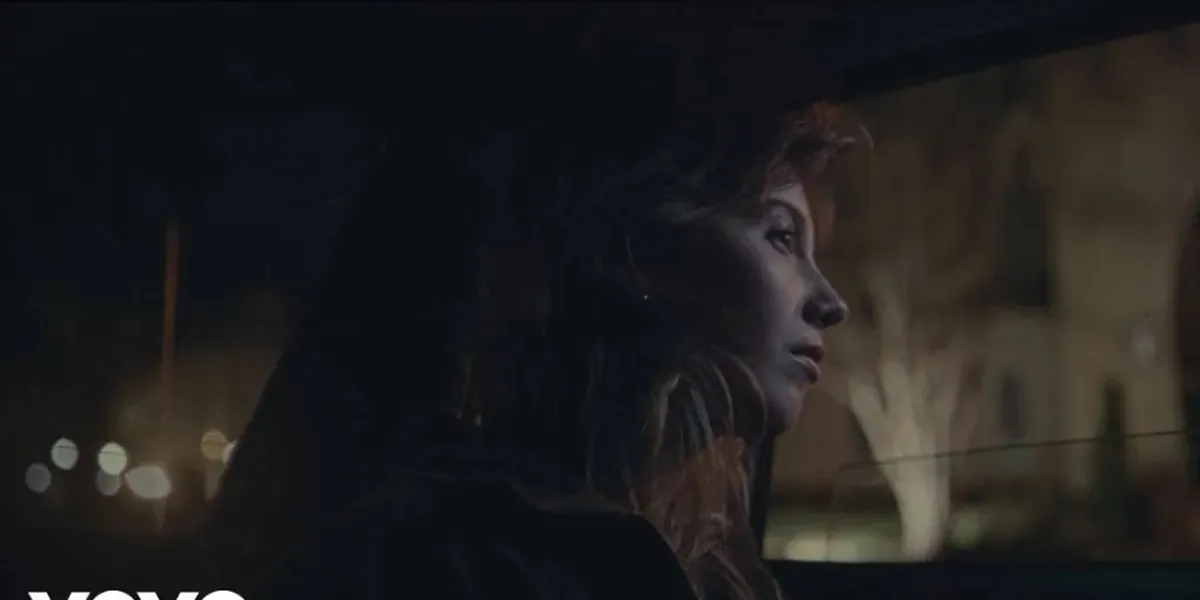
The music video for "We Hug Now" is a poignant visual extension of the song’s lyrical themes, employing artistic semiotics to amplify the narrative of loneliness and longing. Atwood Magazine underscored how the video serves as a powerful testament to the singer’s emotional transparency. The visual aesthetic is dominated by a muted color palette and dim lighting, expertly reflecting the somber and introspective mood of the song. This choice in cinematography immediately immerses the viewer in a state of quiet melancholy, mirroring the artist’s internal world.

The visual composition frequently places Sydney Rose in isolation within public spaces, emphasizing her emotional detachment despite being surrounded by others. Viewers often see her singing from the backseat of a vintage 1980s sedan, a setting that symbolizes a journey halted or a past era she cannot escape. Another recurring motif shows her traversing supermarket aisles, observing friends from a distance, an act that visually represents her feeling left out and disconnected from the bustling social fabric around her.
This symbolism powerfully conveys her feeling of being left behind by the relentless march of time, while her former friend moves forward. OnesToWatch, an industry observer, noted that Sydney Rose originally shared much of her music from the confines of her bedroom. The "We Hug Now" video symbolically translates that sense of intimate isolation from her private space into the broader, often indifferent, public sphere, making her internal struggle externally visible. The visual narrative thus reinforces the song’s core message: that the deepest loneliness can be felt even amidst a crowd, a testament to the isolating nature of ambiguous loss.
Chart Success and Cultural Impact
The impact of "We Hug Now" on the music industry and popular culture has been nothing short of phenomenal. Luminate data confirms that the song’s official streaming numbers experienced a dramatic surge, largely propelled by its organic virality on TikTok. This digital momentum helped the track amass over one hundred million global streams, a remarkable achievement for an indie artist.
On TikTok, the song ignited a widespread trend, inspiring hundreds of thousands of user-generated videos. These creations ranged from nostalgic photo montages of past friendships to deeply personal confessions about present feelings of loss and separation. The Official Charts Company reported that "We Hug Now" successfully charted in the United Kingdom, indicating its widespread appeal beyond its initial American indie roots. This international chart success is a clear indicator of the song’s universal message transcending geographical and cultural boundaries.
The song’s cultural impact extends beyond mere numbers. It has played a crucial role in validating a form of grief—the dissolution of platonic friendships—that is often overlooked or dismissed in societal discourse. By giving a voice to this specific pain, Sydney Rose has inadvertently fostered a collective healing space, particularly for Gen Z, who often navigate their emotional lives through digital expressions. The song has become an anthem for acknowledging and processing these complex feelings, demonstrating the powerful role of music in reflecting and shaping contemporary emotional landscapes. Its success also highlights the evolving dynamics of music discovery, where grassroots virality on platforms like TikTok can launch artists to global recognition, circumventing traditional industry gatekeepers.
The Enduring Legacy of "We Hug Now"

As "We Hug Now" continues to resonate, its legacy is poised to be multifaceted. It stands as a testament to the power of authentic storytelling and minimalist artistry in an increasingly saturated and commercially driven music industry. Sydney Rose, through her raw honesty, has carved out a unique space, validating a form of emotional pain that was previously underexplored in mainstream music.
The song’s influence may well extend to other emerging artists, encouraging them to embrace vulnerability and explore niche emotional themes that hold universal appeal. It demonstrates that profound success can stem from deeply personal narratives, especially when amplified by the democratic nature of social media platforms. "We Hug Now" will likely be remembered not just as a viral hit, but as a pivotal track that captured the zeitgeist of a generation, articulating the silent sorrow of lost friendships and the enduring human need for connection and understanding. It serves as a stark reminder that sometimes, the most painful goodbyes are those left unsaid, lingering in the quiet spaces between "city lights" and the distant memory of "stars."
Related posts: