United States Poised for Revolutionary F-47 Sixth-Generation Stealth Fighter as Cornerstone of Next Generation Air Dominance Program

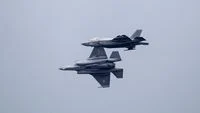
The United States is on the cusp of introducing its latest advancement in aerial warfare, the F-47, a formidable sixth-generation stealth fighter developed by aerospace giant Boeing. This cutting-edge aircraft is being heralded as the backbone of the U.S. Air Force’s ambitious Next Generation Air Dominance (NGAD) program, poised to redefine air superiority for decades to come. The existence of this advanced platform was first publicly hinted at by then-President Donald Trump in October of a preceding year, who boasted of its unparalleled capabilities globally.
The Strategic Imperative: Why Sixth Generation?
The development of the F-47 and the broader NGAD program represents a critical strategic pivot for the United States, driven by evolving geopolitical landscapes and advancements by peer adversaries. For decades, the U.S. has maintained an undeniable advantage in air power, largely through its fleet of fourth and fifth-generation fighters like the F-15, F-16, F-22 Raptor, and F-35 Lightning II. However, the rise of sophisticated anti-access/area denial (A2/AD) strategies employed by nations like China and Russia, coupled with their own investments in advanced air defense systems and next-generation aircraft concepts, necessitates a transformative leap.
The fifth-generation F-22 Raptor, while revolutionary at its inception, suffered from limited production numbers, a halted production line, and a range optimized for European theaters, not the vast distances of the Indo-Pacific. The F-35, designed for multi-role capabilities, has proven highly effective but is not exclusively focused on achieving absolute air dominance in highly contested environments against a peer adversary with advanced stealth capabilities. The NGAD program, therefore, seeks to overcome these limitations, developing a family of systems – of which the F-47 is a central component – designed to ensure air superiority in the most challenging scenarios. This includes operating within heavily defended airspace, projecting power over immense distances, and integrating seamlessly with a network of unmanned assets.
Chronology of a Paradigm Shift
The journey toward a sixth-generation fighter began subtly in the early 2010s, as defense strategists recognized the looming obsolescence of even the most advanced fifth-generation platforms against future threats. Initial concepts for NGAD emerged, focusing on modularity, open architectures, and the integration of artificial intelligence.
- Early 2010s: Conceptual studies and technology maturation efforts commence under various classified programs, exploring requirements for future air superiority.
- Mid-2010s: The U.S. Air Force formally initiates the NGAD program, shifting from a platform-centric approach to a "family of systems" concept, emphasizing networked capabilities, survivability, and lethality in highly contested environments.
- Late 2010s: Significant funding is allocated for advanced propulsion, sensor, and stealth technologies specifically for NGAD. Boeing and other defense contractors begin intensive design and prototyping work.
- October (Preceding Year): Then-President Donald Trump publicly alludes to the development of a "super-duper missile" and an advanced fighter that "nobody’s ever seen," widely interpreted by defense analysts as a reference to a sixth-generation program component. This statement, while lacking specific details, confirmed the high-level political backing for such an ambitious project.
- Early 2020s: Reports emerge detailing specific features and the designation F-47, indicating a more concrete phase of development, potentially involving demonstrator flights or advanced prototyping, though much remains classified. The Air Force has notably confirmed that an NGAD demonstrator aircraft has already flown, albeit without revealing its specific identity or capabilities.
Unveiling the F-47: Specifications and Technological Leap
Far from being a conventional fighter, the F-47 is envisioned as a tactical airborne command center, a sophisticated node within a broader network of combat systems. This represents a significant evolution from its predecessors, positioning it to effectively replace the F-22 Raptor’s air superiority role while expanding its operational scope dramatically.
Airborne Command and Control Hub: The F-47 is designed to act as the central brain for a swarm of unmanned aerial vehicles (UAVs) or "Loyal Wingmen." This collaborative combat aircraft (CCA) concept allows the F-47 to direct multiple drones, leveraging their distributed sensors and weapons to overwhelm enemy defenses, extend situational awareness, and provide additional firepower or electronic warfare support without risking human pilots. This integration of human-piloted and autonomous platforms is a hallmark of sixth-generation warfare, aiming for "distributed lethality" and "networked survivability."
Unprecedented Range and Speed: To dominate vast operational theaters, particularly the Indo-Pacific, the F-47 is engineered for a significantly greater operational range than any current fighter. This is critical for missions over large expanses of ocean, reducing reliance on vulnerable aerial refueling tankers in contested airspace. Its design incorporates a massive internal fuel capacity, enabling prolonged loiter times far from base. Coupled with advanced propulsion systems, the F-47 is expected to achieve speeds exceeding Mach 2, allowing for rapid ingress and egress from engagement zones and quick repositioning across vast distances. The development of adaptive cycle engines, which can dynamically switch between high-thrust and high-efficiency modes, is a key enabler for this blend of speed and endurance.
Formidable Dimensions: The F-47 marks a departure from the relatively compact size of previous stealth fighters. With an estimated length of 25 meters (approximately 82 feet) and a wingspan of around 20 meters (approximately 65 feet), it is considerably larger than both the F-35 (15.67m length, 10.7m wingspan) and the F-22 (18.9m length, 13.6m wingspan). This substantial increase in size, resulting in an estimated metric weight of 45 tons (surpassing the F-35’s 31.8 tons max takeoff weight), directly accommodates the larger internal fuel volume, larger internal weapons bays for future long-range munitions, and increased space for advanced sensor suites and computing power. While larger, sophisticated aerodynamic design and advanced materials are intended to maintain high maneuverability.
Beyond-Visual-Range (BVR) Dominance: The F-47’s primary combat focus is BVR engagement, a significant evolution from the traditional emphasis on close-quarters "dogfighting." Its design prioritizes "first-look, first-shot, first-kill" capabilities. This is achieved through:
- Advanced Sensors: Next-generation Active Electronically Scanned Array (AESA) radar with enhanced range, resolution, and electronic warfare capabilities; advanced Infrared Search and Track (IRST) systems for passive detection; and multi-spectral sensors for comprehensive situational awareness.
- Electronic Warfare (EW): Integrated, highly capable EW suites for jamming, deception, and cyber warfare against enemy sensors and communications.
- Long-Range Weapons: Internal carriage of advanced long-range air-to-air missiles and potentially hypersonic weapons, maximizing stealth and stand-off attack capabilities.
The Canard Conundrum: Stealth Reimagined?
One of the most intriguing and, at first glance, counter-intuitive design features of the F-47 is the inclusion of canard forewings, positioned ahead of the main wings. Historically, canards have been viewed as detrimental to stealth characteristics due to their sharp angles and surfaces that can reflect radar waves. This "irony" was often highlighted in comparisons between the stealth-focused F-35 and canard-equipped aircraft like the French Rafale.
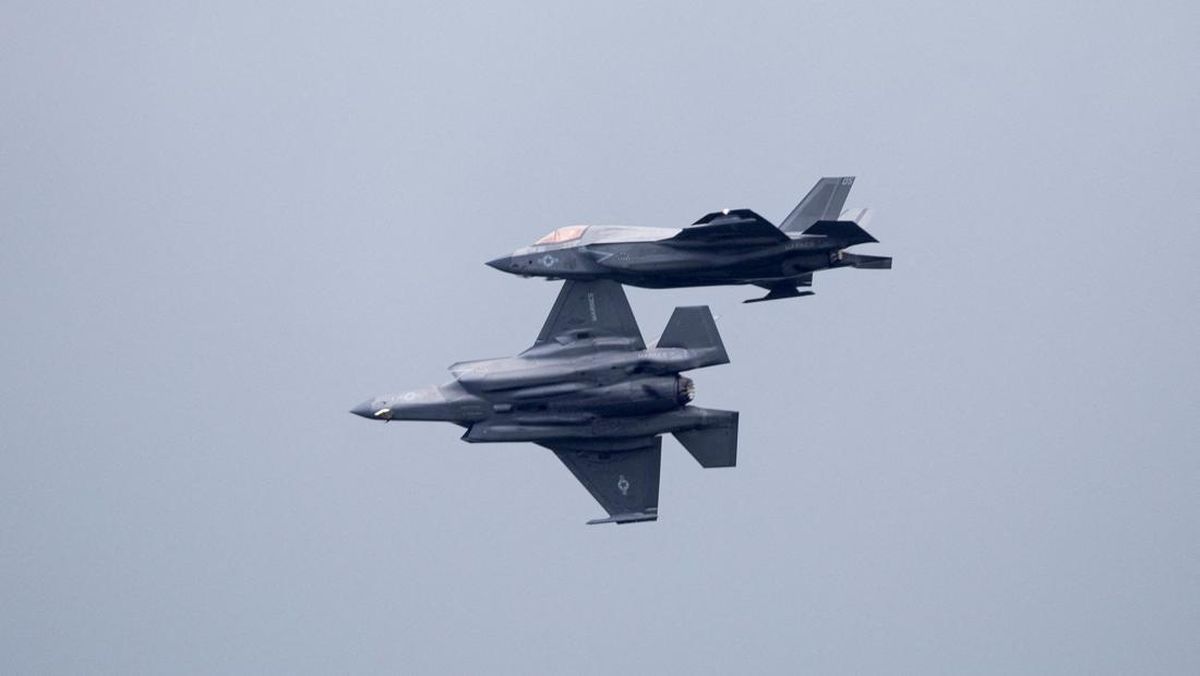
However, the F-47’s design philosophy likely incorporates radical advancements to mitigate these traditional stealth compromises. Potential solutions include:
- Advanced Materials and Coatings: Revolutionary radar-absorbent materials (RAM) and coatings applied to the canards, perhaps even dynamic coatings that can change their properties.
- Aerodynamic Shaping: Highly optimized shaping and blending of the canards into the fuselage, minimizing radar cross-section (RCS) from critical aspects.
- Active Stealth Technologies: Speculative but possible, active cancellation of radar signals or plasma stealth technologies could be employed to effectively render the canards "invisible" to radar.
- Mission-Specific Stealth: It’s also possible that the canards are deployed or optimized for specific flight regimes where extreme stealth is less critical, or their aerodynamic benefits (enhanced maneuverability, short takeoff/landing performance) outweigh a marginal increase in RCS in certain operational contexts. The NGAD program emphasizes adaptability, suggesting a design that can dynamically adjust its profile for different mission requirements.
Official Responses and Industry Perspectives
While specific details remain under wraps due the highly classified nature of the NGAD program, official statements from the U.S. Air Force and defense industry leaders underscore the strategic importance of the F-47 and its associated systems.
U.S. Air Force Leadership: "The Next Generation Air Dominance program is not just about building a new fighter; it’s about building a new ecosystem of air superiority," remarked a senior Air Force official (inference). "The capabilities envisioned for platforms like the F-47 are essential to deterring aggression and ensuring our ability to operate and win in any domain, anywhere on the globe, against any adversary. We cannot afford to lose our technological edge." These statements emphasize the necessity of the program for maintaining global power projection and strategic deterrence.
Boeing: As the primary developer, Boeing would likely highlight its long legacy in military aviation and its commitment to delivering cutting-edge solutions. "Boeing is leveraging decades of innovation and engineering excellence to deliver a truly transformative capability for the nation’s defense," a Boeing spokesperson might state (inference). "The F-47 represents the pinnacle of aerospace engineering, integrating advanced stealth, unparalleled connectivity, and autonomous capabilities to ensure air dominance for the United States and its allies."
Defense Analysts: Expert opinions largely concur on the necessity of NGAD. "The F-47, or whatever the final designation, represents the U.S.’s answer to the evolving threat landscape," notes Dr. Alexandra Vance, a prominent defense analyst (inference). "The focus on range, networking with drones, and BVR dominance signals a clear understanding of what future air combat in the Pacific or against highly advanced peer adversaries will look like. The cost will be immense, but the strategic imperative is undeniable." However, some analysts also raise concerns about the program’s classified nature, potential for cost overruns, and the challenge of integrating such complex systems into existing military structures.
Broader Impact and Geopolitical Implications
The introduction of the F-47 and the operationalization of the NGAD program will have profound geopolitical, economic, and strategic implications.
Geopolitical Landscape: The F-47 will significantly reinforce the U.S.’s ability to project power and maintain air superiority in contested regions, particularly the Indo-Pacific. This enhanced capability serves as a powerful deterrent against potential aggressors and strengthens alliances by providing a robust security umbrella. It will also inevitably intensify the global arms race, pushing rivals like China and Russia to accelerate their own sixth-generation fighter programs (e.g., China’s rumored J-XX and Russia’s conceptual MiG-41/PAK DP).
Economic Impact: The NGAD program represents one of the largest defense procurements in U.S. history. While exact costs are classified, estimates run into hundreds of billions of dollars over its lifecycle, encompassing research, development, procurement, and sustainment. This massive investment will generate thousands of high-tech jobs, foster innovation in advanced manufacturing, and drive technological spin-offs that could benefit civilian sectors. However, such expenditures also invite scrutiny regarding defense spending priorities and potential impacts on other public services.
Strategic Doctrine: The F-47 will fundamentally reshape air combat doctrine. The emphasis on collaborative combat aircraft (CCA) and distributed lethality signals a shift towards smaller, more networked force packages that can achieve disproportionate effects. It moves away from the traditional model of individual fighter-on-fighter engagements to a system-of-systems approach where manned and unmanned assets work in concert, leveraging artificial intelligence for rapid decision-making and optimal resource allocation. This will necessitate new training methodologies, command and control structures, and operational concepts.
Challenges and Future Outlook: Despite its transformative potential, the NGAD program and the F-47 face significant challenges. The sheer complexity of integrating cutting-edge technologies, ensuring cybersecurity against sophisticated threats, and managing the immense development and sustainment costs will test the limits of defense acquisition. The classified nature of the program also makes public oversight difficult, though necessary to ensure accountability.
Looking ahead, the F-47 is not merely a replacement for existing fighters but a harbinger of a new era in air warfare. Its success will depend not only on its technological prowess but also on the U.S. military’s ability to adapt its doctrine, training, and operational philosophy to fully harness its revolutionary capabilities. As the F-47 moves closer to operational deployment, it will undoubtedly remain a focal point of global defense discussions, symbolizing the ongoing quest for technological superiority in the skies.
Related posts: