Iran’s Currency Under Global Scrutiny Amidst Geopolitical Tensions and Economic Policy Shifts

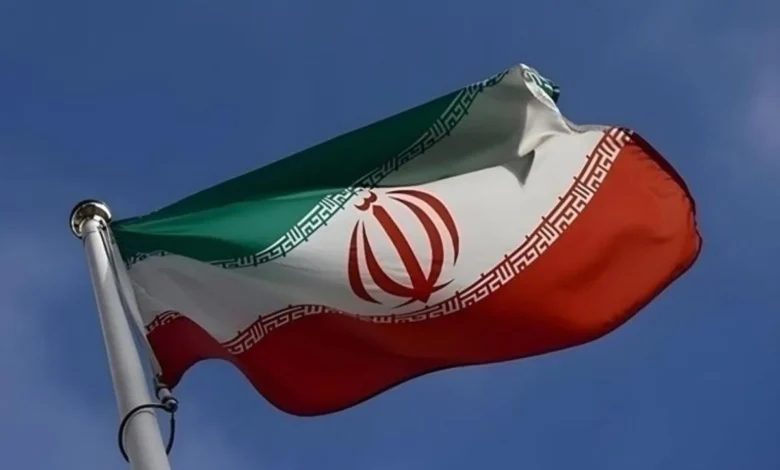
The Iranian currency has recently found itself at the center of global attention, a consequence of escalating geopolitical tensions and evolving international economic policies. In a significant move, the administration of United States President Donald Trump reimposed stringent tariffs, levying a substantial 25 percent tax on countries continuing to engage in business collaborations with Iran. This decisive action has reverberated across the global economic landscape, eliciting a spectrum of reactions, particularly concerning the precarious state of Iran’s economy and the consequent depreciation of its national currency. Recent reports indicate that the Iranian rial has experienced a precipitous decline, at one point reaching historic lows when converted into euros. This severe economic pressure underscores the profound challenges confronting the Iranian economy, exacerbated by protracted sanctions and persistent inflation.
However, a curious observation emerges when one traverses the bustling traditional markets or navigates the modern shopping centers of Iran: the term "rial" is conspicuously absent from the everyday lexicon of commercial transactions. Instead, locals predominantly employ the term "toman" when discussing the prices of goods and services. This widespread adoption of the "toman" is not an arbitrary shift but a direct consequence of the country’s exceptionally high inflation rate. To simplify price communication and circumvent the cumbersome use of excessively large numerical figures, Iran has adopted an alternative calculation system centered around the "toman."
This article delves into the intricacies of Iran’s monetary system, examining the official currency and elucidating the fundamental distinctions between the rial and the toman, a duality that frequently perplexes both international tourists and economic observers.
The Official Monetary Framework of Iran: The Rial
Legally and administratively, the Islamic Republic of Iran designates the rial as its official currency. This designation is embedded in all official banking operations, governmental documentation, and the pricing displayed in contemporary retail establishments. The international currency code for the Iranian rial is IRR. Every financial transaction, from large-scale international trade to the smallest purchase, is theoretically denominated in rials. Government budgets, tax regulations, and all official financial reports adhere strictly to this rial-based accounting. The Central Bank of Iran (CBI) is responsible for issuing rial banknotes and coins, managing monetary policy, and maintaining the stability of the currency, although its effectiveness has been significantly tested in recent years.
The Unofficial Realm: Toman’s Ubiquitous Presence in Daily Transactions
Despite the official standing of the rial, its presence in the daily transactional life of ordinary Iranians is remarkably understated. The vast majority of the population, when engaging in everyday commerce, whether at a local bazaar or a neighborhood shop, will invariably refer to prices in tomans. This informal currency system has become the de facto standard for daily economic interactions, a testament to the practical adaptations necessitated by economic realities.
The underlying principle of the toman’s widespread use lies in its simplicity. One toman is equivalent to 100,000 rials, or more practically, the rial with four zeros removed. This simplification dramatically streamlines price communication. Instead of dealing with figures like 500,000 rials for a common item, a merchant might simply state 50 tomans. This makes transactions quicker, less prone to error, and more psychologically palatable for both buyers and sellers.
Historical Roots and the Impact of Inflation
The duality between rial and toman is not a recent phenomenon. Historically, the rial was the established currency. However, the persistent erosion of its value due to high inflation has compelled the populace to seek a more manageable unit of account. The informal adoption of the toman as a practical alternative predates the current geopolitical pressures but has been significantly amplified by them.
The mechanism is straightforward: one toman represents ten of the old rial units. To clarify, if a vendor quotes a price of 60,000 tomans for a particular good or service, the actual amount to be paid in rials would be 600,000 rials. This discrepancy in terminology is precisely what often leads to considerable confusion for foreign visitors encountering the Iranian economy for the first time. Without a clear understanding of this informal conversion, tourists can easily misinterpret prices and potentially overpay or be misled.
Government Reforms: Redenomination and the New Toman
Recognizing the persistent confusion and the need for a more stable and simplified national financial system, the Iranian government, through the Central Bank of Iran (CBI), initiated a significant currency reform process. This initiative, known as redenominasi, began its rollout in 2020 and is slated for broader and more comprehensive implementation between 2025 and 2026.
The core objective of this redenominasi is to officially replace the rial as the primary unit of currency with a new version of the toman, effectively removing four zeros from the existing rial. Under this new scheme, 10,000 old rials will be equivalent to 1 new toman. This new toman will further be subdivided into smaller denominations called qiran, with one toman comprising 100 qiran. This move aims to bring the currency’s denomination in line with international standards and facilitate easier economic calculations.
During this transitional phase, both old and new banknotes will remain in circulation. However, newly issued banknotes are designed to reflect the reduced nominal values, often featuring a ghosted indication of the removed zeros. This approach is intended to gradually acclimatize the public to the new system and minimize disruption. The CBI has been actively engaged in public awareness campaigns to educate citizens and businesses about the upcoming changes.
Contributing Factors to the Rial’s Weakness
The persistent weakness of the Iranian rial is a multifaceted issue, stemming from a confluence of domestic and international factors.
1. International Sanctions:
The most significant external pressure on the Iranian economy, and consequently its currency, has been the imposition of comprehensive international sanctions, particularly those re-imposed by the United States. These sanctions target key sectors of Iran’s economy, including its oil exports, financial institutions, and access to international markets.
- Impact on Oil Revenue: Iran is a major oil producer, and sanctions have severely curtailed its ability to export oil, its primary source of foreign currency. Reduced export revenues directly translate to less foreign exchange available to support the rial.
- Financial Isolation: Sanctions have largely cut off Iranian banks from the global financial system, making international trade and investment exceedingly difficult. This isolation limits access to capital and hampers economic growth.
- Investor Confidence: The threat and imposition of sanctions create an environment of uncertainty, deterring foreign investment and encouraging capital flight, further weakening the rial.
2. Domestic Economic Challenges:
Beyond external pressures, Iran grapples with significant internal economic vulnerabilities.
- High Inflation: As previously noted, chronic high inflation has been a persistent problem. This erodes purchasing power, devalues savings, and necessitates the informal "toman" system. Factors contributing to inflation include government spending, monetary policy, and supply-side constraints.
- Structural Economic Issues: Decades of centralized economic planning, inefficiencies in state-owned enterprises, and a challenging business environment have hampered productivity and competitiveness.
- Unemployment and Underemployment: High rates of unemployment, particularly among youth, contribute to social unrest and economic stagnation, indirectly impacting currency stability.
- Government Spending and Budget Deficits: Reliance on oil revenues and sometimes unsustainable government spending can lead to budget deficits, which are often financed through printing more money, thus fueling inflation.
3. Geopolitical Instability:
The broader geopolitical landscape in the Middle East, including regional conflicts and tensions with neighboring countries, contributes to a climate of uncertainty. This instability can affect investor sentiment, disrupt trade routes, and indirectly pressure the currency. The current escalation of tensions, as highlighted by the US tariff policy, directly amplifies these concerns.
The Broader Implications and Outlook
The precarious state of the Iranian rial has far-reaching implications, both domestically and internationally.
- Domestic Economic Hardship: For the average Iranian, the depreciating currency means a decline in their purchasing power. Imported goods become more expensive, and the cost of living rises, leading to increased hardship and potential social discontent.
- Impact on International Trade: While sanctions aim to isolate Iran, they also disrupt global supply chains and affect countries that trade with Iran. The volatility of the rial makes pricing and payment for international transactions more complex and risky.
- Regional Economic Dynamics: The economic health of Iran, as a major regional player, has ripple effects across the Middle East. Instability in Iran can translate to broader economic uncertainty in the region.
- The Redenominasi Initiative: The success of Iran’s redenominasi plan is crucial for its long-term economic stability. If managed effectively, it could simplify transactions, improve the perception of the currency, and potentially attract some level of investment. However, without addressing the root causes of inflation and the impact of sanctions, the fundamental challenges will likely persist.
The recent US tariff policy, alongside the ongoing global economic shifts, places Iran’s currency in a particularly challenging position. The effectiveness of the redenominasi, coupled with any potential easing of sanctions or significant shifts in global energy markets, will be critical factors determining the future trajectory of the Iranian rial and its unofficial counterpart, the toman. The journey from a currency battling severe devaluation to one of relative stability will be a long and arduous one, requiring a delicate balance of domestic reforms and external geopolitical navigation.
Related posts: