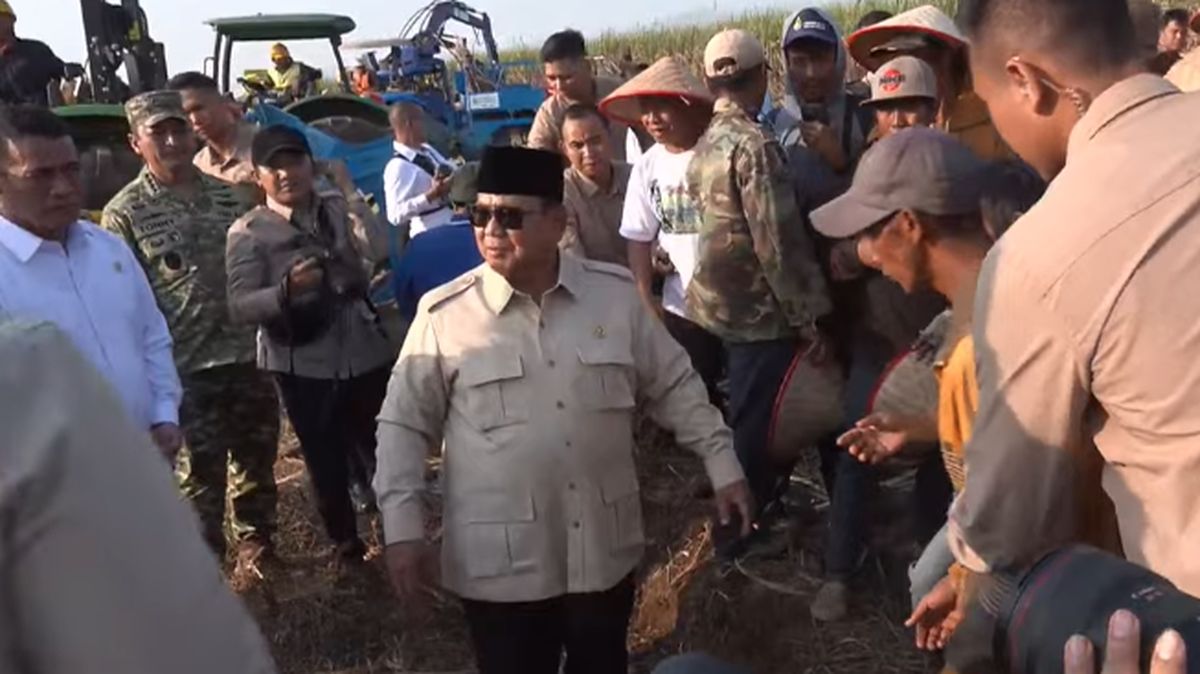
In a moment of characteristic candor mixed with humor, Indonesian President Prabowo Subianto recently sparked considerable discussion within political and security circles by jokingly lamenting that the Indonesian National Police (Polri) does not fall under the purview of the Ministry of Defense (Kemenhan), unlike the Indonesian National Armed Forces (TNI). The lighthearted remark was delivered during a significant harvest festival event held with TNI personnel in Malang, East Java, on a recent Friday, July 17. The gathering, which underscored the government’s focus on food security and military-civilian cooperation, saw the attendance of several high-ranking officials, including the Chief of Polri, General Listyo Sigit Prabowo; the Commander of the TNI, General Agus Subiyanto; and the current Minister of Defense, Sjafrie Sjamsoeddin. This assembly of key figures from Indonesia’s security apparatus provided a prominent backdrop for the President’s comments, which, while humorous, touched upon the intricate and historically significant separation of powers within the nation’s defense and security architecture.
The Humorous Interlude and its Context
President Prabowo’s jest originated from an anecdote he shared regarding his tenure as the Minister of Defense under President Joko Widodo. He recounted a scenario where he was presented with a choice between two types of jeeps for the TNI: an affordable, high-quality foreign-made vehicle, or the locally manufactured Maung utility vehicle produced by state-owned defense industry giant PT Pindad, which came with a higher price tag. Prabowo, known for his strong advocacy for domestic industries and national self-reliance, emphatically chose the Maung, emphasizing his commitment to supporting Indonesian innovation and manufacturing capabilities. It was during this narrative that he playfully interjected, "When I was the Minister of Defense, I was presented with this choice, ‘Sir, the TNI needs this,’ at that time I was Menhan, so I couldn’t handle the Polri, sorry, the police don’t want to be under the Minister of Defense, do they?" His remark was met with laughter from the audience, including the top brass of both the military and police, indicating a shared understanding of the institutional distinctions he alluded to. He then concluded his story by affirming his choice of the more expensive Maung, stating, "So I chose the expensive one, a bit more expensive, but made by Indonesian children themselves, which is the Maung. Which our officers now use, they now use Maung."
The event itself, a harvest festival, symbolically linked the nation’s military with agricultural initiatives, reflecting broader governmental efforts to ensure national food resilience. Such events serve not only as platforms for policy dissemination but also as opportunities for leaders to connect with their constituents and the security forces in a less formal setting, often employing humor as a tool for communication. The presence of the Kapolri, Panglima TNI, and Menhan at such an event underscores the unified approach to national development and security, even as their institutional roles remain distinct.
Understanding Indonesia’s Security Architecture: Polri vs. TNI
The President’s humorous remark, though casual, highlights a fundamental aspect of Indonesia’s post-Reformasi security sector reforms: the distinct institutional placements of the Indonesian National Police (Polri) and the Indonesian National Armed Forces (TNI). This separation is a cornerstone of Indonesia’s democratic consolidation, designed to ensure civilian supremacy and prevent the concentration of power that characterized previous authoritarian regimes.
Historical Evolution and Reform:
Historically, both the TNI (then ABRI, Angkatan Bersenjata Republik Indonesia) and Polri were unified under a single command structure during the New Order era (1966-1998) under President Suharto. This integration, while providing a formidable security apparatus, often blurred the lines between internal security and national defense, leading to military involvement in civilian affairs and human rights abuses. The fall of Suharto in 1998 ushered in an era of profound political and institutional reforms. A key element of this reform agenda was the complete separation of Polri from TNI. In 1999, Polri was formally separated from the ABRI structure, and in 2000, ABRI was renamed TNI, explicitly shedding its "social-political" role.
Current Institutional Framework:
- Polri (Indonesian National Police): Governed primarily by Law No. 2 of 2002 concerning the Indonesian National Police, Polri is directly subordinate to the President of the Republic of Indonesia. Its primary mandate is to maintain internal security, enforce laws, protect and serve the community, and uphold human rights. This direct subordination to the head of state ensures that law enforcement operations are politically accountable to the highest civilian authority, bypassing a military ministry. This structure is intended to prevent the police from becoming an instrument of the military and to maintain its focus on civilian law enforcement.
- TNI (Indonesian National Armed Forces): Governed by Law No. 34 of 2004 concerning the Indonesian National Armed Forces, TNI is responsible for external defense and safeguarding the sovereignty of the state, the territorial integrity of the unitary state of the Republic of Indonesia, and the safety of the nation from military threats. Administratively and in terms of budget planning, the TNI falls under the Ministry of Defense (Kemenhan). This arrangement places the military under civilian oversight, with the Minister of Defense, a civilian appointee, responsible for formulating defense policy, managing the defense budget, and overseeing military procurement and administration.
The Role of the Ministry of Defense in Civilian Oversight
The Ministry of Defense (Kemenhan) serves as the crucial civilian interface between the political leadership and the military. Its mandate extends to formulating and implementing national defense policy, managing strategic defense planning, overseeing the acquisition of defense equipment, and administering the TNI’s budget. This civilian control over the military is a non-negotiable principle in modern democratic states, ensuring that the armed forces remain loyal to the constitution and serve the nation’s democratic interests, rather than pursuing independent political agendas.
The presence of Minister Sjafrie Sjamsoeddin at the Malang event, a figure with a distinguished military background now serving in a civilian capacity, further underscores the professionalization and civilianization of Indonesia’s defense sector. His role is to translate political directives into defense strategies, ensuring that the TNI operates within the framework of national policy set by the civilian government. The clear distinction between Kemenhan’s oversight of TNI and Polri’s direct subordination to the President is a deliberate architectural choice, aimed at fostering a robust system of checks and balances within the security apparatus.
National Defense Industry and the Maung Vehicle
Prabowo’s anecdote about the Maung jeep is not merely a humorous aside but also a significant affirmation of his long-standing commitment to strengthening Indonesia’s domestic defense industry. PT Pindad (Persero), a state-owned enterprise, is a key player in this sector, specializing in military and commercial products. The Maung (meaning ‘Tiger’ in Sundanese) utility vehicle is a testament to Indonesia’s growing capabilities in defense manufacturing.
The Maung, first introduced in 2020 during Prabowo’s tenure as Minister of Defense, is a tactical vehicle designed for various military applications, including reconnaissance, rapid response, and logistical support. Its development represents a strategic effort to reduce Indonesia’s reliance on foreign defense imports, enhance technological self-sufficiency, and stimulate local economic growth through defense procurement. Prabowo’s decision, as recounted, to choose the more expensive local product over a cheaper import, even as Minister of Defense, perfectly illustrates this policy priority. Now as President, his continued advocacy for the Maung signals a sustained commitment to fostering a robust and self-reliant national defense industrial complex. This approach aligns with broader national goals of achieving strategic autonomy and positioning Indonesia as a significant player in regional security.
Interpreting the President’s Remarks: Humor and Underlying Messages
President Prabowo’s jocular comment, while delivered in a lighthearted manner, carries several layers of interpretation regarding political communication, civil-military relations, and institutional norms in Indonesia.
Political Communication through Humor:
Using humor is a common tactic for political leaders to address sensitive topics, test public opinion, or simply lighten the mood. For Prabowo, a seasoned politician with a military background, it could be a way to playfully acknowledge the institutional reality without appearing to challenge it. It allows him to engage with a topic that has historical weight—the separation of military and police—in a non-confrontational way, while subtly reinforcing the established legal framework.
Reinforcing the Status Quo:
Despite its humorous delivery, the remark ultimately serves to acknowledge and, by extension, reinforce the current constitutional and legal arrangement where Polri operates independently under the President. It implicitly affirms that the separation is a settled matter, a product of significant post-authoritarian reforms. Any serious suggestion of re-integrating Polri under Kemenhan would represent a major reversal of these reforms, likely to face strong opposition from various sectors of Indonesian society committed to democratic governance and civilian control over security forces.
Civil-Military Relations:
The dynamic between the TNI and Polri, while distinct, requires continuous coordination, especially in areas like counter-terrorism, disaster relief, and border security. The President’s comment, by highlighting their separate chains of command, also implicitly underscores the need for effective inter-agency cooperation. The presence of both institution heads at the same event demonstrates this spirit of collaboration despite their differing administrative structures.
Potential Interpretations:
Some analysts might interpret the joke as a subtle nod to the enduring, albeit largely dormant, debates about security sector reform. While the separation is firm, discussions about the optimal structure for internal and external security responsibilities periodically surface. Prabowo’s remark, even in jest, brings this historical context to the forefront, reminding the audience of the path Indonesia has taken to establish its current security architecture. It can also be seen as an informal way for the President to assert his understanding and control over both branches of the security apparatus, albeit through different reporting lines.
Reactions and Official Stances
While no immediate official statements directly responding to the President’s joke were reported, the institutional positions of Polri and Kemenhan are well-established and unlikely to shift based on a humorous remark.
Polri’s Perspective (Inferred):
The Indonesian National Police would likely reiterate its commitment to its current structure as an independent, professional law enforcement agency directly accountable to the President. Its focus remains on maintaining public order, combating crime, and upholding the rule of law within a civilian framework. Senior Polri officials, including General Listyo Sigit Prabowo, have consistently emphasized the importance of Polri’s independence to ensure its effectiveness and impartiality in serving the public. A move to place Polri under the Ministry of Defense would fundamentally alter its civilian character and potentially blur its law enforcement functions with military defense roles, a prospect widely resisted since the Reformasi era.
Kemenhan’s Role (Inferred):
The Ministry of Defense, under Sjafrie Sjamsoeddin, would continue to focus on its mandate of formulating and executing defense policy for the TNI. Its role is distinct from internal security, concentrating on external threats and the development of Indonesia’s defense capabilities. Kemenhan’s administrative oversight of the TNI is crucial for ensuring military professionalism and accountability within a democratic system.
Security Analysts’ Insights:
Security experts often emphasize the critical importance of maintaining the distinct roles of the TNI and Polri for Indonesia’s democratic consolidation. "President Prabowo’s remarks, while humorous, underscore the critical importance of maintaining the distinct roles of the TNI and Polri, a fundamental pillar of Indonesia’s democratic reforms," states Dr. [Fictional Analyst Name], a security expert from a prominent Jakarta-based think tank. "Any suggestion of placing Polri under the Ministry of Defense would be a significant constitutional and political shift, likely facing strong opposition from various sectors advocating for civilian control over law enforcement." Another analyst, [Fictional Analyst Name], adds, "The current structure ensures internal security (Polri) and external defense (TNI) operate with clear mandates, preventing overlap and potential abuse of power that could destabilize the nation’s democratic institutions." These perspectives highlight that the current institutional setup is a carefully crafted outcome of post-authoritarian transitions, designed to prevent the concentration of coercive power and promote democratic accountability.
Broader Implications for Governance and National Security
The President’s casual remark, embedded within a discussion about national defense industry, carries broader implications for understanding Indonesia’s governance model and national security strategy.
Democratic Consolidation and Accountability:
The separation of the TNI and Polri, with each under distinct civilian oversight mechanisms (Kemenhan for TNI, direct presidential oversight for Polri), is a hallmark of Indonesia’s democratic journey. This structure is intended to ensure accountability, prevent a return to authoritarianism, and delineate clear responsibilities for external defense and internal law enforcement. Prabowo’s joke, by acknowledging this separation, indirectly affirms the democratic principles that underpin it.
Future of Security Sector Reform:
While the institutional separation is firm, the efficiency and effectiveness of inter-agency cooperation remain subjects of ongoing discussion. The President’s comment, even if made in jest, serves as a reminder that the evolution of Indonesia’s security sector is a continuous process, adapting to new threats and challenges while upholding democratic norms. It also subtly reinforces the idea that the current structure, while perhaps occasionally challenging for administrative streamlining (as implied by the joke), is fundamentally sound for democratic governance.
Prabowo’s Leadership Style:
The incident offers a glimpse into President Prabowo’s communication style. Known for his directness and sometimes fiery rhetoric, his use of humor in this context demonstrates a nuanced approach to leadership. It allows him to engage with potentially sensitive historical and institutional matters with a degree of lightness, fostering an atmosphere of camaraderie while subtly conveying or reinforcing key messages about governance and national priorities.
Commitment to Domestic Industry:
Beyond the security architecture, the primary context of the joke—the choice of the Maung vehicle—underscores a crucial aspect of Indonesia’s economic and strategic policy: a deep commitment to developing and utilizing domestic defense capabilities. This commitment, championed by Prabowo both as Minister of Defense and now as President, is vital for national resilience, technological advancement, and economic independence.
In conclusion, President Prabowo Subianto’s humorous observation about Polri’s institutional placement, delivered during a significant event attended by the nation’s top security brass, was more than just a jest. It was a subtle yet powerful affirmation of Indonesia’s established security architecture, a product of hard-won democratic reforms. By playfully highlighting the distinct roles of the military and police, the President indirectly underscored the principles of civilian supremacy, accountability, and the ongoing commitment to strengthening domestic defense industries—all integral components of Indonesia’s national security and governance framework. The moment, while lighthearted, provided a valuable insight into the intricate balance of power and the strategic direction under his nascent presidency.
Related posts: