The candid remarks from Goldman, reported by Variety on Sunday, July 19, 2026, shed light on the intricate logistics and demanding environment inherent in large-scale productions involving child stars. According to Goldman, the necessity to film with exceptional speed is a direct consequence of the strict regulations governing child labor in the entertainment sector, which mandate limited working hours and require substantial time dedicated to on-set schooling. "You have to shoot very quickly, and the faster you shoot, the more quality is sacrificed," Goldman stated, adding, "There’s no other way, is there?" This sentiment underscores a perennial dilemma in filmmaking: the trade-off between speed and the meticulous craft required to achieve cinematic excellence.
The Demands of Young Talent: Navigating Child Labor Laws
The core of the "brutal" filming experience stems from the stringent child labor laws designed to protect minors working in entertainment. These regulations, which vary by jurisdiction but generally follow similar principles, dictate maximum on-set hours, mandatory breaks, and dedicated periods for education. For a production like Harry Potter, featuring a young ensemble cast in nearly every scene, these laws translate into an exceptionally tight shooting schedule. Typically, child actors under a certain age (often 16) are limited to between four and six hours of work per day, with specific requirements for schooling that can take up to three hours daily, alongside meal breaks and rest periods. This leaves a very narrow window for actual filming.
Goldman provided a stark illustration of this challenge, noting that the young actors portraying the iconic trio – Dominic McLaughlin as Harry Potter, Alastair Stout as Ron Weasley, and Arabella Stanton as Hermione Granger – are often only available on set for approximately one and a half hours. Within this brief timeframe, Goldman and his team are expected to complete "six setups," meaning six different camera angles or lighting configurations for various shots within a scene. This accelerated pace necessitates a level of agility and pre-planning that pushes the boundaries of traditional filmmaking. The crew must be exceptionally efficient, often having to compromise on the number of takes, the complexity of camera movements, or the subtlety of lighting adjustments that might otherwise enhance the visual storytelling.
The pressure isn’t just on the technical crew. Directors, assistant directors, and script supervisors must meticulously plan every moment, breaking down scenes into minute components to maximize the limited time with the young stars. This often means shooting scenes out of chronological order, a common practice in film but one that is intensified by the time constraints. Furthermore, Goldman highlighted the need to "practically pre-shoot all the scenes while they are in class." This implies that stand-ins or adult actors might perform scenes for lighting and blocking purposes, or even for certain wide shots, before the child actors are brought in for their specific lines and close-ups. Such methodologies, while pragmatic, add layers of complexity and can test the patience and creativity of even the most seasoned film professionals.
Logistical Labyrinth: The Art of Filming Out of Sequence
Filming out of sequence is a standard industry practice, driven by factors such as location availability, actor schedules, and logistical efficiency. However, in the context of the new Harry Potter series, this becomes an even more intricate dance. With the primary child actors available for such short bursts, the production cannot simply progress scene by scene. Instead, it must meticulously identify all shots involving a specific child actor that can be grouped together, regardless of where they fall in the narrative timeline. For instance, all scenes requiring Dominic McLaughlin in a particular costume or set might be shot on the same day, even if those scenes are spread across multiple chapters of the Philosopher’s Stone book.
This "jigsaw puzzle" approach demands extraordinary organizational skills from the production team. Continuity supervisors must be hyper-vigilant, ensuring that details like costumes, props, and set dressing remain consistent across scenes shot weeks or even months apart. The editorial team also faces a significant challenge, as they must piece together fragments of performances and technical shots into a coherent narrative. For actors, especially young ones, maintaining emotional consistency and character arc when scenes are shot non-linearly can be demanding. They must constantly jump between different emotional states and plot points, relying heavily on direction and their own burgeoning talent to deliver authentic performances. The logistical complexity, as Goldman described, is "very difficult" but acknowledged that he has "done it before," suggesting a level of experience within the crew in handling such demanding conditions, albeit perhaps not on this scale or with such a tight turnaround for high-profile talent.
A Dedicated Production: Warner Bros. Studios Leavesden’s Infrastructure Investment
Recognizing the unique challenges presented by a decade-long project heavily reliant on child actors, Warner Bros. Studios Leavesden, the historical home of Harry Potter filmmaking, has made significant infrastructure investments. In July 2025, the studio reportedly constructed a temporary school on site. This dedicated educational facility underscores the production’s commitment to adhering to child labor laws and supporting the academic development of its young cast members. By providing an on-site school, the studio streamlines the process, ensuring that the children receive their mandated education without needing to commute off-site, thereby maximizing their time for both learning and acting.
Such an investment highlights the scale and long-term vision of Warner Bros. and HBO Max for this franchise. Establishing a fully equipped school, complete with certified teachers and educational resources, represents a substantial financial and logistical undertaking. It speaks to a proactive approach to managing the inherent complexities of child-led productions, aiming to mitigate potential disruptions and ensure the welfare of the young stars. While it helps in managing the schedule, it doesn’t entirely alleviate the pressure on the filming crew, who still must work within the finite hours the children are available. This proactive measure also serves as a public statement of responsibility, positioning the production as one that prioritizes the well-being and development of its young talent, even amidst the intense demands of a global franchise.
Reimagining a Legacy: The Vision Behind the Seven-Season Saga
The decision to reboot Harry Potter as a television series, rather than extending the highly successful film franchise, represents a monumental strategic shift for Warner Bros. and HBO Max. The original eight films, released between 2001 and 2011, collectively grossed over $7.7 billion worldwide, becoming one of the highest-grossing film series of all time. However, fans and critics often noted that the films, by necessity, had to condense J.K. Rowling’s richly detailed novels, often omitting beloved subplots, characters, and intricate world-building elements.
The new series, envisioned as a seven-season adaptation, with each season dedicated to one of Rowling’s seven books, aims to rectify this. This ambitious "one book, one season" approach promises a level of fidelity to the source material that the films, with their two-hour constraints, could not achieve. Rowling herself is involved as an executive producer, a role that signals her direct input into the creative direction and ensures a close alignment with her original vision. This involvement is crucial for appeasing a passionate fanbase that holds the books in almost sacred regard. The episodic format of television allows for deeper character development, more intricate plotlines, and a more expansive exploration of the wizarding world, from the nuances of Hogwarts house rivalries to the complexities of magical history and politics.
The decade-long commitment to the series also signifies Warner Bros.’s strategy to build a cornerstone franchise for HBO Max, aiming to attract and retain subscribers globally. In an increasingly competitive streaming landscape, exclusive, high-quality content with an established global fanbase is invaluable. The Harry Potter series is poised to be a tentpole offering, a multi-generational appeal that transcends demographics. This long-term investment, however, places immense pressure on early seasons to deliver both critically and commercially, justifying the massive resources being poured into the production.
Key Figures and Rising Stars: The New Golden Trio
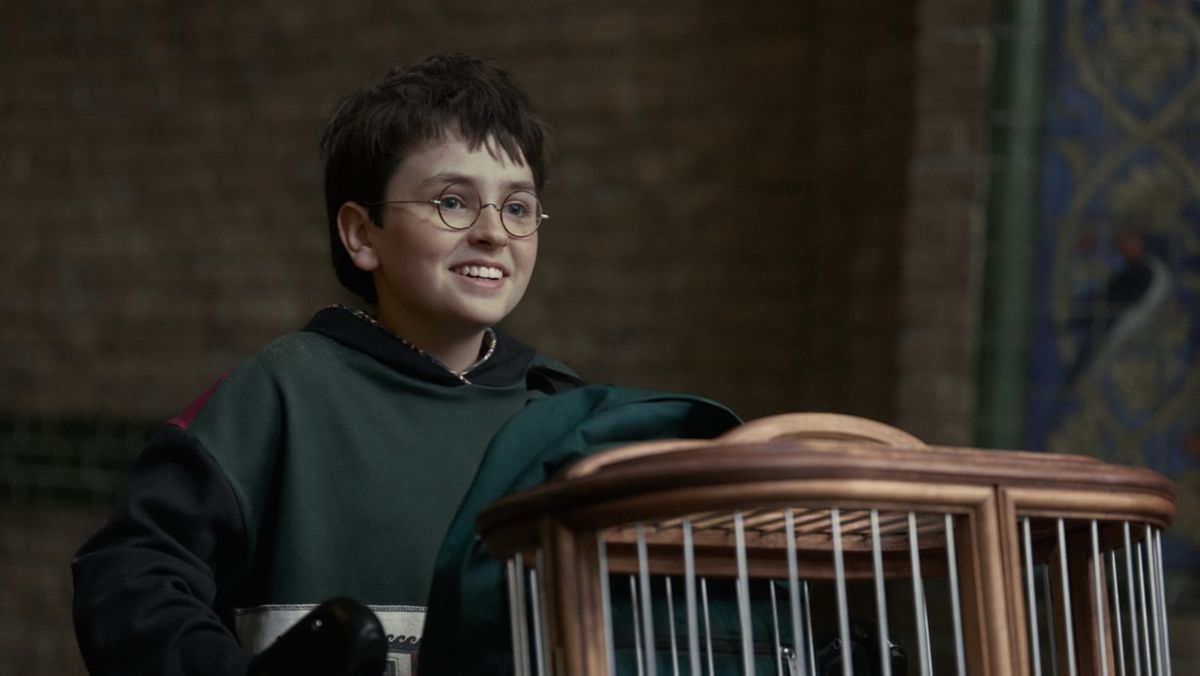
At the heart of this colossal undertaking are the young actors tasked with stepping into the iconic roles previously inhabited by Daniel Radcliffe, Rupert Grint, and Emma Watson. Dominic McLaughlin takes on the titular role of Harry Potter, with Alastair Stout as Ron Weasley and Arabella Stanton as Hermione Granger. These young talents face the dual challenge of embodying beloved characters while navigating the intense demands of a major Hollywood production. Their limited on-set availability, as detailed by Goldman, means they must be exceptionally focused and capable of delivering compelling performances under tight deadlines.
For these emerging actors, the Harry Potter series is a career-defining opportunity, but it also comes with immense scrutiny and pressure. The original trio became global superstars, and their performances set a high bar for comparison. McLaughlin, Stout, and Stanton must not only meet the physical demands of the role but also capture the essence of characters deeply ingrained in the cultural consciousness. Their ability to adapt to the "brutal" filming pace, maintain enthusiasm, and deliver consistent performances will be critical to the series’ success. The temporary school on set is not just for their education but also provides a stable environment amidst the whirlwind of filmmaking, crucial for the psychological well-being of young performers.
Production Timeline and Anticipated Release
The production timeline for the new Harry Potter series is ambitious and tightly scheduled, reflecting the long-term commitment to adapting all seven books.
- July 2025: Warner Bros. Studios Leavesden completes the construction of a temporary school on its premises, a critical step to support the academic and welfare needs of the young cast.
- Early 2026 (Inferred): Principal photography for the first season, Harry Potter and the Philosopher’s Stone, likely commences. This period would involve initial set construction, costume fittings, and the early stages of filming with the primary cast.
- July 19, 2026: Cinematographer Adriano Goldman’s revealing comments about the "brutal" filming conditions are published by Variety, bringing the behind-the-scenes challenges to public attention.
- Christmas Holidays 2026: The highly anticipated first season, Harry Potter and the Philosopher’s Stone, is slated for its global premiere on HBO Max. This holiday release window is strategically chosen to maximize viewership, leveraging the festive season when families are likely to gather and seek new entertainment.
- Autumn 2026 (Mid to Late 2026): Even before the first season airs, production is scheduled to begin on Season 2, Harry Potter and the Chamber of Secrets. This overlapping production schedule is common for major series, allowing for continuous content delivery and efficient use of sets and crew. This rapid succession of seasons is integral to the decade-long plan to adapt all seven books, indicating a fast-paced, high-volume production model.
This timeline underscores the immense logistical coordination required to bring such a complex and long-running series to fruition. The continuous production cycle means the cast and crew will be working non-stop for the foreseeable future, making the early reports of "brutal" conditions a significant concern for ongoing welfare.
Industry Perspectives: Balancing Artistry with Efficiency
The revelations about the Harry Potter series production conditions resonate with broader industry discussions about crew welfare, production pressures, and the impact of streaming services on traditional filmmaking practices. While the specific constraints of child labor laws are unique to productions with young actors, the demand for speed and efficiency is a constant in modern cinema, often exacerbated by tight budgets or aggressive release schedules.
Film industry analysts suggest that while speed can save money in some areas (e.g., fewer days on location), it can incur costs in others, such as potential reshoots if quality is compromised, or a higher turnover rate for stressed crew members. "The goal is always to maximize efficiency, but there’s a fine line between efficiency and exploitation," notes Dr. Evelyn Reed, a media studies professor specializing in film production logistics. "Major studios have a responsibility to ensure their crew’s well-being, especially on projects with such high visibility. Reports like these highlight the need for continuous oversight and support mechanisms."
From a creative standpoint, the challenge for director and cinematographer is to maintain the visual richness and atmospheric depth that Harry Potter fans expect, despite the rapid pace. This often means relying on highly skilled crew members, extensive pre-visualization (pre-vis), and sophisticated post-production techniques. While CGI can augment scenes, the foundational cinematography must be solid. Goldman’s comments imply that some creative choices might be dictated by the clock rather than purely artistic vision, a common lament among filmmakers in high-pressure environments.
Representatives from Warner Bros. and HBO Max, while not directly commenting on Goldman’s specific remarks, have consistently emphasized their commitment to creating a definitive adaptation of the Harry Potter books. An inferred statement from a studio executive might reiterate their dedication to supporting the cast and crew, ensuring compliance with all labor laws, and delivering a magical experience that honors J.K. Rowling’s legacy while maintaining the highest production standards. They would likely point to the on-site school as evidence of their commitment to child welfare.
Fan Expectations and Critical Reception: The Road Ahead
The Harry Potter fanbase is one of the most passionate and discerning in the world. News of "brutal" filming conditions, while primarily concerning crew welfare, could subtly influence fan perception. While fans prioritize a faithful adaptation, they also increasingly value ethical production practices. If reports suggest that the rushed pace tangibly impacts the visual quality, performance nuances, or overall artistry, it could lead to critical scrutiny and potentially temper initial enthusiasm.
Conversely, if the series manages to deliver a high-quality product that meticulously adapts the books, the initial challenges might be seen as a testament to the crew’s dedication and resilience. The anticipation for the series is immense, fueled by nostalgia and the promise of a more comprehensive narrative. The casting of the new Golden Trio and the involvement of J.K. Rowling have generated significant buzz. Ultimately, the success of the series will hinge on its ability to capture the magic of the books while demonstrating a commitment to responsible production.
The first season’s release during the Christmas holidays of 2026 will be a pivotal moment. Critics and fans alike will scrutinize every detail, from the performances of the young leads to the visual effects and pacing. The challenge for the production team is to not only meet but exceed the incredibly high expectations set by a beloved global phenomenon, all while navigating the logistical tightrope of working with young actors and an aggressive production schedule.
Conclusion: A High-Stakes Endeavor
The new Harry Potter television series represents a monumental undertaking for Warner Bros. and HBO Max, aiming to expand and deepen the narrative of J.K. Rowling’s iconic books over a decade. While the ambition is grand, the early reports of "brutal" filming conditions, driven by the necessary accommodation of child actors’ schedules, underscore the immense pressures faced by the cast and crew. Cinematographer Adriano Goldman’s candid remarks highlight the perpetual industry challenge of balancing efficiency with artistic integrity, especially when working within stringent regulatory frameworks. As the production barrels towards its Christmas 2026 premiere, the world watches with anticipation, hopeful that the magic of Hogwarts can be brought to life anew, without compromising the well-being of those working tirelessly behind the scenes. The success of this high-stakes endeavor will not only redefine the Harry Potter legacy but also serve as a crucial case study in the evolving landscape of large-scale, child-led productions in the streaming era.