Viral Social Media Video Sparks Global Curiosity Over Alleged Chinese Full-Body Airbag Motorcycle Helmet Technology

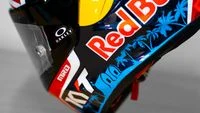
A dramatic video depicting a revolutionary motorcycle helmet equipped with a full-body airbag system originating from China has captured widespread attention across various social media platforms, accumulating millions of views. The viral clip, which showcases a rider experiencing a simulated fall and subsequently becoming encased in a massive, rapidly deploying white protective cocoon, has ignited intense global debate regarding both the technological feasibility of such a device and the authenticity of the visual media itself. While the concept of advanced safety gear designed to mitigate catastrophic injuries during motorcycle accidents is not entirely unprecedented, the emergence of this specific footage has highlighted the growing challenge of distinguishing between genuine engineering breakthroughs and sophisticated artificial intelligence-generated content in the digital age.
The Genesis of the Viral Phenomenon
The widespread dissemination of the video began in earnest on Tuesday, November 17, when the X (formerly Twitter) account @FutureStacked published a post featuring the now-viral footage. The accompanying caption claimed that China had successfully developed and launched an innovative motorcycle helmet featuring an integrated airbag mechanism. According to the claims made in the post, this purported technology was engineered to detect a fall and deploy instantly—in the blink of an eye—creating a protective cushion that envelops the rider’s entire body to absorb the kinetic energy of an impact before deflating automatically shortly thereafter.
As the video cascaded across digital networks, reaching audiences far beyond the initial posting, it prompted a flurry of investigative reporting and skepticism from automotive and technology journalists alike. According to a report published by the news outlet NDTV on Wednesday, November 18, online discussions quickly traced the alleged innovation back to two prominent entities within the industrial ecosystem of China: Zhejiang Lanxi Yema Motorcycle Fittings, a recognized helmet manufacturing enterprise, and Yanfeng Automotive, a major global supplier of automotive safety components.
Despite the widespread attribution and fervent speculation circulating across digital forums, a thorough examination of official corporate channels reveals that neither Zhejiang Lanxi Yema Motorcycle Fittings nor Yanfeng Automotive has issued any press releases, commercial announcements, or promotional materials acknowledging the existence, development, or upcoming release of such a product. The absence of corporate validation has served as a primary catalyst for industry experts and digital sleuths to scrutinize the foundational claims of the viral video.
Anatomy of a Suspected AI-Generated Hoax
As millions of internet users scrutinized the high-definition footage, numerous visual inconsistencies and technical anomalies quickly came to light, fueling widespread allegations that the video is a product of generative artificial intelligence (AI).
One of the most glaring contradictions observed by industry analysts pertains to the branding displayed within the video itself. While online rumors heavily linked the technological breakthrough to the Chinese manufacturer Lanxi Yema, the helmet worn by the rider in the footage prominently features the logo of AGV, a prestigious and historic motorcycle helmet brand hailing from Italy. Furthermore, the rider in the clip is outfitted in head-to-toe leather riding gear bearing the insignia of Dainese, another globally renowned Italian manufacturer of motorcycle protective equipment. The juxtaposition of a purported Chinese safety innovation utilizing elite Italian branding has added significant weight to the theory that the video was synthetically generated rather than captured from a genuine physical test.
Further compounding the skepticism is the total lack of verifiable secondary evidence. A comprehensive search across industrial databases, patent registries, product catalog pages, and independent safety testing facilities yields no formal documentation, press releases, or certification records that would corroborate the claim that a full-body airbag helmet system has been successfully engineered and manufactured in China.
To combat the rapid spread of misinformation, the crowdsourced verification mechanism on X, known as Community Notes, was swiftly appended to the viral post. The added context clarified that the video actually depicts a conceptual visualization of a full-body airbag suit designed to inflate into a protective white cocoon, rather than a functional, helmet-integrated airbag system. The Community Notes clarification further noted that while research and development into airbag-equipped helmets have occasionally been patented in various jurisdictions, including China, a commercial product matching the exact specifications and deployment mechanics shown in the viral video has never been officially released to the global market.
The Reality of Motorcycle Safety and Airbag Technology
While the specific video dominating social media feeds has been widely debunked as a conceptual or synthetically generated illusion, the broader conversation it has inadvertently sparked touches upon a very genuine and rapidly evolving sector of the automotive safety industry: wearable airbag technology for motorcyclists.
Motorcycle riders represent one of the most vulnerable demographics in global transportation infrastructure. According to traffic safety data compiled by organizations such as the World Health Organization (WHO) and national departments of transportation, motorcyclists face a disproportionately high risk of fatal injury or severe trauma in the event of a collision, primarily due to the lack of an exterior structural cage surrounding the operator. Consequently, engineers and safety researchers have spent decades developing advanced rider protection systems designed to bridge the gap between traditional static gear—such as leather jackets and reinforced helmets—and active safety systems common in modern automobiles.
In recent years, standalone wearable airbag systems, primarily configured as vests or jackets, have transitioned from elite racing circuits to the consumer market. Brands such as Alpinestars, Dainese, and Helite have successfully commercialized electronic and mechanical airbag vests that deploy upon detecting sudden deceleration, angular changes, or impacts. These systems inflate within milliseconds to protect critical areas of the upper body, including the neck, shoulders, thorax, spine, and ribs, significantly reducing the severity of blunt force trauma during accidents.
Efforts to integrate airbag technology directly into motorcycle helmets, however, have proven to be exponentially more complex from an engineering standpoint. Helmets are already subject to stringent safety certifications—such as ECE, DOT, and Snell standards—which mandate strict weight limitations, aerodynamic profiles, and structural integrity parameters. Adding an active explosive or compressed-gas inflation mechanism, sensors, power sources, and a flexible bladder system directly into the confines of a helmet introduces significant design challenges, including center-of-gravity shifts, increased weight that could strain the rider’s neck during low-speed impacts, and the risk of accidental deployment.
Despite these hurdles, the concept is not entirely fictional. In 2022, prominent Italian helmet manufacturer AIROH partnered with Swedish safety technology firm Autoliv—a global leader in automotive occupant protection systems—to unveil a functional prototype of a motorcycle helmet integrated with advanced airbag technology. The collaborative project aimed to enhance head and neck protection during severe crashes by deploying an external cushion attached to the helmet shell. However, industry insiders and representatives from both companies confirmed that the 2022 prototype initiative was part of a long-term research and development phase and bore no structural or corporate connection to the viral video that recently surfaced from Chinese digital channels.
Broader Implications and the Rise of Synthetic Media
The rapid proliferation and widespread uncritical acceptance of the viral airbag helmet video underscore a growing socio-technical challenge in the modern information ecosystem: the increasing sophistication of synthetic media and its impact on consumer perception.
As generative artificial intelligence tools become more accessible and capable of rendering hyper-realistic physics, lighting, and textures, distinguishing between authentic engineering advancements and digital fabrications grows increasingly difficult for the general public. In the context of consumer technology and automotive safety, such viral misinformation can distort market expectations, create unwarranted confusion regarding regulatory standards, and occasionally overshadow legitimate, peer-reviewed safety innovations occurring within the industry.
For industry analysts and communication strategists, the incident serves as a poignant reminder of the necessity for rigorous source verification. As long as public fascination with futuristic safety gear remains high, the temptation to generate speculative conceptual videos for digital engagement will persist. Consequently, consumers, journalists, and safety advocates must rely on official corporate disclosures, certified testing laboratories, and independent engineering validation before accepting dramatic social media claims as technological reality.
Conclusion
Ultimately, while the viral video depicting a Chinese full-body airbag helmet has been exposed as a digital illusion rather than a commercial product launch, it has successfully focused global attention on the ongoing quest for advanced motorcycle safety solutions. As engineers continue to refine wearable airbag vests and explore the complex integration of impact-mitigation systems within helmets, the boundary between science fiction and practical engineering continues to narrow—even if the viral manifestations of that future require a healthy dose of skepticism.
Related posts: