Universitas Gadjah Mada Firmly Rejects Police Use of Tear Gas and Tactical Vehicles Within Campus Grounds

Universitas Gadjah Mada (UGM) has issued a resolute stance against the deployment of security forces utilizing tear gas and tactical vehicles (rantis) within the boundaries of its campus. This declaration follows reports of heightened tensions during a protest action on November 10, where allegations emerged regarding the encroachment of law enforcement personnel into the academic environment while dispersing demonstrators. The university’s leadership has emphasized that the sanctity of the campus as a space for intellectual discourse and academic freedom must be preserved, particularly during instances of civic expression.
The Stance of University Leadership
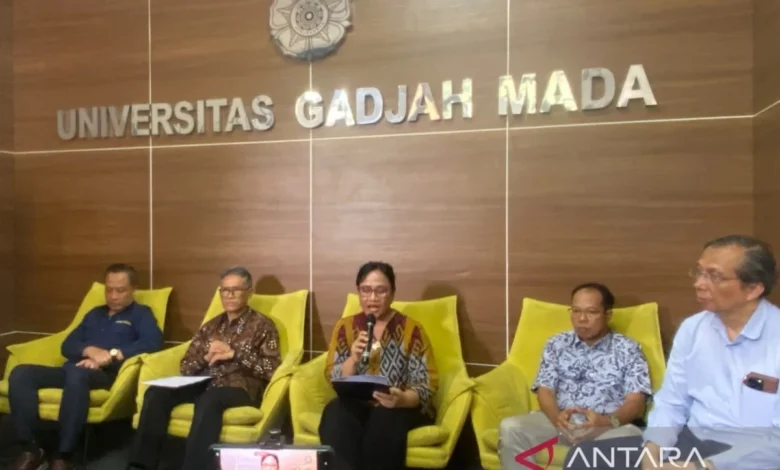
During a press conference held at the UGM campus in Yogyakarta, Vice Rector for Education and Teaching, Wening Udasmoro, articulated the institution’s firm opposition to any form of physical coercion within university grounds. "We strongly reject and I believe all members of the UGM community agree that security forces should not enter the UGM area with tear gas and other such measures," Wening stated.
The university’s position is rooted in the fundamental definition of a university as a "safe space." According to the UGM administration, the campus is designated for educational activities, which necessitates an environment free from violence. Wening highlighted that the university maintains a zero-tolerance policy toward violence, regardless of the perpetrator’s origin, be it state security apparatus, internal parties, or external organizations. By upholding this policy, the university aims to reinforce its role as a bastion of critical thinking and democratic participation.
Chronology of Events: The November 10 Protest
The controversy stems from a series of events on November 10, a significant date in Indonesia known as National Heroes’ Day. As demonstrators gathered to voice concerns regarding national policies and governance, security forces were deployed to manage the crowds. Reports surfaced on social media and among student groups suggesting that tactical vehicles and tear gas were used in proximity to—or potentially within—the UGM area during the dispersal process.
While the university administration acknowledged that information regarding the specific penetration of these vehicles into the campus remains "cloudy" or unverified, the preemptive stance taken by UGM serves as a firm boundary-setting exercise. The university is currently reviewing internal reports and testimonies from students and campus security to determine the exact extent of the police presence during the protest.
The Role of Academic Freedom and Democracy
A core component of the university’s response is the philosophical defense of student activism. UGM leadership argues that student protests and the articulation of critical views toward the government are essential indicators of a healthy, functioning democracy. Wening Udasmoro noted that instead of viewing protests as a nuisance, the state should interpret them as a vital feedback mechanism.
"The process of students expressing criticism and protests is something for which the state should be grateful, as there are still those providing input. When there is no input, and everyone says ‘okay,’ that is when one should be cautious," Wening remarked. This sentiment aligns with long-standing academic traditions where universities serve as the "conscience of the nation," providing space for discourse that might be stifled elsewhere.
Within the UGM institutional framework, this culture of openness is also applied to internal policies. The administration insists that it maintains a receptive stance toward student feedback regarding institutional decisions, viewing such dialogue as a collaborative effort to improve the quality of higher education.
Polda DIY Response and Ongoing Investigation
In response to the mounting pressure and public concern, the Yogyakarta Regional Police (Polda DIY) have issued a denial regarding the alleged encroachment of their personnel into the campus grounds. Authorities maintained that their security protocols are designed to ensure public order while respecting the autonomy of educational institutions.
Despite these assurances from law enforcement, the discord between the university’s account and the police narrative highlights a significant disconnect in communication during civil disturbances. This tension is not unique to Yogyakarta; across Indonesia, the relationship between campus administrations and security forces during student-led demonstrations has been a subject of recurring debate. The "campus autonomy" principle—which generally restricts the entry of police into university grounds without administrative permission—remains a highly sensitive topic.
Contextualizing Campus Security in Indonesia
The incident at UGM is set against a broader backdrop of student activism in Indonesia. Historically, universities have been the epicenter of political change, most notably during the 1998 Reformasi movement. Because of this history, the presence of security forces on campus often triggers deep-seated collective trauma and evokes concerns about the regression of democratic freedoms.
Data on protest management in Indonesia shows that tactical vehicles and tear gas are commonly deployed in urban centers to prevent the escalation of protests. However, the use of these tools near "vital academic zones" often sparks debate over proportionality. International human rights organizations and educational advocacy groups have previously criticized the use of force in proximity to schools and universities, noting that such actions can disproportionately affect non-combatant students and staff, and may create a "chilling effect" on free speech.
Broader Implications for Academic Institutions
The firm stance taken by UGM has implications that extend beyond the Yogyakarta campus. It sets a precedent for other universities to assert their autonomy and protect their students’ right to express dissent. By publicly rejecting the presence of force, UGM is reinforcing the "sanctuary" status of the university, a principle that is vital for the protection of independent research and critical inquiry.
- Academic Autonomy: The protection of the campus as a neutral ground is essential for the pursuit of truth. When institutions are perceived as being under the influence or direct intervention of state security, the integrity of academic discourse is compromised.
- Standardizing Protest Protocols: The incident may lead to more formalized agreements between university administrations and local police departments regarding the management of protests on the perimeter of academic zones.
- Dialogue as a Solution: The UGM administration’s emphasis on "gratitude for criticism" signals a shift toward a more collaborative governance model, where student voices are viewed as stakeholders in the national trajectory rather than adversaries.
Conclusion and Future Outlook
As the situation in Yogyakarta stabilizes, the primary concern for the UGM administration remains the safety and well-being of its students and staff. The university is committed to investigating the events of November 10 further to ensure that no breach of campus safety protocols occurs in the future.
The incident serves as a critical reminder of the delicate balance between maintaining public order and protecting the fundamental right to peaceful assembly. For UGM, the path forward is clear: the university will continue to foster an environment where students are encouraged to engage with the issues of the day, provided that their voices are heard in an environment free from fear and intimidation. As an institution of higher learning, UGM continues to stand by its belief that a vibrant democracy depends on the courage of its youth to speak, and the willingness of its institutions to provide the space for them to do so safely.
The university has indicated that it will remain in active communication with law enforcement agencies to ensure that future protests, should they occur, are managed with the utmost respect for the university’s status as a peaceful, academic, and safe environment for all who study and work within its walls.
Related posts: