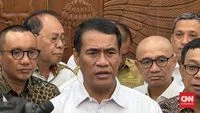
Minister Reveals Majority of Public Works Ministry Employees Involved in Online Gambling Are Lower-Level Officials


Jakarta, Indonesia – A significant portion of employees within Indonesia’s Ministry of Public Works and Public Housing (PUPR) implicated in online gambling activities are from lower-ranking positions, with a concerning number of transactions reaching hundreds of millions of Rupiah. Minister of Public Works, Dody Hanggodo, revealed that approximately 6,000 out of the ministry’s 38,600 employees have been flagged for suspected involvement in online gambling, commonly referred to as "judol."
The data, provided by the Financial Transaction Reports and Analysis Centre (PPATK), paints a stark picture of the prevalence of this issue within the ministry. Minister Hanggodo expressed his astonishment at the scale of the transactions, particularly noting that the majority of implicated individuals are Echelon IV and V officials, as well as those without any official echelon. Notably, no Echelon I or II officials have been detected in the PPATK’s findings thus far.
"The data shows that there are indeed over 6,300 individuals involved in judol, and what is shocking is the value of these transactions – hundreds of millions of Rupiah. I am perplexed, as these are not Echelon II or Echelon I officials, but rather Echelon IV, Echelon V, and those without any echelon," stated Minister Hanggodo during a media briefing at his office on Wednesday, July 22nd.
The extent of the financial involvement is particularly alarming. According to the PPATK data shared with the Minister, one employee’s online gambling transactions alone reached an astounding Rp800 million. This figure is exceptionally high for civil servants, especially those in lower-ranking positions.
"The highest transaction was over Rp800 million for a single individual. If totaled, the amount could reach billions of Rupiah from these approximately 6,000 employees," Hanggodo added.
Ministry Initiates Disciplinary Actions and Investigations
In response to these findings, the Inspectorate General of the Ministry of Public Works is currently conducting a thorough analysis of the implicated employees. The ministry has outlined a clear disciplinary framework for addressing these cases, differentiating sanctions based on the transaction value.
Employees found to have online gambling transaction values below Rp10 million will face minor sanctions, such as a written reprimand. This approach aims to address less severe instances while emphasizing the unacceptability of such behavior.
However, for employees whose online gambling transactions exceed Rp10 million, a more in-depth investigation will be undertaken. This deeper dive will aim to ascertain the full extent of their involvement and determine the appropriate and proportionate sanctions. The ministry emphasized its commitment to a fair and transparent disciplinary process.
"But for those with transactions of Rp10 million and above, there will likely be further investigation. Basically, we do not want the people’s money to be used inappropriately," Minister Hanggodo concluded, underscoring the ministry’s responsibility to public funds and the integrity of its workforce.
The Growing Shadow of Online Gambling in Indonesia
The revelation from the Ministry of Public Works highlights a broader societal concern in Indonesia: the pervasive and rapidly growing issue of online gambling. While the specific case involves a government ministry, the underlying problem affects a wide spectrum of Indonesian society, from students to professionals.
Online gambling, or "judol," has seen a significant surge in popularity across Indonesia in recent years. This growth is attributed to several factors, including increased internet penetration, the proliferation of smartphones, and the relative ease of access to various online gambling platforms. Many of these platforms operate through offshore servers, making them difficult to regulate and shut down by domestic authorities.
The PPATK, the agency tasked with combating financial crimes, has been a key player in identifying suspicious transactions. Their role in flagging these accounts within the Ministry of Public Works is a testament to their ongoing efforts to monitor financial flows related to illicit activities.
Timeline of Events and Data Analysis
While the specific timeline of individual employee involvement remains under investigation, the PPATK’s data provides a snapshot of the current situation. The data indicates that the period covered by the PPATK’s analysis has revealed a significant number of employees with financial activities consistent with online gambling.
The concentration of implicated officials at Echelon IV and V levels, along with non-echelon employees, suggests a potential vulnerability within the lower strata of the ministry’s organizational structure. This could be due to a variety of reasons, including potentially lower salaries, greater susceptibility to peer influence, or a lack of awareness regarding the severe consequences of such activities.
The fact that Echelon I and II officials have not been detected in this specific PPATK report is a positive indicator for the highest levels of leadership within the ministry. However, it does not diminish the gravity of the issue at lower levels.
The staggering figure of Rp800 million in transactions for a single individual, particularly someone in a lower echelon, raises serious questions about financial management, potential illicit income sources, or the extent to which these individuals may have fallen prey to gambling addiction.
Official Responses and Broader Implications
The Ministry of Public Works’ proactive approach in addressing the issue is crucial. By publicly acknowledging the problem and outlining a disciplinary framework, Minister Hanggodo signals a commitment to transparency and accountability.
The tiered disciplinary approach – minor sanctions for lower transaction values and deeper investigations for higher amounts – appears to be a pragmatic strategy. It allows for swift action on less severe cases while ensuring thoroughness for more serious offenses.
The ministry’s stance, "we do not want the people’s money to be used inappropriately," directly links the actions of its employees to their public service role and the responsible stewardship of public resources. This sentiment is vital in reinforcing the ethical obligations of civil servants.
The implications of this revelation extend beyond the Ministry of Public Works. It serves as a wake-up call for other government agencies and public institutions across Indonesia. The widespread accessibility of online gambling platforms means that similar issues could be present in various sectors.
Potential Factors Contributing to Employee Involvement
Several factors could be contributing to the involvement of ministry employees in online gambling:
- Financial Strain: Lower-ranking civil servants may face financial pressures, making them more susceptible to seeking quick financial gains through gambling.
- Accessibility and Normalization: The ease of access to online gambling platforms and the increasing normalization of such activities in society can lower the perceived risk and ethical barriers.
- Addiction: For some individuals, online gambling can escalate into a severe addiction, leading to desperate financial decisions.
- Lack of Awareness: A potential lack of comprehensive education and awareness campaigns within the ministry regarding the risks and consequences of online gambling could also be a contributing factor.
- Peer Influence: In any workplace environment, peer influence can play a role, and if online gambling is prevalent among a group, others might be drawn in.
Government’s Wider Stance on Online Gambling
The Indonesian government has consistently taken a firm stance against online gambling. Law Number 11 of 2008 concerning Information and Electronic Transactions (ITE Law) prohibits the promotion and facilitation of online gambling. Enforcement efforts include blocking websites and collaborating with international bodies to curb the flow of illegal gambling activities.
The Ministry of Communication and Information Technology (Kominfo) regularly announces the blocking of numerous online gambling sites. However, the persistent emergence of new platforms and the use of VPNs make it a challenging battle. The PPATK’s role in tracking financial flows is therefore a critical complementary strategy.
Future Steps and Recommendations
The Ministry of Public Works’ current actions are a positive step, but further measures could be considered to address the root causes and prevent future occurrences:
- Enhanced Awareness and Education Programs: Implementing comprehensive and regular awareness programs for all employees, focusing on the dangers of gambling addiction, financial literacy, and the ethical implications for public servants.
- Support Systems for Employees: Establishing or promoting existing support systems, such as counseling services or employee assistance programs, for employees struggling with gambling addiction or financial difficulties.
- Stricter Monitoring and Verification: While respecting privacy, exploring mechanisms for more robust monitoring of financial activities that might indicate illicit behavior, particularly for employees in positions of trust or those with access to public funds.
- Cross-Agency Collaboration: Sharing best practices and findings with other government ministries and agencies to foster a unified approach to combating online gambling within the public sector.
- Review of Salary and Welfare: While not a direct solution, a periodic review of salary scales and welfare programs for lower-ranking civil servants might indirectly alleviate some of the financial pressures that could lead individuals to seek risky avenues for income.
The findings from the Ministry of Public Works serve as a critical reminder that the fight against online gambling requires a multi-faceted approach, involving law enforcement, financial intelligence, public awareness, and robust internal governance within public institutions. The ministry’s commitment to investigating and imposing sanctions is a crucial step in upholding integrity and public trust.