The Complex Dual Currency System of Iran: Rial Under Pressure, Toman Dominates Daily Transactions

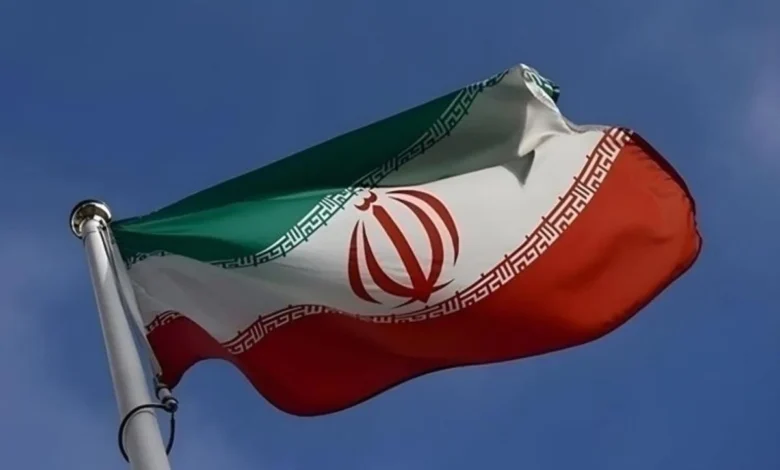
The Iranian currency, the rial, has recently found itself at the epicenter of global attention, largely due to escalating geopolitical tensions and shifting global economic policies. A significant catalyst for this heightened scrutiny has been the stringent measures imposed by the United States, with President Donald Trump implementing tariffs of up to 25 percent on nations engaging in business collaborations with Iran. This policy has reverberated through Iran’s economic landscape, most notably contributing to the considerable weakening of its national currency. Recent reports indicate that the Iranian rial has experienced a precipitous decline, reaching historically low levels when converted into euros, underscoring the immense pressure on the Iranian economy stemming from sustained sanctions and persistent inflation.
However, a curious dichotomy emerges when one visits Iran’s bustling traditional markets or navigates its vibrant shopping centers. The term "rial" is conspicuously absent from everyday transactional conversations. Instead, locals overwhelmingly adopt the term "toman" when discussing the prices of goods and services. This widespread reliance on the toman is not an arbitrary linguistic quirk but a direct consequence of the country’s extremely high inflation rate. To simplify price referencing and circumvent the cumbersome use of excessively large numbers, Iran has unofficially adopted an alternative accounting system known as the toman.
This dual currency phenomenon, where an official currency coexists with a de facto colloquial unit, often leads to confusion among international tourists and economic observers alike. Understanding the fundamental differences between the rial and the toman, and the historical context that led to this situation, is crucial for a comprehensive grasp of Iran’s economic realities.
The Official Currency: Rial (IRR)
Legally and administratively, the rial stands as Iran’s official currency. All official banking transactions, government documentation, and pricing in modern retail establishments are conducted and denominated in rials, carrying the international code IRR. The Central Bank of Iran (CBI) is the issuing authority, and all legal tender is expressed in rials. This formal recognition of the rial is anchored in the nation’s monetary laws and international financial reporting standards. Historically, the rial has been the primary unit of exchange since its introduction in the early 20th century, evolving through various iterations and denominations over the decades.
The Unofficial Dominance: Toman and the Impact of Inflation
Despite the rial’s official status, its practical use in daily transactions has been largely supplanted by the toman. This shift is a direct response to the erosive effects of hyperinflation, which has significantly devalued the rial over time. In everyday Iranian discourse, the term "rial" is rarely uttered during a purchase. Instead, "toman" is the preferred and more manageable unit of pricing.
The practical difference is substantial and directly linked to the inflationary pressures. One toman is equivalent to 10,000 rials. In essence, the toman is a simplified representation of the rial, with four zeros effectively removed. This simplification makes price discussions more fluid and less prone to errors when dealing with extremely large figures. For instance, a price tag of 60,000 toman translates to a staggering 600,000 rials. This numerical disparity is a constant source of bewilderment for foreign visitors encountering the Iranian economy for the first time.
Historical Context and the Road to Redenomination
The historical roots of this dual system lie in the sustained economic challenges Iran has faced. The imposition of international sanctions, particularly those enacted by the United States, has had a profound impact on the rial’s value. These sanctions, aimed at curtailing Iran’s nuclear program and its regional influence, have severely restricted its access to international financial markets, limited its oil exports, and deterred foreign investment. The cumulative effect has been a dramatic depreciation of the rial, exacerbating inflationary pressures.
For decades, the Iranian government has grappled with the persistent devaluation of the rial. While the official figures always reflect rials, the public’s adoption of the toman as a unit of convenience has been a long-standing coping mechanism. The psychological and practical burden of constantly dealing with vast numbers in everyday transactions became untenable for the populace.
Recognizing the need to streamline its financial system and alleviate public confusion, the Iranian government, through the Central Bank of Iran, initiated a significant monetary reform. Beginning in 2020, the CBI started the process of redenominasi, a formal revaluation of the currency. This comprehensive plan, slated for broader implementation between 2025 and 2026, aims to officially replace the rial with a new version of the toman as the primary unit of currency.
Under this redenominasi plan, the Iranian rial will be officially replaced by the new toman. The core of this reform involves removing four zeros from the existing rial. Therefore, 10,000 old rials will be equivalent to one new toman. This new toman will be further subdivided into smaller units called qiran, with one toman comprising 100 qiran. This move is intended to simplify accounting, reduce the physical volume of banknotes needed for transactions, and potentially bolster public confidence in the currency.
The Transition Period: Coexistence and Adaptation
The transition to the new currency system is designed to be gradual. During this period, old rial banknotes will continue to circulate alongside the new toman currency. Newer banknotes issued by the CBI are already being printed with smaller nominal values, often featuring a faint indication of the removed zeros. This visual cue serves as a reminder of the ongoing systemic change and facilitates a gradual adaptation for the public.
The implementation of such a large-scale currency reform is a complex undertaking. It requires extensive public education campaigns, recalibration of financial systems, and the logistical challenge of distributing new currency while phasing out the old. The success of this redenominasi will depend on the CBI’s ability to manage inflation effectively during the transition and to build trust in the new currency unit.
Factors Contributing to the Rial’s Weakness
The precarious state of the Iranian rial is not a singular event but a culmination of interconnected factors. The primary drivers of its depreciation include:
- International Sanctions: The most significant external pressure on the Iranian economy and its currency has been the multifaceted sanctions regime imposed by the United States and its allies. These sanctions have crippled Iran’s oil exports, its primary source of foreign currency, and have severely restricted its access to global financial networks. The inability to engage in normal international trade and investment directly impacts the demand for and value of the rial. For instance, data from the U.S. Treasury Department details numerous entities and individuals sanctioned for activities related to Iran’s oil sector and financial institutions, directly limiting the rial’s convertibility and international standing.
- Persistent Inflation: Iran has historically struggled with high inflation rates, a problem exacerbated by economic mismanagement, government spending, and the impact of sanctions. High inflation erodes the purchasing power of money, leading to a continuous devaluation of the currency. The International Monetary Fund (IMF) has consistently reported high inflation figures for Iran, often in double digits, which fuels the need for a simplified currency unit like the toman.
- Geopolitical Instability: The broader geopolitical landscape in the Middle East, particularly the tensions between Iran and the United States, has created an environment of uncertainty. This instability deters foreign investment and can lead to capital flight, further pressuring the rial. Events such as the drone strike on Iranian oil facilities or regional military standoffs have historically triggered sharp depreciations of the rial in currency markets.
- Economic Structural Issues: Underlying structural weaknesses within the Iranian economy, including reliance on oil revenues, a large state-controlled sector, and corruption, also contribute to economic vulnerability and currency instability. These issues make the economy less resilient to external shocks.
Broader Implications of the Currency Reform
The redenominasi of the Iranian rial to the toman represents a significant step in the nation’s economic policy. Beyond simplifying daily transactions, the reform is intended to have several broader implications:
- Restoring Confidence: A primary goal is to restore public confidence in the national currency. By removing large numbers and creating a more manageable unit, the government hopes to alleviate the psychological impact of high inflation and present a more stable economic image.
- Facilitating Trade and Investment: A simplified currency system, with fewer zeros, can potentially make financial transactions more straightforward for both domestic and international businesses. This could, in theory, encourage more foreign investment, although the effectiveness will largely depend on the lifting of sanctions and broader economic reforms.
- Symbolic Importance: The currency reform also carries symbolic weight. It signals a commitment by the Iranian government to address deep-seated economic challenges and to modernize its financial infrastructure.
However, the success of this ambitious reform is not guaranteed. The underlying causes of inflation and currency depreciation, particularly the impact of international sanctions, remain significant hurdles. The transition period itself is fraught with challenges, and the long-term stability of the new toman will depend on a confluence of domestic economic policies and the evolution of the geopolitical landscape. The global financial community will be closely observing Iran’s progress as it navigates this complex monetary transformation, a testament to the intricate interplay between economics, politics, and the daily lives of its citizens.
Related posts: