Warren Buffett Officially Steps Down as Berkshire Hathaway Chairman After Six Decades at the Helm

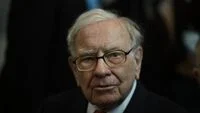
The era of Warren Buffett’s direct boardroom leadership at Berkshire Hathaway has officially drawn to a close. On Friday, September 18, the legendary investor stepped down from his role as chairman of the board, marking the end of a remarkable tenure spanning more than sixty years. Despite relinquishing the chairmanship, Buffett has opted to remain a member of the board of directors, ensuring that his historic institutional knowledge and foundational ethos will continue to anchor the multinational conglomerate.
In recognition of his monumental contributions, Berkshire Hathaway announced the creation of a new honorary designation, naming Buffett chairman emeritus. This prestigious title is traditionally reserved for visionary founders, retired executives, or long-standing directors whose service and enduring impact have fundamentally shaped the trajectory of an enterprise. Buffett’s departure from the chairmanship closes a chapter that not only transformed a struggling New England textile mill into an economic titan valued at over $1.1 trillion, but also forever altered the landscape of global investing.
The transition was formally communicated to shareholders through one of Buffett’s characteristic, candid letters. Reflecting on his departure, the billionaire investor offered a characteristically philosophical take on the passage of time. "Time always wins. However, time has been remarkably generous to me," Buffett wrote in the letter, which was widely circulated by financial news agencies. "After more than 60 years, I still have the best job in the world. Not many people my age can say the same, and I have never felt better about what lies ahead."
The Succession Blueprint and the Rise of Howard Buffett
With Buffett stepping aside from the active chairmanship, the board of directors elected his eldest son, Howard Buffett, to succeed him as non-executive chairman. Howard Buffett, who has served as a Berkshire director since 1993, steps into a role designed primarily to preserve the corporate culture and long-term governance principles of the conglomerate rather than manage day-to-day operations.
Unlike his father’s historic dual-threat role as both chairman and chief executive officer, Howard Buffett will not hold executive management responsibilities. His primary mandate is safeguarding the unique decentralized culture that has defined Berkshire Hathaway for decades. Under this decentralized model, the myriad subsidiary companies operating beneath the Berkshire umbrella enjoy vast autonomy, managing their daily activities without heavy-handed intervention or bureaucratic micromanagement from the corporate headquarters in Omaha, Nebraska.
This leadership adjustment follows nearly nine months after Warren Buffett stepped down from his long-held post as chief executive officer, passing the operational reins to his handpicked successor and longtime lieutenant, Greg Abel. The deliberate, methodical nature of this multi-year succession plan has drawn praise from market analysts and institutional investors alike, who view the gradual delegation of authority as a masterclass in corporate continuity.
Brian Jacobsen, chief economist at Annex Wealth Management in Brookfield, Wisconsin, noted the orderly progression of the handover. "This was always a question of when, not if. Buffett has executed this transition with extraordinary elegance," Jacobsen observed. "The move feels far more like the final, natural punctuation mark of a meticulously planned succession process rather than any abrupt or disruptive shift in leadership."
A Chronology of Transition: From CEO to Chairman Emeritus
The shifting of the guard at Berkshire Hathaway has unfolded through a carefully calibrated timeline, designed to mitigate market anxiety and ensure absolute stability:
- Late 2023 to Early 2024: Whispers and formal outlines regarding succession solidify as Buffett publicly acknowledges the necessity of preparing the firm for the post-Buffett era, emphasizing the readiness of his inner circle.
- Late December: Warren Buffett steps down as chief executive officer, officially passing the operational controls of the sprawling conglomerate to Greg Abel, who assumes the CEO title.
- Friday, September 18: Buffett formally steps down from his position as chairman of the board, concluding more than six decades at the leadership pinnacle of the firm. Berkshire Hathaway confers upon him the title of chairman emeritus, while Howard Buffett is appointed non-executive chairman of the board.
- Sunday, September 20: Berkshire Hathaway publicly releases Buffett’s letter to shareholders, detailing his reflections on stepping down and confirming his continued presence as a regular member of the board of directors.
Buffett’s decision to reduce his workload has not been prompted by any sudden medical emergency or health crisis. While the billionaire maintains his characteristic privacy regarding detailed medical records, he recently shared a lighthearted anecdote involving his one-year-old great-grandson, joking that the toddler was already "moving a little bit faster" than he was. At over ninety years of age, Buffett’s decision to step back is viewed by close associates as a natural accommodation to the realities of advanced age, executed on his own terms.
Building the Oracle’s Empire: From Textile Mill to $1.1 Trillion Giant
Warren Buffett’s journey to becoming the quintessential "Oracle of Omaha" is one of the most studied business narratives in modern economic history. Taking control of Berkshire Hathaway in the mid-1960s, Buffett initially inherited a faltering textile manufacturing business. Rather than allowing the company to fold, he systematically pivoted its capital toward equity investments and wholly owned subsidiaries, transforming it into a massive holding company.
Over the decades, Buffett popularized the philosophy of value investing—identifying fundamentally sound companies trading below their intrinsic value and holding them for the long term. His plainspoken wisdom, homespun analogies, and unwavering adherence to ethical business practices earned him a global following of retail investors, institutional managers, and corporate executives.
Today, Berkshire Hathaway’s corporate empire spans an astonishing breadth of the global economy. Its portfolio of wholly owned subsidiaries includes:
- GEICO: One of the largest auto insurers in the United States, providing a steady stream of "float" capital that Buffett utilized for major investments.
- BNSF Railway: A colossal freight railroad network moving goods across the North American continent.
- Energy and Utilities: Sprawling operations providing electricity and natural gas to millions of customers.
- Retail and Manufacturing: Well-known consumer brands and industrial firms, including iconic ice cream maker Dairy Queen, high-end kitchen cutlery brand Ginsu, and the venerable World Book encyclopedia.
In addition to these operating businesses, Berkshire maintains a massive equity portfolio containing hundreds of billions of dollars in blue-chip common stock. Among its most prominent holdings are massive stakes in tech giant Apple, financial services titan American Express, Google parent company Alphabet, and beverage icon Coca-Cola.
Uniquely among enterprises valued above $1万亿 (one trillion dollars)—a club otherwise heavily dominated by high-flying technology conglomerates—Berkshire Hathaway achieves its monumental valuation through a diversified blend of heavy industry, insurance, retail, and traditional equity ownership.
Broader Economic Implications and Market Reactions
The formal retirement of Warren Buffett from the chairmanship marks the definitive close of an era in American capitalism. For generations of market participants, Berkshire Hathaway was synonymous with Buffett’s personal brand of patient, rational, and disciplined capital allocation.
Financial markets have largely priced in the structural changes, given the multi-year runway provided by Buffett and his executive team. Greg Abel’s leadership as CEO has already won the confidence of major shareholders, who appreciate his deep operational expertise within Berkshire’s energy and utility divisions. Meanwhile, Howard Buffett’s appointment as non-executive chairman guarantees that the distinct corporate culture—characterized by minimal corporate overhead, absolute integrity, and decentralized autonomy—will remain safeguarded against institutional drift.
As Berkshire Hathaway navigates this new chapter under the leadership of Greg Abel and Howard Buffett, the foundational principles established by the Oracle of Omaha remain deeply embedded in the company’s DNA. While the man holding the gavel has changed, the enduring philosophy of disciplined investing and long-term value creation continues to set the standard for corporate governance worldwide.
Related posts: