FIFA President Gianni Infantino Proposes Independent Governance Review Following Commercial Rights Controversy

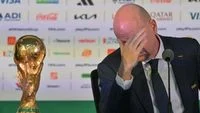
The international governing body of association football, FIFA, is once again navigating a period of internal turbulence and institutional scrutiny. In an official letter addressed to the FIFA Council and the organization’s 211 member associations, FIFA President Gianni Infantino has formally broken his silence on a series of governance controversies that have threatened the internal unity of the global body. Infantino’s communication outlines a proactive approach to addressing these divisions, most notably through a proposal for an independent, external review of FIFA’s current governance framework for strategic initiatives. This development represents a significant pivot for the leadership, coming in the wake of intense pushback from major continental confederations regarding proposed structural overhauls and commercial partnerships.
Background and Context of the Controversy
The current friction within FIFA stems from a controversial proposal spearheaded by Infantino earlier this year, which sought to sell a 20 percent stake in FIFA’s commercial rights—including lucrative revenue streams tied to the FIFA World Cup—to private equity investors. The initiative, designed to dramatically boost global football development funds and expand commercial horizons, was met with immediate alarm from several powerful regional stakeholders. Critics argued that privatizing a significant portion of the organization’s primary revenue engine would compromise the democratic oversight of the sport and shift financial control away from traditional football administration channels toward private corporate entities.
The plan ignited a firestorm of resistance across European, Asian, and North and Central American football administrators. UEFA, the Asian Football Confederation (AFC), and the Confederation of North, Central America and Caribbean Association Football (CONCACAF) expressed profound dissatisfaction not only with the substance of the commercial proposal, but crucially with the manner in which it was introduced. Member associations complained that major strategic decisions of this magnitude were being formulated and pushed forward without adequate prior consultation, undermining the consultative principles that underpin global sports governance.
Chronology of Escalation and Resolution
The timeline of the dispute accelerated rapidly during the spring and early summer months. As details of the private equity proposal leaked and circulated among the 211 member associations, opposition solidified. By June, major confederations were actively coordinating responses, culminating in veiled and overt threats of boycotts regarding upcoming tournaments and administrative votes.
The tipping point arrived in July, when the pressure from UEFA, AFC, and CONCACAF reached a crescendo. Faced with the realistic prospect of a fractured congress and widespread institutional rebellion, Infantino and his executive team formally shelved the proposal. The plan to monetize the World Cup commercial rights was officially withdrawn, with the FIFA leadership assuring stakeholders that the initiative would not be pursued further.
However, the withdrawal of the commercial rights proposal did not immediately heal the institutional fractures. The incident exposed underlying systemic vulnerabilities in how power and decision-making authority are distributed within FIFA, prompting calls from continental bodies for a fundamental re-evaluation of presidential powers and executive decision-making protocols. Despite these calls for reform, the opposition has yet to materialize into a concrete electoral threat. Although UEFA, AFC, and CONCACAF have publicly criticized Infantino’s leadership style, no viable candidate has stepped forward to challenge him ahead of the upcoming FIFA presidential election scheduled for March 2027 in Morocco.
Infantino’s Defense and Strategic Proposals
In his recent letter to the global football community, Infantino sought to contextualize the events that led to the summer crisis, defending his administrative intentions while acknowledging the communication gaps that caused widespread anxiety. He emphasized that the private equity initiative was never a finalized executive decree, but rather a preliminary discussion document intended to stimulate financial growth.
"I am aware that, without context, this raised concerns and created the impression that decisions had been taken, when they had not," Infantino wrote in the correspondence seen by international news agencies. "It remained a proposal, not a decision, and was always dependent on the necessary approval from the Council and Member Associations. That proposal has now been withdrawn and will not be pursued."
To rebuild trust and mend fences with alienated confederations, Infantino outlined a series of structural remedies. Foremost among these is his intention to ask the FIFA Council to commission an independent, external review of the framework governing strategic initiatives. Furthermore, the FIFA President announced plans to initiate broad consultations with all six confederations, member associations, and key industry stakeholders to reinforce and democratize FIFA’s decision-making architecture.
These upcoming consultations are expected to closely examine the distribution of authority regarding major initiatives, specifically defining and balancing the respective roles of the FIFA President, the Bureau of the Council, the FIFA Council itself, and the sovereign FIFA Congress. By opening these internal mechanics to scrutiny, Infantino aims to demonstrate a commitment to transparency and prevent future unilateral policy proposals from blindsiding the membership.
Stakeholder Reactions and Political Landscape
The reaction from regional confederations to Infantino’s latest overtures has been cautiously measured. While the withdrawal of the commercial rights proposal was viewed as a major victory for collective governance, institutional watchdogs and regional leaders maintain that structural reforms must go beyond symbolic gestures.
European football officials have consistently argued that FIFA requires stricter internal checks and balances to ensure that the executive branch cannot bypass traditional consultative channels. Similar sentiments have been echoed within Asian and North American football circles, where administrators have emphasized the necessity of protecting the integrity of international match calendars and tournament revenues from speculative commercialization.
Despite these tensions, the political reality within FIFA currently favors stability. Infantino remains firmly entrenched in his position. The absence of a challenger for the March 2027 election in Morocco underscores the formidable political machinery the current president has cultivated across Africa, South America, and smaller member associations worldwide, where his focus on expanding tournament formats—such as the expanded 48-team FIFA World Cup and the new Club World Cup—has earned him substantial support.
Addressing the internal climate directly in his letter, Infantino sought to reassure all member associations that regional politics would not influence administrative treatment or resource allocation. "My role is not to judge these discussions prematurely," he stated. "Those who support a specific model must have the opportunity to present their arguments. The treatment of any association will not depend on its position regarding any proposal or institutional issue. I remain fully committed to leading FIFA."
Broader Implications for Global Football Governance
The ongoing friction between FIFA’s executive leadership and its powerful continental confederations highlights the persistent challenges of governing a truly global sport with diverse regional interests. As football continues to commercialize at an unprecedented rate, the tension between maximizing financial returns through private investment and maintaining democratic, transparent sports administration remains a central dilemma for modern sports federations.
The proposed independent governance review, if executed with genuine autonomy and rigorous oversight, could serve as a crucial milestone in modernizing FIFA’s administrative practices. However, the ultimate success of these reforms will depend on the willingness of both the central leadership and regional confederations to engage in constructive, good-faith dialogue ahead of the 2027 electoral congress. For now, Infantino has successfully diffused the immediate threat of an executive revolt, but the path forward requires delicate diplomacy to ensure that FIFA remains a unified global body capable of navigating the complex financial and structural demands of 21st-century football.
Related posts: