Ministry of Finance Identifies Financially Strained Regions, Plans Targeted Fiscal Support


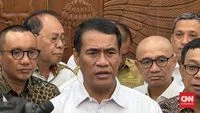
Jakarta, Indonesia – The Indonesian Ministry of Finance has identified a number of regions experiencing significant financial difficulties and is in the process of formulating a plan for targeted fiscal support. Minister of Finance Purbaya Yudhi Sadewa revealed this initiative during a press conference on APBN Kita (Our State Budget) held at the Ministry of Finance in Jakarta on Tuesday, July 21, 2026. The government’s assessment involves a detailed examination of each region’s financial health, including the status of their cash reserves in banks and how these funds are being utilized.
"We are indeed examining which regions are running out of money. We are looking at their bank balances and whether those funds are being put to use," stated Purbaya, underscoring the proactive approach being taken to address potential fiscal imbalances at the regional level. This move comes as part of a broader strategy to ensure fiscal stability and equitable development across the archipelago.
The Ministry of Finance has already calculated the potential increase in "Transfer ke Daerah" (TKD), or transfers from the central government to regional governments, for these identified areas. TKD represents a significant portion of regional budgets, encompassing various forms of financial assistance from the central government, including general allocation funds (DAU), specific allocation funds (DBH), grants, and special autonomy funds. The government’s intention is to channel additional resources to regions demonstrating a clear need for fiscal assistance.
However, Minister Purbaya declined to disclose the specific amounts or the list of regions slated to receive this additional funding. He explained that the plan is still subject to presidential approval and requires further coordination with the Ministry of Home Affairs to ensure the proposed recipients genuinely require the additional financial injections.
"We have a specific figure now, but we cannot announce it yet because I need to get permission from the President and also communicate with the Ministry of Home Affairs to confirm whether the regions we propose are indeed in need," Purbaya elaborated, highlighting the meticulous process involved in allocating public funds.
A Comprehensive Assessment of Regional Fiscal Health
The initiative to map and support financially challenged regions is not a sudden development. As far back as July 15, 2026, during a meeting between the Ministry of Finance and Commission XI of the House of Representatives (DPR RI), Vice Minister of Finance Suahasil Nazara had indicated that the ministry was conducting a thorough, region-by-region assessment of financial conditions across Indonesia.
"We are in the process of mapping the financial conditions of regions throughout Indonesia, one by one," Suahasil Nazara had informed the parliamentary committee. He further confirmed that plans were underway to increase TKD for specific regions, emphasizing that the disbursement would be selective and carefully managed.
"We hope that when we implement this, fiscal gaps and other considerations will remain a priority. So, hopefully, we can do this well," Suahasil Nazara had added, signaling the government’s commitment to judicious fiscal management.

Context: The Role and Evolution of Transfer ke Daerah (TKD)
Transfer ke Daerah (TKD) is a critical component of Indonesia’s fiscal decentralization framework, designed to empower local governments and promote equitable development. It represents a significant portion of the national budget allocated to regions to fund public services, infrastructure development, and other regional responsibilities.
The total allocation for TKD has seen fluctuations over the years, reflecting evolving economic conditions and government priorities. For the current fiscal year, the allocated amount for TKD stands at Rp 692.99 trillion. This represents a notable decrease of approximately 24% compared to the previous year’s allocation of Rp 919.9 trillion. This reduction in the overall TKD allocation underscores the need for the government to carefully target additional support to regions facing genuine fiscal distress, rather than a blanket increase.
The composition of TKD includes:
- Dana Alokasi Umum (DAU): General Allocation Fund, a key component of regional revenue, distributed based on regional population, area, and poverty levels, intended to cover basic regional expenditures.
- Dana Alokasi Khusus (DAK): Special Allocation Fund, provided for specific regional development programs and services deemed national priorities, such as education, health, and infrastructure.
- Dana Bagi Hasil (DBH): Revenue Sharing Fund, derived from the revenue of natural resources (oil, gas, minerals, etc.) and general taxes, shared between the central government and resource-rich regions.
- Dana Otonomi Khusus (Otsus): Special Autonomy Funds, allocated to specific provinces like Papua and Aceh to address unique development needs and historical contexts.
- Hibah (Grants): Discretionary grants from the central government for specific projects or programs.
The Ministry of Finance’s detailed mapping is likely examining not just the balances held by regional governments but also their revenue generation capacity, expenditure patterns, and the efficiency of their fiscal management. Factors such as a region’s dependence on central government transfers, its ability to generate local own-source revenue (PAD), and the impact of economic shocks on its financial stability are likely being considered.
Potential Implications and Analysis
The government’s proactive stance in identifying and planning to support financially strained regions is a positive development for fiscal stability and public service delivery at the local level. Regions facing financial difficulties often struggle to meet their obligations, including salary payments for civil servants, the provision of essential public services like healthcare and education, and the maintenance of critical infrastructure.
By identifying these regions and planning targeted interventions, the Ministry of Finance aims to prevent a domino effect where financial distress in one region could potentially impact the broader national economy or lead to significant disparities in service delivery across the country. The selective approach, requiring presidential approval and coordination with the Ministry of Home Affairs, suggests a commitment to fiscal prudence and accountability.
However, the success of this initiative will depend on several factors:
- Accuracy of the Assessment: The effectiveness of the support will hinge on the accuracy and comprehensiveness of the financial health assessment conducted by the Ministry of Finance. Identifying the root causes of financial strain – whether it’s poor revenue generation, inefficient expenditure, or external economic factors – is crucial for designing appropriate solutions.
- Adequacy of Support: The amount of additional TKD provided must be sufficient to address the identified fiscal gaps without creating new dependencies or distorting regional fiscal autonomy.
- Conditionalities and Oversight: To ensure effective use of the funds and to foster long-term fiscal health, the government may need to implement conditionalities or provide technical assistance to regions receiving support. This could include guidance on improving revenue collection, optimizing expenditure, and enhancing fiscal planning and management.
- Transparency: While specific names and amounts are being withheld for now, eventual transparency regarding the recipients and the rationale for their selection will be important for public trust and accountability.
The decrease in the overall TKD allocation for the current year, as noted, suggests a strategic shift towards more targeted resource allocation. This could be a response to macroeconomic conditions, a desire to incentivize fiscal responsibility at the regional level, or a broader effort to optimize the efficiency of central government transfers.
Looking Ahead
The Ministry of Finance’s initiative highlights the ongoing challenge of balancing fiscal decentralization with the need for central government oversight and support. As Indonesia continues its development journey, ensuring that all regions have the financial capacity to provide essential services and promote economic growth remains a paramount objective. The government’s current efforts to identify and assist financially vulnerable regions are a crucial step in this direction, aiming to build a more resilient and equitable fiscal landscape across the nation. The public will be awaiting further announcements regarding the specific regions and the quantum of support, as well as the mechanisms for ensuring the effective utilization of these funds.
Related posts: