Hari Olahraga Nasional: A Historical Retrospective on Indonesia’s Journey Toward Physical Excellence and National Identity

Every September 9, Indonesia observes Hari Olahraga Nasional (Haornas), or National Sports Day, a date that serves as a cornerstone for the country’s athletic identity. Far from being a mere ceremonial calendar event, Haornas represents a deep-seated commitment to physical health, national unity, and the spirit of perseverance that defined the nation in its infancy. As the country marks the 43rd anniversary of the official commemoration in 2026, the occasion invites a reflection on the strategic importance of sports in building a robust, healthy, and disciplined society.
The Genesis of Indonesian Sports: The 1948 PON Legacy
The historical roots of Haornas are inextricably linked to the inaugural Pekan Olahraga Nasional (PON), held in Solo, Central Java, from September 9 to 12, 1948. At the time, the Republic of Indonesia was in a fragile state, grappling with the complexities of sovereignty following its declaration of independence in 1945. The nation was under constant pressure from colonial remnants and international scrutiny, leading to a profound desire to prove its viability as a sovereign state.
The impetus for the first PON was, in many ways, an act of diplomatic defiance. In 1948, Indonesia had aspirations to participate in the XIV Olympic Games in London. However, the international community, largely influenced by colonial powers, did not yet recognize Indonesia as an independent nation. Consequently, the Indonesian contingent faced insurmountable administrative hurdles that prevented them from flying the national flag on the global stage.
Faced with this exclusion, Indonesian leaders and sports enthusiasts made a bold pivot: if the world would not allow them to compete as a nation, they would create their own national stage. The decision to hold the first PON in Solo was a statement of existence. It showcased that despite the turmoil of the revolutionary era, the Indonesian people possessed the organizational capacity, the athletic talent, and the national cohesion to host a large-scale event. The opening date of this landmark event, September 9, was etched into history, eventually becoming the bedrock for the annual celebration of sports.
From 1948 to 1983: The Path to Institutionalization
While the spirit of sports was celebrated sporadically in the decades following the first PON, it was not until the early 1980s that the government moved to formalize the commemoration. On September 9, 1983, President Soeharto officially inaugurated the revitalized Stadion Sriwedari in Surakarta. It was during this event that the President officially declared September 9 as Hari Olahraga Nasional.
The institutionalization of Haornas was a strategic move by the government to transition from sporadic sports activities to a systemic, state-sponsored approach to physical education. This vision was solidified through the issuance of Presidential Decree (Keppres) Number 67 of 1985. This legal framework was designed to ensure that the development of sports was not left to chance but was instead prioritized as a pillar of national development.
By mandating a specific day to focus on sports, the government sought to foster a culture of physical activity that extended beyond elite athletes. The intent was to integrate sports into the daily lives of citizens, recognizing that a healthy populace is the primary engine of national productivity. Over the subsequent four decades, this decree has provided the basis for various policies aimed at upgrading sports facilities, improving athlete training centers, and promoting grassroots physical education in schools.
The Modern Mandate: Sports as a Socio-Economic Engine
In the contemporary context, the Ministry of Youth and Sports (Kemenpora) has redefined the mission of Haornas. In the 2025 and 2026 guidelines, the ministry emphasizes that the celebration is no longer just about athletic trophies or gold medals. Instead, it is framed as a movement to cultivate national character and public health.
The implications of this shift are significant. With rising health costs associated with sedentary lifestyles, the government has begun to view sports as a preventive health measure. By encouraging community-level sports—from walking and cycling to neighborhood-based tournaments—the state aims to mitigate the long-term economic burden of non-communicable diseases.
Furthermore, there is a growing recognition of the "sport-tourism" nexus. Events such as the upcoming 2028 PON, which is expected to utilize Sumba Timur as a hub for sport tourism, demonstrate how the government intends to link athletic events with regional economic development. By hosting sports competitions in culturally rich and scenic locations, Indonesia hopes to attract international attention and investment, turning sporting events into drivers of local economies.
Supporting Data: The Infrastructure Challenge
Despite the enthusiasm surrounding Haornas, the path toward becoming a global sporting powerhouse remains fraught with challenges. Recent budgetary discussions within the Kemenpora highlight the significant investment required to modernize the nation’s sporting ecosystem. The ministry has recently signaled a need for approximately Rp1.5 trillion to build advanced academies and centralized training facilities.
This financial requirement reflects a strategic shift toward a more science-based approach to athlete development. Gone are the days of relying solely on raw talent; modern competition requires high-performance training, sports psychology, and data analytics. Analysts argue that if Indonesia is to consistently compete on the global stage, these investments are not merely luxuries but necessities. The push for a standardized, world-class training curriculum is the next logical step in the journey that began in 1948.
Societal Impact: Building Discipline and Unity
Beyond the statistics and government budgets, the social impact of sports in Indonesia is profound. In a nation as diverse as Indonesia—spanning thousands of islands and hundreds of ethnicities—sports acts as a common language. Whether it is football, badminton, or traditional martial arts like Pencak Silat, the competitive arena serves as a rare space where individuals from disparate backgrounds unite under a single flag.
Educational experts often note that the values instilled through sports—discipline, teamwork, resilience in the face of defeat, and the pursuit of excellence—are the same values required for nation-building. By promoting the "sporting spirit" through Haornas, the government is essentially conducting a massive, annual public campaign for character education.
Looking Ahead: Haornas 2026 and Beyond
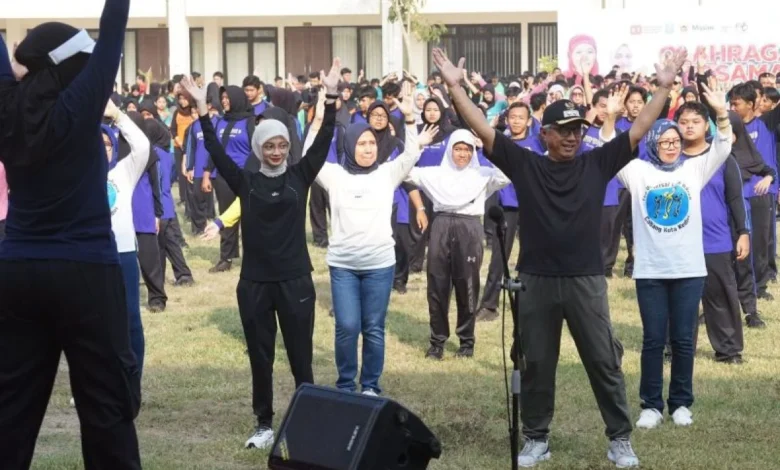
As Indonesia celebrates the 43rd anniversary of Haornas in 2026, the focus remains on participation. The Ministry has encouraged all segments of society, from schools to corporate offices and local communities, to engage in at least 30 minutes of physical activity on this day.
The success of these initiatives, however, will be measured by their long-term sustainability. The challenge for policymakers is to ensure that the excitement generated on September 9 does not dissipate by September 10. To this end, the integration of technology—such as fitness tracking apps and digital sports registries—is being explored to keep the public engaged throughout the year.
Furthermore, the integration of "sport-based community development" is becoming a priority. By upgrading public parks and neighborhood courts, the government is making the barrier to entry for sports as low as possible. The aim is to create an environment where the "culture of sports" is not an elite pursuit but a daily habit for every Indonesian, from Sabang to Merauke.
Conclusion: A Legacy of Resilience
The story of the Indonesian sporting movement is one of resilience. It began in a time of uncertainty, born from the need to prove that a newly independent nation could stand tall among the nations of the world. Today, that spirit continues to evolve. While the goals have expanded from mere political recognition to public health, economic development, and international athletic prestige, the core motivation remains the same: the belief that a physically active and disciplined nation is a strong nation.
As the country reflects on the history of the 1948 PON and the subsequent establishment of Haornas in 1983, it is clear that the journey of sports in Indonesia is a microcosm of the nation’s own progress. Each year, September 9 serves as a vital reminder that the strength of the nation is built not only in classrooms and parliaments but also on the field, the court, and the track. By continuing to foster this spirit, Indonesia ensures that the legacy of those pioneers in Solo remains vibrant and relevant for generations to come.
The 2026 commemoration, therefore, acts as both a tribute to the past and a blueprint for the future—a future where every Indonesian is empowered to lead a healthy, active life, contributing to a more prosperous and unified country.