Revitalizing Jakarta: MRT Jakarta Expands Placemaking Strategy to Kota Tua Following Blok M Success

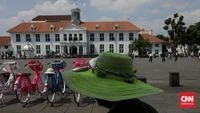
The landscape of Indonesia’s capital city is undergoing a profound transformation, one that extends far beyond the subterranean tunneling and elevated concrete pillars of expanding mass rapid transit networks. PT MRT Jakarta (Perseroda), the city-owned enterprise steering Jakarta’s modern mobility revolution, is increasingly treating the urban spaces surrounding its stations as dynamic canvases for revitalization. Building upon the successful yet ongoing social and economic resuscitation of the Blok M district in South Jakarta, the company has officially announced its next major urban acupuncture project: the historical district of Kota Tua in West and North Jakarta.
Unlike conventional urban renewal projects that prioritize purely aesthetic upgrades or vehicular flow, the forthcoming intervention in Kota Tua will lean heavily on the concept of placemaking. This urban design strategy seeks to transform physical locations into vibrant hubs of human activity by fostering community engagement, enhancing pedestrian connectivity, and celebrating local identity. However, as the company prepares to break new ground, planners face a delicate balancing act. They must infuse modern economic vitality into a centuries-old trading post without erasing the layered multicultural heritage that defines the historic core of Jakarta, formerly known as Batavia.
Bridging Transit-Oriented Development and Cultural Heritage
The strategic imperative driving PT MRT Jakarta’s urban development model is rooted in Transit-Oriented Development (TOD). By positioning public transportation stations as the gravitational centers of urban life, the organization aims to reduce Jakarta’s heavy reliance on private motor vehicles. This vision integrates pedestrian pathways, multi-modal transport nodes, commercial enterprises, and accessible public spaces into a cohesive, sustainable ecosystem.
Speaking at a workshop for the MRT Jakarta Fellowship Program 2026 held at the company’s headquarters in Central Jakarta, Samuel Ryan Pradipta Pranowo, Division Head of the Business Planning and Expansion Division at MRT Jakarta, outlined the organization’s roadmap for the historical district. He emphasized that the primary challenge lies in breathing new life into an aging precinct while fiercely safeguarding its architectural and cultural DNA.
"We hope to revitalize the Kota Tua area soon," Pranowo stated during the workshop. "Hopefully, it will remain vibrant while maintaining its heritage identity. The heritage of Chinatown and Little Amsterdam will not be lost. Instead, the area will be energized through a combination of retail, community activities, and other elements."
The urban strategy acknowledges Kota Tua’s unique dual identity. On one hand, the area encompasses the colonial-era administrative core historically dubbed "Little Amsterdam," characterized by European-style architecture surrounding Fatahillah Square. On the other hand, it bleeds seamlessly into Glodok, one of the oldest and most vibrant Chinatowns in Southeast Asia, celebrated for its bustling electronics markets, traditional apothecaries, and deep-rooted Peranakan culture. Rather than imposing a homogenized template, MRT Jakarta intends to weave these distinct historical narratives into a contemporary framework supported by curated retail spaces and community-driven events.
Learning from the Blok M Transformation
The decision to apply placemaking principles to Kota Tua stems from the operational successes—and ongoing lessons—observed in Blok M. For decades, Blok M served as a legendary commercial and cultural epicenter during the late 20th century before experiencing a protracted economic decline driven by shifting retail trends, the rise of suburban shopping malls, and inadequate public transit integration.
However, MRT Jakarta’s intervention over recent years has dramatically reversed the fortunes of the South Jakarta neighborhood. Through strategic spatial planning, the establishment of pedestrian-friendly plazas, the integration of green spaces like the Taman Literasi Martha Tiahahu, and the creation of transit hubs, Blok M has reemerged as a cultural melting pot for urban youth and families alike.
Despite this visible success, urban planners within the state-owned enterprise maintain a pragmatic view of the project’s current status. Pranowo candidly admitted that the transformation of Blok M is, at present, only halfway complete. The ultimate vision for the district requires further infrastructural refinement and deeper commercial integration before it can be considered a fully realized TOD model.
"Some of these concepts will be applied by MRT, starting with Blok M, which we have already begun, although that is still only halfway done," Pranowo explained. "Blok M will be made much neater and better, so we are actually only halfway through the Blok M revitalization, and this same concept will later be applied to Kota Tua."
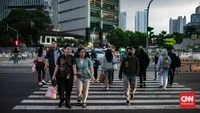
Data compiled by MRT Jakarta illustrates the tangible economic and social impact of these interventions. Prior to the targeted revitalization initiatives, foot traffic in Blok M was largely stagnant outside of specific retail hours. Today, the district routinely attracts approximately 40,000 visitors per weekday. On weekends, absent any major scheduled festivals or promotional events, that figure surges to between 60,000 and 70,000 visitors. When community events, cultural festivals, or creative markets are hosted within the precinct, daily attendance spikes dramatically to between 80,000 and 90,000 people.
Integrating the Informal Economy and Small Enterprises
A critical pillar of MRT Jakarta’s placemaking methodology is the deliberate inclusion of micro, small, and medium-sized enterprises (MSMEs). Rather than clearing out traditional vendors or relying exclusively on multinational corporate franchises to anchor the revived districts, the state-owned enterprise has deliberately structured its real estate and commercial leasing strategies to accommodate local entrepreneurs.
Current operational records from MRT Jakarta indicate that nearly 500 MSMEs have successfully integrated as tenants within the ecosystem cultivated across its operational zones. This deliberate policy serves a dual purpose. Economically, it ensures that the financial benefits of urban revitalization directly empower grassroots business owners, street vendors, and independent artisans. Socially and operationally, it prevents the districts from becoming ghost towns on weekdays or sterile commercial zones that only come alive during heavily marketed weekend festivals. By fostering a diverse mix of culinary stalls, independent bookstores, artisan craft shops, and digital-native retail brands, the spaces maintain a continuous, organic pulse of daily human activity.
This grassroots economic integration is expected to form the cornerstone of the Kota Tua revitalization plan. Given that Glodok and the broader Kota Tua district already possess a deeply entrenched, historic commercial culture—ranging from generations-old noodle shops and traditional medicine stores to modern creative startups—the integration of MSMEs must be handled with structural sensitivity. Planners aim to elevate the physical infrastructure and sanitary conditions of these small businesses without pricing them out of their ancestral trading grounds or eroding their authentic cultural appeal.
Socio-Economic Implications and Future Outlook
The expansion of MRT Jakarta’s placemaking mandate from Blok M to Kota Tua marks a significant evolution in Indonesian urban governance. For decades, infrastructure development in Jakarta was characterized by siloed engineering projects that prioritized vehicular throughput over pedestrian safety, public health, and social equity. The shift toward integrated TOD paired with cultural placemaking represents a paradigm shift in how the municipal government and state enterprises conceptualize city life.
However, the impending intervention in Kota Tua carries complex operational challenges. Unlike Blok M, which primarily functions as a mid-century commercial hub easily adaptable to modern urban youth culture, Kota Tua is a protected heritage zone subject to strict preservation guidelines overseen by cultural heritage authorities. Any physical intervention—ranging from paving materials and lighting installations to signage and commercial retrofitting of colonial-era warehouses—must navigate stringent regulatory frameworks designed to protect historical integrity.
Furthermore, issues of gentrification and social displacement remain persistent risks in large-scale urban renewal projects. As property values rise around newly minted transit stations and beautifully landscaped public squares, long-standing residents and vulnerable informal workers often face the threat of displacement. To ensure sustainable urban development, municipal stakeholders and transit operators must implement inclusive housing policies and rent-stabilization measures alongside physical revitalization efforts.
As MRT Jakarta advances its planning phases for the historic district, the broader urban community is watching closely. The success of the Kota Tua project will not merely be measured by pedestrian foot traffic metrics or retail revenue growth, but by its ability to honor the ghosts of Batavia and the living pulse of modern Chinatown. If executed successfully, the initiative will prove that Jakarta’s aggressive modernization through rapid transit does not require the erasure of its past, but can instead serve as the foundational bedrock upon which its historical identity is brilliantly preserved, reactivated, and carried forward into the future.
Related posts: