Hari Radio Nasional: Tracing the Evolution of Indonesia’s Sonic Struggle and Modern Digital Transformation

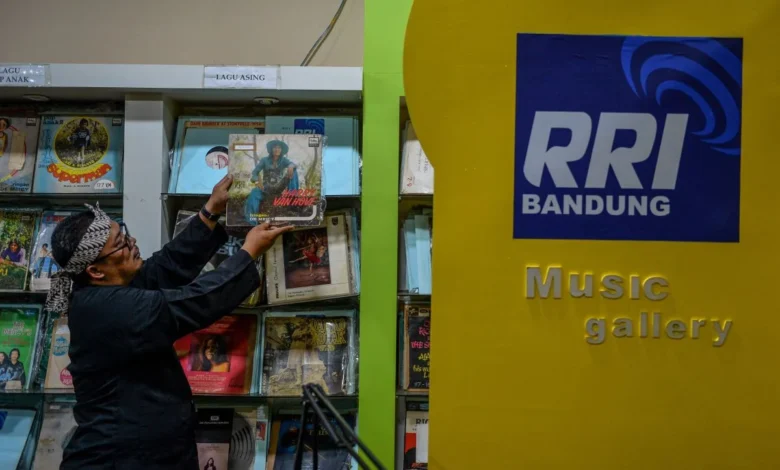
Every September 11, Indonesia observes National Radio Day, a commemoration that serves as both a historical anchor and a testament to the resilience of the nation’s oldest electronic medium. This date is inextricably linked to the birth of Radio Republik Indonesia (RRI) in 1945, an institution that emerged from the crucible of the Indonesian National Revolution to become the voice of a newly sovereign state. While the modern listener may associate radio with entertainment and background music, its inception in Indonesia was a matter of survival, sovereignty, and the urgent need to bridge the gap between a fledgling government and a populace hungry for the truth.
The Colonial Genesis of Radio in the Archipelago
Long before the declaration of independence, radio was introduced to the Dutch East Indies as a tool for colonial governance and European entertainment. The early 20th century saw the establishment of numerous radio clubs and broadcasting organizations, reflecting the era’s fascination with wireless technology.
The Bataviase Radio Vereniging (BRV), established in Batavia (modern-day Jakarta), stands as the primary pioneer in this history. It was followed by a tapestry of regional broadcasting entities, most notably the Nederlandsch-Indische Radio Omroep Maatschappij (NIROM). These stations were predominantly utilized for disseminating colonial policy, European cultural broadcasts, and localized commercial interests. However, indigenous Indonesians soon established their own platforms, such as the Solo Radio Vereniging (SRV) and the Mataramse Vereniging Voor Radio Omroep (MAVRO), which served as early, albeit limited, channels for local culture and identity.
The landscape shifted dramatically in 1942 when the Imperial Japanese Army occupied the archipelago. Under the Japanese military administration, the Hoso Kyoku (radio broadcasting) system was centralized. Radio became a potent instrument of propaganda, controlled strictly to ensure that the narrative favored the Greater East Asia Co-Prosperity Sphere. This period of restriction suppressed the indigenous voice, yet it inadvertently prepared the ground for the post-war broadcast infrastructure that would become the backbone of the independent Republic.
September 1945: The Birth of a National Institution
The transition from the Japanese-controlled Hoso Kyoku to the Indonesian-managed RRI was a high-stakes tactical maneuver. Following the proclamation of independence on August 17, 1945, the Japanese-managed stations ceased operations by August 19, leaving the nation in a state of informational vacuum.
On September 11, 1945, a historic meeting took place at the former Raad Van Indje building in Pejambon, Jakarta. Eight visionary figures—Abdulrahman Saleh, Adang Kadarusman, Soehardi, Soetarji Hardjolukita, Soemarmadi, Sudomomarto, Harto, and Maladi—gathered to draft a blueprint for a national broadcasting entity. Their mission was clear: to create a medium that would unify the disparate regions of the archipelago and serve as a direct line of communication between the government and the people.
The outcome was the establishment of Radio Republik Indonesia. Abdulrahman Saleh, a polymath and pioneering figure in Indonesian aviation and radio, was appointed as its first General Leader. By that evening, representatives from various stations across Java had solidified the mandate of RRI, cementing it as the foundational pillar of the state’s communication apparatus.
Radio as the Vanguard of the Revolution
Between 1945 and 1949, the role of RRI was not merely that of a broadcaster, but that of a strategic asset in the fight for sovereignty. During the Dutch military aggressions, radio became the primary vehicle for relaying the reality of the Indonesian struggle to the international community and keeping the morale of the local resistance high.
The strategic value of radio during this period cannot be overstated. With physical travel restricted by military blockades and infrastructure largely destroyed, the radio wave was the only medium capable of traversing the archipelago instantly. It allowed the central government in Yogyakarta to issue directives, debunk colonial disinformation, and broadcast the spirit of the revolution to the remotest villages. For the common citizen, the voice of RRI was the heartbeat of the nation; it was the primary source of truth in an era of intense psychological warfare.
Evolution and Adaptation: From Analog to Digital
The history of radio in Indonesia is also a narrative of constant technological adaptation. Throughout the late 20th century, RRI expanded its reach, operating as a vital public broadcaster that maintained a presence in virtually every district of Indonesia. It became the primary source for news, education, and cultural preservation, particularly in areas where television and internet access remained sparse.
However, the dawn of the 21st century presented a challenge: the digital disruption. The rise of social media, podcasts, and streaming services initially threatened to render traditional radio obsolete. Critics argued that the static-filled AM/FM frequencies could not compete with the on-demand nature of modern digital content.
RRI and other private broadcasters responded by pivoting toward a multi-platform strategy. Today, the "radio" experience in Indonesia has been redefined. It is no longer confined to a physical receiver; it exists in the form of RRI Digital applications, high-definition web streams, and active engagement on social media platforms. The transformation of radio into a digital-first medium has allowed it to maintain its relevance among the younger generation, who consume content through smartphones rather than traditional radios.
Strategic Implications and Current Status
The endurance of National Radio Day serves as a reminder of the medium’s inherent strengths: accessibility and intimacy. Unlike television, which requires visual focus, or text-based news, which requires literacy and data connectivity, radio remains the most accessible form of mass communication.
Data from recent media consumption studies indicates that while digital platforms are growing, radio continues to hold a significant market share, especially during peak commute times and in rural sectors. In Indonesia, where geography poses a constant challenge to infrastructure, radio remains the most reliable emergency communication tool during natural disasters, acting as an early warning system that operates when cellular towers fail.
Industry experts observe that the "podcasting" trend has actually revitalized interest in audio-based storytelling, providing a tailwind for traditional radio stations to pivot back to high-quality, long-form content. By integrating historical legacy with modern accessibility, the radio industry in Indonesia has transitioned from a tool of state propaganda to a diverse ecosystem of public information and community-based engagement.
The Future of the Sonic Medium
As Indonesia marks this year’s National Radio Day, the focus is firmly on the future. The transition to Digital Radio Mondiale (DRM) and the increasing integration of Artificial Intelligence in content curation are the next frontiers for the industry.
RRI, in its role as a public broadcaster, has acknowledged that its mandate has evolved. It is no longer just about transmitting government policy; it is about facilitating democratic discourse and serving as a repository for the nation’s diverse cultural heritage. The historical weight of September 11, 1945, remains the guiding star, but the methods of delivery are now as agile as the technology allows.
In conclusion, the history of radio in Indonesia is a reflection of the nation’s own journey—from the colonial shadows to the light of independence, and now into the hyper-connected digital age. As long as there is a need for a voice that can reach across distances to unite the people, radio will remain an indispensable pillar of Indonesian society. Whether transmitted through a traditional vacuum tube or a 5G stream, the essence of the medium remains the same: a powerful, human-centric connection that fosters a collective national identity. The commemoration of this day is not merely a nostalgic exercise, but a recognition of a medium that has consistently proven its necessity, adaptability, and enduring power in the face of change.