Suahasil Nazara Appointed as Indonesia’s New Minister of Finance Amidst Strategic Cabinet Reshuffle

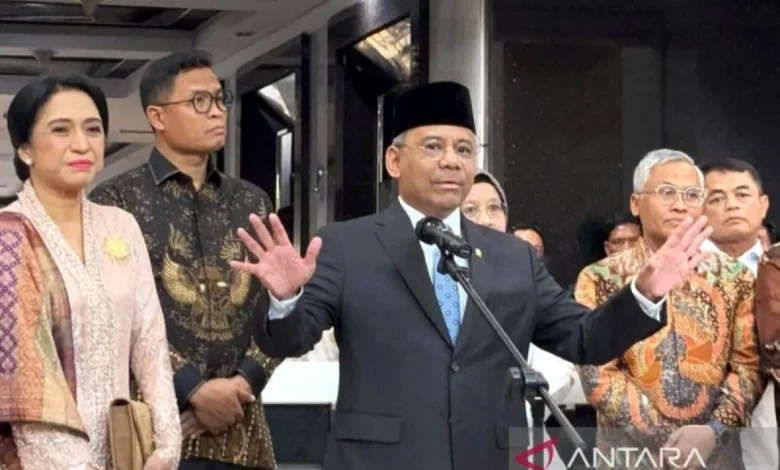
In a significant political development, the administration of President Prabowo Subianto has undergone another pivotal transition within its economic leadership. On September 14, 2026, Suahasil Nazara was officially inaugurated as the Minister of Finance, succeeding Purbaya Yudhi Sadewa. The appointment, formalized under Presidential Decree Number 97P of 2026, marks the third change in the leadership of the Ministry of Finance during the current administration, underscoring the President’s focus on recalibrating fiscal strategy in a complex global economic environment.
Suahasil Nazara brings to the office a profound depth of institutional memory, having served as a Deputy Minister of Finance during the transition between the Joko Widodo and Prabowo Subianto administrations. His ascension to the top position is widely viewed by market analysts and policymakers as a move toward policy continuity and technical stability, particularly as the government navigates fluctuating commodity prices, fiscal deficit management, and the ambitious infrastructure and social programs outlined in the President’s agenda.
A Career Built on Academic Rigor and Fiscal Expertise
The trajectory of Suahasil Nazara’s career is defined by a synthesis of rigorous academic training and long-term bureaucratic service. Born in Jakarta on November 23, 1970, Suahasil pursued his undergraduate studies at the Faculty of Economics and Business at the University of Indonesia, graduating in 1994. This early exposure to economic theory laid the foundation for his future role in national policy formulation.
Seeking to deepen his expertise, Suahasil moved to the United States, obtaining a Master of Science degree from Cornell University in 1997. His academic journey culminated at the University of Illinois at Urbana-Champaign, where he was awarded a Doctor of Philosophy (Ph.D.) in Economics in 2003. This international academic pedigree has provided him with a nuanced understanding of global economic standards, which he has subsequently applied to the Indonesian fiscal context.
Following his doctoral studies, Suahasil returned to his alma mater, the University of Indonesia, where he served as a lecturer and eventually ascended to the position of Professor of Economics in 2009. His academic tenure included leadership roles such as the Head of the Graduate Program in Economics (2004–2005), Head of the Demographic Institute (2005–2008), and Chair of the Department of Economics (2009–2013). These roles allowed him to bridge the gap between theoretical economic research and practical public policy, a transition that became permanent in 2015 when he joined the Ministry of Finance.
Chronology of Fiscal Leadership and Public Service
Suahasil’s entry into the executive branch was marked by his tenure at the Fiscal Policy Agency (BKF). In 2015, he was appointed as the Acting Head of the agency, a position that solidified into a permanent role, which he held until 2019. During this period, he played a crucial role in shaping Indonesia’s tax policy, state budget planning, and economic response strategies during periods of volatility.
His rise to executive prominence continued on October 25, 2019, when he was appointed Deputy Minister of Finance under President Joko Widodo’s second cabinet. When President Prabowo Subianto took office in October 2024, Suahasil was retained as Deputy Minister in the "Red and White" Cabinet, signaling the administration’s trust in his ability to maintain fiscal discipline.
The transition on September 14, 2026, represents a critical juncture for the Indonesian economy. As the third Minister of Finance in the Prabowo administration—following Sri Mulyani Indrawati and Purbaya Yudhi Sadewa—Suahasil inherits a ministry that is currently balancing the need for aggressive economic growth against the constraints of a rigid fiscal space.
The Fiscal Landscape: Challenges and Expectations
The appointment of a career technocrat like Suahasil is interpreted by many as a signal that the government aims to prioritize predictable, data-driven fiscal management. The challenges facing the new Minister are multifaceted. Indonesia continues to grapple with the global pressures of inflationary trends, the necessity to expand the tax-to-GDP ratio, and the imperative to fund the "Golden Indonesia 2045" vision.
Economists have noted that the primary task for Suahasil will be ensuring that the state budget remains credible in the eyes of international rating agencies and global investors. Following the handover of the ministry, market sentiment has remained cautiously optimistic. Analysts suggest that because Suahasil has been an integral part of the ministry’s senior leadership for years, the transition will likely result in minimal disruption to current policy implementation.
"The continuity of the fiscal team is vital," remarked a senior analyst from a Jakarta-based think tank. "Suahasil knows the machine from the inside out. He is not just an academic; he is a practitioner who understands the limits and the possibilities of the Indonesian budget. The market expects him to maintain the balance between stimulating growth and preventing the budget deficit from exceeding the legal limit of 3 percent."
Strategic Priorities for the New Administration
Upon assuming his duties, Suahasil has emphasized his commitment to maintaining the integrity of the state budget. In his initial remarks following his inauguration, he highlighted the importance of transparency and the strategic allocation of funds to maximize the impact on the national economy.
The Ministry of Finance under his leadership is expected to focus on several core pillars:
- Tax Reform Optimization: Enhancing tax collection efficiency through digitalization and broadening the tax base to reduce reliance on commodity-related revenues.
- Fiscal Sustainability: Managing government debt levels to ensure that they remain within manageable limits while funding priority national projects.
- Institutional Strengthening: Improving the bureaucratic efficiency of the ministry to ensure that fiscal policies are implemented with speed and precision.
- Resilience Against Global Shocks: Developing a robust buffer against global economic headwinds, such as fluctuations in energy prices and interest rate volatility in major economies.
The Broader Economic Context
The leadership change occurs against a backdrop of significant economic ambition. President Prabowo’s administration has set aggressive targets for GDP growth, which require a careful orchestration of public spending. With Suahasil’s long-standing experience in the Fiscal Policy Agency, he is uniquely positioned to bridge the gap between the government’s ambitious development goals and the realities of the national balance sheet.
Furthermore, the appointment of a seasoned academic and bureaucrat serves as a reassuring message to international partners. During the transition ceremony, Purbaya Yudhi Sadewa expressed confidence in his successor, noting that Suahasil’s deep understanding of the ministry’s internal systems would facilitate a seamless transition. This sentiment was echoed by various stakeholders within the business community, who have long viewed Suahasil as a steady hand in the government’s economic team.
Implications for Future Policy
Looking ahead, the market will be closely monitoring the upcoming budget discussions in the parliament. As the new Minister of Finance, Suahasil will lead the negotiations for the state budget, where he will have to balance the competing demands of various ministries. His ability to negotiate with the legislative body while maintaining fiscal prudence will be a critical test of his leadership.
Moreover, as the global economy continues to face uncertainties, the role of the Finance Minister in Indonesia has evolved into one of the most demanding positions in the cabinet. Suahasil’s background—which spans both the high-level policy formulation of the Fiscal Policy Agency and the day-to-day administrative oversight as a Deputy Minister—provides him with a holistic view of the challenges ahead.
The shift in leadership is not merely a change of personnel but a consolidation of a specific style of economic governance: one that is deeply rooted in empirical data, institutional stability, and a cautious approach to macroeconomic risks. As the country moves toward the final quarter of 2026, all eyes will be on how the Ministry of Finance maneuvers through the complexities of the global market under its new helmsman.
Conclusion
The appointment of Suahasil Nazara as the Minister of Finance marks a pivotal moment for the Prabowo Subianto administration. His extensive background in academia, combined with his years of service at the highest levels of the Indonesian government, positions him as a figure of stability and expertise. As he takes on the responsibility of managing the nation’s finances, the focus remains on the dual mandate of fostering sustainable economic growth and ensuring fiscal discipline. With the support of an experienced team within the ministry, Suahasil is tasked with navigating Indonesia through the economic challenges of the coming years, maintaining the trust of the public, and steering the nation toward its long-term economic objectives.
Related posts: