Neta Auto Parent Hozon Set for Rescue Deal as Zhejiang Taiyi Shanglian Steps In with Massive Multibillion-Yuan Restructuring Plan

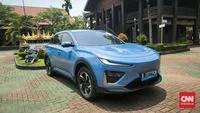
The global electric vehicle landscape has witnessed a dramatic shift following intense financial volatility, leading to the near-collapse of several prominent Chinese EV startups. Among them, Hozon New Energy Automobile Company, the parent entity behind the Neta Auto brand, has emerged from the brink of liquidation thanks to a rescue package orchestrated by Zhejiang Taiyi Shanglian Enterprise Management Partnership. According to recent disclosures from corporate restructuring proceedings, Taiyi Shanglian has emerged as the white-knight investor poised to inject vital capital into the embattled automaker, fundamentally reshaping its operational footprint, product strategy, and global market trajectory, including its precarious standing in Southeast Asian markets like Indonesia.
The details of the impending corporate rescue were formalized in a comprehensive draft reorganization plan released following the fourth online creditor meeting of Hozon New Energy Automobile Company. The crucial turning point underscores the resilience of specific EV manufacturing assets even as broader corporate structures fail under the weight of mounting debts and disrupted supply chains. For an industry that expanded at a breakneck pace over the past decade, Hozon’s trajectory offers a cautionary tale of overexpansion balanced by the pragmatic mechanisms of corporate bankruptcy restructuring in China’s fiercely competitive automotive sector.
Chronology and Background of the Collapse
To understand the magnitude of Taiyi Shanglian’s intervention, it is essential to examine the sequence of events that led Hozon to this critical juncture. Founded with ambitions to capture both the domestic Chinese mass-market EV segment and international territories, Neta Auto initially gained traction through affordable, technology-laden electric crossovers and hatchbacks. However, the aggressive price wars initiated by industry heavyweights such as BYD and Tesla squeezed profit margins across the board, leaving cash-strapped startups with unsustainable burn rates.
By late 2024 and early 2025, Hozon’s financial obligations spiraled out of control. Supply chain partners halted deliveries due to unpaid bills, production lines ground to a halt, and dealerships across various markets began experiencing severe logistical and operational disruptions. The mounting pressure ultimately forced the company into formal bankruptcy protection and reorganization proceedings. Creditor meetings became the primary arena for determining whether the company would face outright liquidation or a court-supervised operational overhaul.
Following multiple rounds of negotiations, the fourth online creditor meeting held in September marked a definitive breakthrough. The draft reorganization plan tabled during the meeting illuminated the path forward, designating Taiyi Shanglian as the primary investor tasked with resurrecting the beleaguered brand through a targeted infusion of capital and a streamlined manufacturing philosophy.
The Financial Architecture of the Taiyi Shanglian Acquisition
Under the terms of the reorganization draft, Zhejiang Taiyi Shanglian Enterprise Management Partnership—a specialized management entity established earlier in the year by Zhejiang Shanzi Holdings Company and Zhejiang Shanzi Yuxu Technology Company—will commit a staggering 3 billion yuan, equivalent to approximately $420 million or Rp7.9 trillion, into Hozon New Energy Automobile Company.
This substantial financial commitment will grant Taiyi Shanglian a controlling 70.6 percent stake in Hozon, effectively transferring operational and strategic control to the new management consortium. The allocation of the 3 billion yuan injection has been meticulously structured to address both legacy liabilities and future operational readiness.
Out of the total restructuring fund, approximately 1.17 billion yuan (around Rp3.1 trillion) has been earmarked for debt settlement and administrative obligations. This portion will be utilized to satisfy legacy debts, compensate creditors for retained assets, cover bankruptcy-related expenses, and clear various restructuring fees accrued during the insolvency phase.
The remaining 1.83 billion yuan (approximately Rp4.8 trillion) will be injected directly into Hozon as fresh working capital. This capital pool is designated for a specific set of operational milestones: restarting idled manufacturing facilities, rebuilding a fractured and depleted supply chain, reviving the domestic and international sales network, restoring comprehensive purnajual (after-sales) support infrastructure, and funding day-to-day corporate operations.
Strategic Pivot: Focusing Exclusively on SUV Production
A core element of the reorganization plan involves a rigorous pruning of Hozon’s product portfolio and manufacturing assets. In a bid to maximize capital efficiency and target the most profitable segments of the electric vehicle market, the company is abandoning its broad-spectrum manufacturing approach in favor of a specialized SUV-centric strategy.
According to the restructuring documents, production equipment dedicated to the Neta L and Neta X electric SUVs has been officially categorized as core assets that will be retained and modernized. Conversely, the manufacturing infrastructure and tooling dedicated to passenger sedans, specifically the Neta S and Neta GT models, have been designated as non-core assets. These non-core sedan production lines are slated to be unbundled and disposed of separately, signaling a permanent departure from the high-performance sedan and coupe markets that failed to yield sufficient volume during the company’s initial growth phase.
By narrowing its manufacturing scope exclusively to SUVs, Hozon aims to align its production capabilities with proven market demand, leveraging the widespread popularity of high-riding utility vehicles in both domestic and international markets.
A Three-Phase Road Map for Global Recovery
The draft reorganization plan outlines a disciplined, three-phase recovery roadmap designed to guide Hozon from insolvency back to commercial viability and, ultimately, public market readiness.
Phase One: Operational Restart and Supply Chain Rehabilitation
The immediate priority of the first phase is the resumption of manufacturing operations, centered primarily around the Neta X model. Management has set an initial first-year sales target of 10,000 units to establish immediate revenue streams. Simultaneously, this phase focuses on reconstructing the supply chain and reactivating localized service networks. A critical imperative during this initial stage is honoring and addressing the warranty claims and service backlogs of the approximately 400,000 existing Neta vehicle owners worldwide, ensuring brand trust is not entirely eroded.
Phase Two: Scale Expansion and Emerging Market Penetration
Once baseline production stability is achieved, the second phase will focus on scaling up manufacturing output to reach a target volume of 300,000 units per year. During this expansionary phase, Hozon plans to develop and introduce specialized EV models tailored specifically for emerging markets across Asia, Africa, Latin America, and other developing economic regions where affordable, robust electric mobility solutions are projected to experience high demand.
Phase Three: Smart EV Innovation and Global Public Offering
The final phase of the corporate turnaround envisions the broad development and deployment of next-generation smart electric vehicle models designed for the global market. Management has established an ambitious target for this mature phase, aiming for an annual output value of 40 billion yuan (approximately Rp105.8 trillion). Furthermore, this concluding milestone includes preparations for an initial public offering (IPO), allowing early investors and the new ownership consortium to capitalize on the resurrected enterprise’s market valuation.
Implications for International Operations: The Indonesian Market Context
While the financial rescue in China provides a vital lifeline for Hozon’s corporate survival, the ripple effects of the restructuring are being felt keenly across international markets where Neta established a commercial foothold, most notably in Indonesia.
In the Indonesian market, Neta previously introduced several models, including the Neta V, Neta V-II, and the Neta X. Under the restructured global product strategy, the Neta X falls into the core SUV category whose production is actively prioritized and maintained. However, the future roadmap for the entry-level Neta V and V-II hatchbacks remains conspicuously absent from the reorganization disclosures, casting uncertainty over their long-term parts availability and localized assembly.
Local adaptations began unfolding earlier. Back in January, communications from Neta Indonesia via its official social media channels indicated that the parent company’s restructuring process was anticipated to reach definitive milestones by mid-2026. In the interim, structural adjustments forced the brand to streamline its domestic footprint. Notably, the after-sales and service operations for existing Indonesian owners were transitioned to third-party automotive service providers such as Otoklix and Anma Mobil, while multiple authorized dealerships across the archipelago were closed down to curtail operational overhead.
Manufacturing Realities and Industry Reactions
Manufacturing realities in Indonesia have similarly reflected the parent company’s financial distress. Jongkie D Sugiarto, commissioner of Handal Indonesia Motor (HIM)—the local contract assembly partner responsible for producing Neta vehicles domestically—confirmed that vehicle assembly activities at their facilities had been completely halted approximately six months prior to the finalization of the rescue deal.
Jongkie, who also serves as Chairman I of the Association of Indonesian Automotive Industries (Gaikindo), noted that while final operational decisions regarding assembly resumption rest squarely with the brand’s appointed holder of the agency license (APM), Neta maintains its official standing as an active member of Gaikindo. The stance of local industry stakeholders suggests a cautious "wait-and-see" approach, wherein assembly partners are prepared to reactivate production lines only once reliable capital flows and stable component shipments are officially verified from the newly restructured headquarters in China.
Broader Industry Analysis and Outlook
The acquisition of Hozon by Zhejiang Taiyi Shanglian illustrates a broader structural consolidation currently sweeping through the global electric vehicle sector. As venture capital funding dries up and government subsidies recede, unprofitable EV startups face a binary choice: consolidation through strategic acquisitions or orderly liquidation.
For Hozon, the injection of 3 billion yuan provides a realistic second chance, but the road ahead remains fraught with formidable challenges. Successfully rebuilding a fragmented supply chain, regaining consumer confidence among 400,000 vehicle owners, and reclaiming market share against deeply entrenched competitors will require flawless execution of the three-phase recovery plan.
For international markets like Indonesia, the pivot toward a streamlined SUV portfolio under new management could ultimately establish a healthier, more sustainable business model—provided that local distribution and after-sales networks are successfully rehabilitated to match the revived manufacturing output from China. As mid-2026 approaches, the automotive industry will closely monitor whether Taiyi Shanglian’s substantial investment can successfully translate draf reorganizations into profitable, road-ready realities.