Lintasarta Officially Launches Deka LLM Powered by Indosat Intelligence Suite to Drive Indonesia Sovereign AI Ecosystem

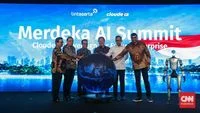
Jakarta, CNN Indonesia — In a significant stride toward technological self-reliance, Lintasarta, a leading information and communications technology (ICT) total solutions provider, officially launched Deka LLM powered by Indosat Intelligence Suite. The grand unveiling took place during the prestigious Merdeka AI Summit, themed "Cloud Sovereign for Future Enterprise," held in Jakarta on Wednesday, November 11. This newly introduced platform is strategically positioned as a sovereign artificial intelligence (AI) solution designed to empower enterprises, corporations, and government institutions across Indonesia. By offering a localized, scalable, and trusted AI environment, Deka LLM enables organizations to develop and deploy cutting-edge AI applications tailored explicitly to domestic business needs while ensuring strict adherence to data sovereignty regulations.
The launch marks a pivotal milestone in Indonesia’s digital transformation roadmap. As the global economy accelerates its transition toward artificial intelligence-driven productivity, emerging markets face the dual challenge of harnessing advanced technologies while safeguarding national security, data privacy, and strategic infrastructure. Deka LLM addresses these challenges directly by providing a fully integrated AI ecosystem within the Indosat Ooredoo Hutchison (IOH) Group framework. Through this platform, Indonesian enterprises gain secure, unhindered access to high-performance computing infrastructure and sophisticated large language models (LLMs) managed within a robust governance structure.
The Strategic Vision Behind Sovereign AI
Addressing the audience at the Merdeka AI Summit, Lintasarta President Director and CEO Armand Hermawan underscored the critical necessity for Indonesia to transition from a passive consumer of foreign technologies to an active creator and orchestrator of its own digital destiny. Hermawan emphasized that true technological independence extends far beyond mere software adoption; it requires deep-seated national capabilities across the entire technological stack.
"Indonesia needs to move well beyond simply adopting AI technology toward developing the capabilities to create, manage, and optimize value from that technology," Armand stated during his keynote address. "Sovereignty means having control over the essential foundations of AI, ranging from infrastructure and data to technology, operations, and governance."
This sentiment was further echoed by Vikram Sinha, President Director and CEO of Indosat Ooredoo Hutchison. Sinha highlighted that the rollout of Deka LLM aligns seamlessly with the overarching corporate mission of the IOH Group to democratize access to advanced technologies while simultaneously elevating Indonesia’s status on the international AI stage.
"Indonesia should not merely remain a user of AI technology. We possess the talent, linguistic diversity, and industrial opportunities that can serve as capital to take on a larger role in shaping the future of AI," Vikram remarked. "Through the IOH Group ecosystem, we are integrating connectivity, infrastructure, and AI capabilities so that this technology can be accessed more broadly."
Background Context and the Rise of Sovereign Cloud
The introduction of Deka LLM arrives at a time when Southeast Asia’s digital economy is experiencing exponential growth, largely catalyzed by artificial intelligence and cloud computing. Industry analysts project that AI could contribute nearly one trillion dollars to the Southeast Asian economy by the end of the decade, with Indonesia capturing a substantial portion of this economic dividend due to its massive domestic market and vibrant startup ecosystem.
However, rapid digitalization has also intensified concerns regarding data residency, cyber security, and foreign technological dependency. Regulatory bodies worldwide are increasingly demanding that citizen data and critical enterprise information remain within national borders. In response, the concept of "Sovereign Cloud" has evolved from a niche enterprise requirement into a mandatory framework for government agencies, financial institutions, telecommunications providers, and other critical infrastructure operators.
Recognizing this paradigm shift, Lintasarta and its parent company, Indosat Ooredoo Hutchison, have heavily invested in building robust domestic data centers and cloud infrastructure. Deka LLM is built upon this formidable foundation, leveraging the capabilities of Cloudeka, Lintasarta’s sovereign cloud brand. Cloudeka has consistently maintained rigorous international security standards and quality certifications, ensuring that enterprises utilizing Deka LLM operate within a framework of absolute trust, compliance, and operational resilience.
Chronology of the Indosat Intelligence Suite Integration
The deployment of Deka LLM is the culmination of a multi-year strategic evolution within the Indosat Group, aimed at transforming the telecommunications giant into a comprehensive digital service provider (Telco to TechCo).
In the years leading up to the Merdeka AI Summit, Lintasarta systematically overhauled its enterprise portfolio to consolidate disparate IT services into a unified architecture known as the Lintasarta Intelligent Core. This core infrastructure unites four distinct yet highly synergistic pillars: Connectivity, Cloud, Cybersecurity, and AI Applications.
- Phase One: Infrastructure Foundation and Connectivity Expansion — Lintasarta fortified its nationwide fiber-optic network and data center capabilities to ensure ultra-low latency and high-availability connectivity, which serve as the fundamental prerequisites for heavy data processing.
- Phase Two: Sovereign Cloud Deployment via Cloudeka — The establishment of secure local cloud environments, ensuring that domestic enterprises could store and process sensitive workloads onshore without violating regulatory frameworks.
- Phase Three: Cybersecurity Hardening — Integration of advanced threat intelligence, encryption protocols, and compliance frameworks to protect digital assets against increasingly sophisticated cyber threats.
- Phase Four: AI Integration and the Launch of Deka LLM — The final piece of the architectural puzzle, introducing localized large language models capable of understanding regional languages, cultural nuances, and specific industry workflows.
By weaving these four pillars together, the Indosat Intelligence Suite bridges the gap between raw computational power and practical business execution.
Technical Capabilities and Industry Applications
Deka LLM is engineered to cater to a diverse array of industrial sectors, including banking and financial services, healthcare, telecommunications, retail, manufacturing, and public administration. Unlike off-the-shelf global AI models that are often trained on generalized Western datasets, Deka LLM is specifically optimized to comprehend the linguistic intricacies of Bahasa Indonesia, regional dialects, and localized regulatory contexts.
Key functional advantages of the platform include:
- Customization and Scalability: Enterprises can fine-tune base large language models using proprietary corporate data without risking data leakage or intellectual property exposure.
- On-Premises and Hybrid Deployment: Organizations with stringent security policies can deploy the platform within local sovereign data centers, maintaining absolute physical and logical control over their information assets.
- Enhanced Productivity and Automated Workflows: By integrating Deka LLM into enterprise resource planning (ERP) and customer relationship management (CRM) systems, businesses can automate complex customer service interactions, streamline document analysis, and accelerate decision-making processes.
Furthermore, the platform’s modular design allows Chief Information Officers (CIOs) and Chief Technology Officers (CTOs) to scale their AI workloads dynamically, optimizing operational expenditure while maximizing return on investment.
Broader Economic Implications and National Competitiveness
The commercial availability of Deka LLM is anticipated to trigger a multiplier effect across Indonesia’s digital economy. By removing traditional barriers to entry—such as the prohibitive cost of building proprietary AI infrastructure and the scarcity of specialized machine learning engineering talent—the platform democratizes access to transformative technology for mid-sized enterprises and large corporations alike.
From a macroeconomic perspective, fostering a domestic AI ecosystem mitigates the risk of capital flight associated with relying entirely on foreign cloud and AI service providers. When Indonesian companies invest in local AI platforms like Deka LLM, the financial capital, intellectual property generation, and job creation remain within the country. This dynamic directly supports national initiatives such as "Making Indonesia 4.0," which seeks to position the nation as one of the top ten global economies by 2030 through digital innovation.
Moreover, the emphasis on structured governance and certified security ensures that the adoption of artificial intelligence will not come at the expense of data privacy. As Indonesia continues to enforce and refine its personal data protection regulations, platforms that guarantee local data residency will inevitably become the preferred standard for corporate and governmental IT procurement.
Conclusion and Future Outlook
The launch of Deka LLM powered by Indosat Intelligence Suite at the Merdeka AI Summit represents a defining moment for Indonesia’s technology landscape. By fusing resilient cloud infrastructure, uncompromising cybersecurity, high-speed connectivity, and localized artificial intelligence into a single unified ecosystem, Lintasarta and Indosat Ooredoo Hutchison have laid the groundwork for a truly sovereign digital future.
As enterprises across the archipelago begin integrating Deka LLM into their daily operations, Indonesia moves closer to realizing its ambition of transitioning from a mere market for technological goods to a sovereign powerhouse capable of inventing, governing, and exporting advanced digital solutions. The success of this platform will likely serve as a blueprint for other emerging economies seeking to navigate the complex intersection of global technological advancement and national sovereignty.
Related posts: