Megawati Soekarnoputri Urges Second Asia-Africa Conference Amidst Escalating Geopolitical Tensions and US Aggression Towards Iran and Venezuela

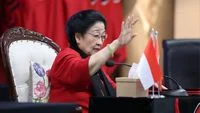
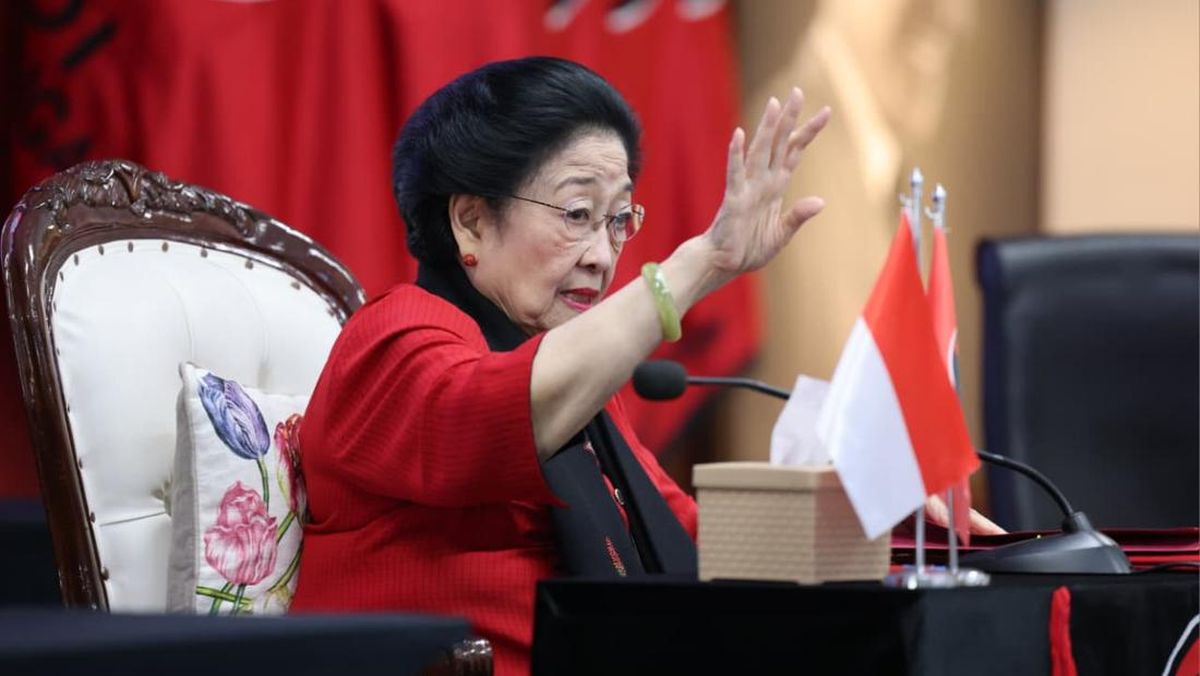
Former Indonesian President Megawati Soekarnoputri has made a compelling call for a second Asia-Africa Conference (KAA II), asserting its urgent necessity in light of what she describes as military aggression by the United States against Iran and Venezuela. Speaking at a seminar titled ‘The Relevance of the Asia-Africa Movement in Current Geopolitical Crises’ held at the Partai School in Lenteng Agung on Saturday, April 18, 2020, the fifth President of the Republic of Indonesia and General Chairwoman of the Indonesian Democratic Party of Struggle (PDIP) underscored the prevailing global instability. She argued that these contemporary conflicts demonstrate the enduring relevance of the Asia-Africa Conference’s core values, particularly the Dasa Sila Bandung, in safeguarding the sovereignty of independent nations against foreign intervention.
Historical Imperative: The Genesis of the Asia-Africa Conference
The original Asia-Africa Conference, held in Bandung, Indonesia, in April 1955, was a watershed moment in global history. Convened amidst the backdrop of the Cold War and the fervent wave of decolonization, it brought together representatives from 29 newly independent and developing nations across Asia and Africa. These nations, representing over half of the world’s population at the time, sought to forge a collective identity and voice in an international arena dominated by superpower rivalries and lingering colonial influences. Key figures like Indonesia’s Sukarno, India’s Jawaharlal Nehru, Egypt’s Gamal Abdel Nasser, Ghana’s Kwame Nkrumah, and China’s Zhou Enlai spearheaded the initiative, aiming to promote Afro-Asian economic and cultural cooperation and to oppose colonialism and neocolonialism by any nation.
The Bandung Conference’s profound impact culminated in the adoption of the "Dasa Sila Bandung" or Ten Principles of Bandung. These principles, advocating for respect for fundamental human rights, respect for the sovereignty and territorial integrity of all nations, recognition of the equality of all races and nations, abstention from intervention or interference in the internal affairs of another country, and the promotion of mutual interests and cooperation, laid the philosophical groundwork for the Non-Aligned Movement (NAM) established in 1961. The conference effectively gave a powerful collective voice to the Global South, asserting their right to self-determination and an independent foreign policy free from the ideological dictates of either the Western or Eastern blocs.
The Dasa Sila Bandung: An Enduring Framework for Global Order
Megawati’s renewed emphasis on the Dasa Sila Bandung highlights its continued pertinence in an increasingly complex and interconnected world. She stated, "When the world is currently faced with problems in Venezuela through the kidnapping of President Maduro, and the attacks by the United States and Israel against Iran, the international system is shaken." This situation, she contends, necessitates a return to foundational values that uphold the equality of nations. The Dasa Sila principles, conceived as international law initiated by Indonesia, served as a bulwark for the sovereignty and independence of nations from external interference.
Let’s delve deeper into some of the most relevant principles in the current context:
- Respect for Human Rights and the Purposes and Principles of the Charter of the United Nations: This principle underscores a universal commitment to human dignity and the established international legal framework.
- Respect for the Sovereignty and Territorial Integrity of all Nations: Directly addressing concerns about foreign intervention, this principle is central to Megawati’s argument against US actions in Iran and Venezuela.
- Recognition of the Equality of all Races and the Equality of all Nations: This foundational tenet challenges hierarchical power structures and advocates for a multilateral world order.
- Abstention from Intervention or Interference in the Internal Affairs of another Country: This is a cornerstone of non-alignment and a direct counterpoint to what Megawati perceives as aggressive foreign policy.
- Abstention from Acts or Threats of Aggression or the Use of Force against the Territorial Integrity or Political Independence of any Country: This principle directly condemns military actions or coercive diplomacy.
- Settlement of all International Disputes by Peaceful Means: Emphasizes diplomacy and international law over conflict.
Megawati stressed that the spirit of KAA and the Non-Aligned Movement remains the best answer to erode the influence of neocolonialism and imperialism (Nekolim). The Dasa Sila, she argued, is not merely a historical document but a living international legal framework crucial for navigating contemporary challenges.
Current Geopolitical Flashpoints: Iran and Venezuela
Megawati’s call for KAA II is directly linked to specific geopolitical crises involving the United States, Iran, and Venezuela. These situations, in her view, exemplify the erosion of national sovereignty and the destabilization of the international order.
US-Iran Tensions:
The relationship between the United States and Iran has been fraught with tension for decades, particularly since the 1979 Iranian Revolution. However, the period leading up to Megawati’s statement saw a significant escalation. In May 2018, the Trump administration unilaterally withdrew from the Joint Comprehensive Plan of Action (JCPOA), commonly known as the Iran nuclear deal, which had been signed by Iran and several world powers in 2015. Following this withdrawal, the US reimposed and expanded crippling sanctions on Iran, targeting its oil exports, financial sector, and other key industries, with the stated aim of forcing Tehran to renegotiate a new deal addressing its ballistic missile program and regional activities.
This "maximum pressure" campaign led to a series of dangerous incidents in the Persian Gulf, including attacks on oil tankers, drone shoot-downs, and increased military posturing by both sides. A critical escalation occurred in January 2020, when the US launched a drone strike that killed Major General Qasem Soleimani, commander of the Islamic Revolutionary Guard Corps’ Quds Force, in Baghdad, Iraq. This act was widely condemned by many nations as a violation of international law and a severe provocation, bringing the US and Iran to the brink of a full-scale military conflict. While the immediate crisis had somewhat de-escalated by April 2020, the underlying tensions, economic warfare through sanctions, and the potential for renewed military confrontation remained extremely high. Megawati’s reference to "attacks by the United States and Israel against Iran" likely encompasses these economic and military pressures, viewing them as direct infringements on Iran’s sovereignty.
US-Venezuela Tensions:
Venezuela, under the presidency of Nicolás Maduro, has also been a focal point of US foreign policy, particularly since the early 2000s under Hugo Chávez. The US, along with many Latin American and European nations, does not recognize Maduro’s legitimacy following the 2018 presidential elections, which they deemed fraudulent. Instead, Washington and its allies recognized opposition leader Juan Guaidó as the interim president.
The US has imposed extensive sanctions on Venezuela’s oil industry, the country’s primary source of revenue, and on key government officials, aiming to pressure Maduro to step down. The humanitarian situation in Venezuela, marked by severe economic crisis, hyperinflation, and widespread shortages of food and medicine, has been exacerbated by these sanctions. Megawati’s specific mention of "the kidnapping of President Maduro" refers to events in early 2020 when the US Department of Justice unsealed indictments against Maduro and several top Venezuelan officials, accusing them of narco-terrorism and offering a $15 million reward for information leading to his arrest. This move was widely seen as an extraordinary escalation, with some critics viewing it as an attempt at regime change through legal and economic coercion, blurring the lines of international legal norms and national sovereignty. For Megawati, these actions represent a clear case of intervention in the internal affairs of a sovereign state, violating the Dasa Sila.
The Peril of Foreign Military Bases
Beyond direct intervention, Megawati also critically highlighted the presence of foreign military bases, connecting them to the ease with which interventions occur. She invoked Indonesia’s progressive stance in 1965, recalling the International Conference Against Foreign Military Bases (KIAPMA) held at Hotel Indonesia. This conference, also a brainchild of Sukarno, was a testament to Indonesia’s commitment to an independent foreign policy and its strong opposition to the projection of military power by external forces on its soil or in its region.
Megawati asserted that Indonesia’s defense capabilities should be built upon a mission of global peace and a robust geopolitical perspective, rather than relying on or being dictated by foreign military presences. "Various interventions in the sovereignty of independent and sovereign states in Latin America and the Middle East lately can occur quickly due to the presence of foreign military bases in a country," she observed. This statement points to a widely held concern that such bases often serve as platforms for power projection, intelligence gathering, and, crucially, as staging grounds for military interventions, thereby undermining the host nation’s sovereignty and regional stability. Examples abound, from US bases in the Persian Gulf facilitating operations in the Middle East to those in East Asia influencing regional dynamics. The existence of these bases, from this perspective, represents a form of structural neocolonialism, allowing powerful states to maintain influence and intervene without direct occupation.
Bung Karno’s Enduring Geopolitical Vision
In her address, Megawati also delved into the geopolitical thoughts of her father, Indonesia’s first President, Sukarno, who famously divided global powers into two categories: "The New Emerging Forces" (NEFOS) and "The Old Established Forces" (OLDEFOS).
Sukarno conceptualized NEFOS as comprising newly independent nations, socialist states, and progressive forces worldwide, united by their struggle against imperialism, colonialism, and neocolonialism. OLDEFOS, conversely, represented the established capitalist and imperialist powers. This framework was not merely geographical but ideological, reflecting a fundamental struggle for justice, equality, and self-determination against historical subjugation.
Megawati reinterpreted this vision for the modern era, emphasizing that despite their differing capacities, both NEFOS and OLDEFOS must be driven by a common will: to champion humanity, justice, and world peace. This suggests that while the categories might evolve in a multipolar world, the underlying struggle for a more equitable global order remains. The spirit of NEFOS, therefore, continues to call for solidarity among developing nations to collectively assert their interests and resist domination.
The Call for KAA II: Rationale and Potential Challenges
Megawati’s concluding remarks underscored the profound relevance of a second Asia-Africa Conference in the face of an increasingly complex global landscape. "Amidst the increasingly complex global situation, the implementation of the Asia-Africa Conference Volume II becomes highly relevant as a compass for the future of the nation and the world," she concluded.
The rationale for KAA II in the 21st century extends beyond the original anti-colonial and Cold War contexts. While traditional forms of intervention persist, new challenges have emerged, including:
- Economic Coercion: Sanctions and trade wars are increasingly used as tools of foreign policy, impacting national sovereignty and development.
- Cyber Warfare and Digital Imperialism: The digital realm presents new frontiers for intervention, espionage, and manipulation.
- Climate Change: A global existential threat that disproportionately affects developing nations, requiring collective action and a shared voice.
- Pandemics and Global Health Crises: The COVID-19 pandemic, which was emerging as Megawati made her statement, highlighted the interconnectedness of nations and the need for global cooperation, often hampered by nationalistic approaches.
- Rise of Multipolarity and Protectionism: While the bipolar world of the Cold War is gone, the rise of multiple power centers, often accompanied by protectionist tendencies and a retreat from multilateralism, creates new uncertainties.
A KAA II could aim to:
- Reaffirm the Dasa Sila Bandung: Reinterpret its principles in light of contemporary challenges, providing a renewed moral and legal framework for international relations.
- Strengthen South-South Cooperation: Foster economic, technological, and cultural exchanges among Asian and African nations, reducing reliance on traditional power centers.
- Develop Common Stances on Global Issues: Formulate collective positions on climate change, trade, intellectual property, digital governance, and security, thereby amplifying the voice of the Global South in international forums.
- Address Neocolonialism in New Forms: Confront issues such as debt traps, unequal trade agreements, and resource exploitation.
However, convening a KAA II would face significant challenges. The Asia-Africa bloc today is far more diverse politically and economically than in 1955. National interests have diverged, and many nations have strong strategic and economic ties with major global powers, potentially making a unified front difficult to achieve. Logistical hurdles, financing, and finding a consensus on a concrete agenda beyond rhetorical solidarity would also be substantial.
Implications for Indonesia’s Foreign Policy
Indonesia, as the host and primary initiator of the original Bandung Conference, holds a unique historical and moral authority in advocating for a KAA II. Such a move would reaffirm Indonesia’s commitment to its "Bebas Aktif" (Free and Active) foreign policy, which emphasizes non-alignment, independence in charting its international course, and active participation in promoting world peace and order. By pushing for KAA II, Indonesia would reassert its role as a bridge-builder, a champion of multilateralism, and a voice for the developing world. This could elevate its diplomatic standing and provide a platform to address regional and global issues from a distinctly Global South perspective.
In conclusion, Megawati Soekarnoputri’s impassioned call for a second Asia-Africa Conference is more than a historical echo; it is a contemporary response to a world grappling with resurgent geopolitical tensions, unilateral actions, and the enduring quest for a just and equitable international order. Her invocation of the Dasa Sila Bandung and Bung Karno’s vision serves as a powerful reminder that the principles of sovereignty, non-intervention, and collective action remain vital compass points for nations seeking to navigate an increasingly complex and often perilous global landscape. The question remains whether the political will and consensus among Asia-Africa nations can coalesce to realize this ambitious vision for a renewed era of South-South solidarity.