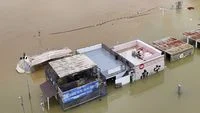
BMKG Issues Early Warning for Moderate to Heavy Rain, Strong Winds Across Indonesia Amidst Widening Dry Season Pattern


Jakarta, Indonesia – The Indonesian Agency for Meteorology, Climatology, and Geophysics (BMKG) has issued an early warning for potential moderate to heavy rainfall accompanied by strong winds across numerous regions of the archipelago on Saturday, June 27, 2026. This forecast comes even as a significant portion of Indonesia is projected to experience a widening dry season pattern, highlighting the complex interplay of regional and global meteorological phenomena influencing the nation’s climate. The warning underscores the need for continued vigilance despite the general seasonal trend towards drier conditions.
I. Early Warning Issued by BMKG for Late June 2026
The BMKG’s detailed early warning, spanning from June 26 to June 28, 2026, identifies several provinces at risk of experiencing adverse weather conditions. Regions such as Aceh, Kepulauan Riau, Banten, West Java, East Java, West Kalimantan, Southeast Sulawesi, Maluku, and various parts of Papua are specifically highlighted as having the potential for moderate to heavy rain and strong winds. These areas have been placed under a "Waspada" (Watch) status, indicating that residents and local authorities should exercise caution and be prepared for potential impacts. Crucially, the BMKG’s assessment for this period indicates that no regions are currently designated with "Siaga" (Alert) or "Awas" (Danger) status, which would signify a higher probability of very heavy to extreme rainfall and more severe potential consequences. This distinction is vital in communicating the precise level of threat and guiding appropriate public responses.
The "Waspada" classification means that while disruptive weather is possible, it is not expected to reach the most extreme levels that would necessitate immediate, large-scale evacuation or emergency response. However, even moderate to heavy rainfall can lead to localized flooding, especially in urban areas with inadequate drainage, or trigger landslides in hilly and mountainous terrains, which are prevalent across many Indonesian islands. Strong winds, on the other hand, pose risks to infrastructure, maritime activities, and aviation, potentially causing damage to buildings, uprooting trees, and disrupting transportation networks. The BMKG’s comprehensive monitoring and early warning system play a critical role in providing timely information, enabling communities and disaster management agencies to implement precautionary measures and mitigate potential risks.
II. Meteorological Phenomena Driving the Forecast
The seemingly contradictory forecast of significant rainfall during a period of widening dry season is attributed by BMKG to a confluence of dynamic atmospheric and oceanic phenomena. Understanding these complex interactions is key to appreciating the intricacies of Indonesia’s tropical climate.
-
Madden-Julian Oscillation (MJO): For the period of June 26 to July 2, 2026, the Madden-Julian Oscillation (MJO) is spatially predicted to traverse several Indonesian regions. The MJO is a major intra-seasonal oscillation of the tropical atmosphere, characterized by an eastward-moving "pulse" of clouds and rainfall that propagates around the global tropics. When the convective phase of the MJO moves over Indonesia, it enhances the likelihood of rainfall. Its predicted path includes Aceh, North Sumatra, Riau, West Sumatra, Riau Islands, South Sulawesi, Southeast Sulawesi, southern Maluku, eastern East Nusa Tenggara, South Papua, as well as the Banda Sea and Arafura Sea waters. The MJO’s influence is a significant factor in modulating rainfall patterns, even during traditionally drier months.
-
Equatorial Rossby Waves: This condition is further reinforced by the active presence of Equatorial Rossby Waves. These large-scale atmospheric waves, which typically move westward in the tropics, are observed to be moving westward in the southern Maluku region. Rossby waves play a crucial role in atmospheric dynamics by transporting energy and momentum. Their presence can induce convergence and uplift, thereby promoting the formation of rain-bearing clouds. The interaction of these waves with local atmospheric conditions can significantly amplify rainfall intensity.
-
Kelvin Waves: Simultaneously, Kelvin Waves are also active, observed moving eastward and significantly crossing the waters south of South Sulawesi and Southeast Sulawesi. Kelvin waves are another type of large-scale atmospheric wave that propagates eastward along the equator. Similar to the MJO, they are associated with enhanced convection and rainfall. When Kelvin waves interact with other atmospheric disturbances, they can create conditions highly conducive to heavy precipitation, particularly over oceanic regions and adjacent landmasses.
-
Cyclonic Circulation: A cyclonic circulation is anticipated to form in the Pacific Ocean north of Papua. Cyclonic circulations are low-pressure systems characterized by inward spiraling winds, which facilitate the upward movement of air. This upward motion cools the air, leading to condensation and cloud formation. The presence of such a circulation can trigger patterns of wind deceleration and convergence, effectively acting as a focal point for increased potential for rain cloud growth around the cyclonic center and along the convergence zones. This phenomenon can draw moisture from surrounding areas and concentrate it, resulting in localized heavy rainfall.
-
Local Atmospheric Lability: Beyond these large-scale phenomena, local atmospheric lability remains sufficiently strong to enhance the growth of convective clouds. Atmospheric lability refers to the atmosphere’s susceptibility to vertical motion. A highly labile atmosphere means that parcels of air, once lifted, will continue to rise due to buoyancy, leading to the rapid development of tall, dense cumulonimbus clouds associated with intense thunderstorms and heavy rain. This local factor, combined with the broader meteorological waves and circulations, creates a robust environment for precipitation, particularly in Aceh, Jambi, Riau, South Sumatra, Lampung, Banten, West Java, West Nusa Tenggara, West Kalimantan, North Kalimantan, North Sulawesi, South Sulawesi, Southeast Sulawesi, Maluku, Southwest Papua, West Papua, Central Papua, Papua, Papua Mountains, and the northern part of South Papua.
The intricate dance of these global and regional atmospheric and oceanic processes underscores why Indonesia’s weather patterns are often dynamic and localized, defying simple seasonal classifications and necessitating constant, sophisticated monitoring by agencies like BMKG.
III. Dual Climate Patterns: Rain Amidst Widening Dry Season
The current meteorological outlook for Indonesia presents a fascinating and challenging dual climate pattern. While the BMKG issues warnings for moderate to heavy rainfall in certain areas, it simultaneously emphasizes that a significant portion of the archipelago is entering or has already entered a period characterized by low rainfall.
During the mid-third ten-day period (dasarian) of June 2026, several regions across Indonesia are projected to experience a low rainfall category, defined as less than 50 mm of precipitation per dasarian. This condition unequivocally confirms the broadening pattern of the dry season. The affected areas include parts of Sumatra, extending from Banten to the entirety of East Nusa Tenggara, as well as segments of Kalimantan, Sulawesi, Maluku, North Maluku, and various regions in Papua.
The dry season in Indonesia typically runs from April/May to September/October, characterized by reduced rainfall as the Australian monsoon dominates, bringing dry air from the Australian continent. The projection of less than 50 mm per dasarian in these vast areas is a clear indicator of this seasonal transition taking firm hold. This has significant implications for sectors like agriculture, where reliance on consistent rainfall for crop growth is high, and for water resource management, where planning for scarcity becomes paramount.
However, the BMKG’s simultaneous warning for rain, even amidst this widening dry season, is not a contradiction but rather a testament to the complex atmospheric dynamics at play. As BMKG aptly stated in its "Indonesia Rainfall Potential Forecast for the Week Ahead Period June 26-July 2," "Meskipun sebagian besar wilayah Indonesia telah memasuki periode musim kemarau, kewaspadaan terhadap potensi hujan tidak boleh dikesampingkan." (Although most parts of Indonesia have entered the dry season, vigilance against potential rain should not be overlooked.) This statement serves as a crucial reminder that localized weather phenomena, driven by the Madden-Julian Oscillation, Rossby Waves, Kelvin Waves, and cyclonic circulations, can temporarily override the broader seasonal trends. These transient atmospheric disturbances can inject moisture and trigger convective activity, leading to isolated or widespread heavy downpours even when the prevailing climate pattern is dry. Such events are often intense but short-lived, distinct from the sustained, widespread rainfall characteristic of the wet season. This meteorological paradox underscores the importance of granular, localized forecasts and the need for communities to remain prepared for both drought-like conditions and sudden, heavy rainfall events.
IV. Regional Breakdown and Specific Vulnerabilities

Indonesia’s vast geographical expanse and diverse topography mean that the impact of weather phenomena varies significantly from one region to another. The areas highlighted in the BMKG warning each possess unique vulnerabilities:
-
Sumatra (Aceh, North Sumatra, Riau, West Sumatra, Jambi, South Sumatra, Lampung): These western regions are often the first to experience the MJO’s influence. While typically lush, areas like Aceh and West Sumatra are prone to landslides due to their mountainous terrain and deforestation in some areas. Flash floods are common in river basins. Riau and Jambi, though flatter, can experience significant urban flooding and disruption to palm oil and rubber plantations. Lampung and South Sumatra, at the southern tip, are also susceptible to coastal flooding and strong winds affecting maritime activities in the Sunda Strait.
-
Java (Banten, West Java, East Java): As Indonesia’s most populous island, Java’s vulnerability is largely tied to its dense population and extensive infrastructure. Banten and West Java, particularly regions around Jakarta, Bogor, Depok, Tangerang, and Bekasi (Jabodetabek), are highly susceptible to urban flooding. Their mountainous southern coasts are also prone to landslides. East Java, with its numerous active volcanoes and fertile plains, can experience disruptions to agriculture and transportation, with strong winds posing risks to coastal fishing communities.
-
Kalimantan (West Kalimantan, North Kalimantan): The vast rainforests and extensive river systems of Kalimantan make it vulnerable to riverine flooding. West Kalimantan, being closer to the equator, often experiences more consistent rainfall. North Kalimantan, while less densely populated, can see disruptions to mining and logging operations, and strong winds can affect air transport to remote areas. The low-lying coastal areas are also susceptible to tidal surges exacerbated by strong winds.
-
Sulawesi (South Sulawesi, Southeast Sulawesi, North Sulawesi): This island’s unique K-shape with mountainous interiors and long coastlines creates varied microclimates. South and Southeast Sulawesi, with their agricultural heartlands and bustling port cities, are vulnerable to flash floods and landslides, particularly in their mountainous regions. Strong winds can disrupt inter-island ferry services and fishing activities. North Sulawesi, exposed to the Pacific Ocean, is often affected by cyclonic circulations, leading to heavy rains and strong winds, especially during the transition periods.
-
Maluku and Papua (Maluku, Southwest Papua, West Papua, Central Papua, Papua, Papua Mountains, South Papua): These eastern islands, including the vast Papua region, are characterized by rugged terrain, dense forests, and numerous small islands. Maluku, with its archipelagic nature, is highly susceptible to strong winds and high waves, impacting maritime transport and fishing. Papua, despite its generally lower population density, faces challenges from limited infrastructure. Heavy rains can cause river swelling, making travel by road or river perilous, and leading to landslides in its vast mountainous interior (Papua Mountains, Central Papua). Coastal areas in Southwest, West, and South Papua are vulnerable to storm surges and coastal erosion from strong winds. The MJO, Rossby, and Kelvin waves often have significant influence over these eastern regions, making them prone to intense, localized rainfall.
The specific risks in each region highlight the multifaceted nature of disaster preparedness in Indonesia, requiring tailored responses that consider both the prevailing seasonal patterns and the dynamic influence of transient meteorological events.
V. Broader Implications and Preparedness Measures
The BMKG’s early warning for late June 2026 carries several broader implications for public safety, economic activities, and disaster management across Indonesia. While the absence of "Siaga" or "Awas" status suggests a lower immediate threat level, the "Waspada" classification still necessitates proactive measures.
-
Infrastructure and Transportation: Moderate to heavy rainfall can quickly overwhelm drainage systems, leading to localized flooding in urban and low-lying areas, disrupting road traffic and potentially damaging public utilities. Strong winds pose a direct threat to power lines, telecommunications infrastructure, and buildings, potentially causing widespread power outages and communication breakdowns. Maritime and air transportation are particularly vulnerable to strong winds and turbulent weather, with potential for flight delays or cancellations and dangerous conditions for sea travel, impacting logistics and trade.
-
Agriculture and Livelihoods: While some areas might welcome rain during the dry season, intense downpours can also damage crops, lead to soil erosion, and disrupt planting or harvesting schedules. For fishing communities, strong winds and high waves make going out to sea hazardous, directly impacting their livelihoods. In regions transitioning to the dry season, localized heavy rain might create a false sense of security regarding water availability, while the broader trend points to potential water scarcity in the near future.
-
Public Safety and Health: The primary concern for public safety remains the risk of flash floods and landslides. Residents in flood-prone areas or near steep slopes are advised to remain vigilant and follow instructions from local authorities. Strong winds can cause falling debris or trees, posing a physical danger. Indirectly, heavy rainfall can lead to an increase in waterborne diseases if sanitation systems are compromised.
-
Disaster Preparedness and Response: The BMKG’s early warning serves as a crucial trigger for national and local disaster management agencies, such as the National Disaster Management Agency (BNPB) and local Regional Disaster Management Agencies (BPBDs). These agencies are expected to:
- Disseminate Information: Ensure the warning reaches communities, especially those in high-risk areas, through various channels.
- Monitor Conditions: Continuously monitor weather developments and ground conditions.
- Preposition Resources: Prepare emergency response teams, equipment, and aid supplies.
- Community Engagement: Conduct awareness campaigns and readiness drills in vulnerable communities.
- Coordination: Coordinate with other relevant ministries (e.g., Public Works, Transportation, Health) and local governments to ensure a synchronized response.
Local governments play a pivotal role in enforcing building codes, managing urban drainage, and implementing land-use planning that mitigates disaster risks. The repeated occurrence of such warnings underscores the need for robust, long-term climate resilience strategies that integrate scientific forecasting with community-level preparedness.
VI. Understanding Indonesia’s Dynamic Climate
Indonesia’s position straddling the equator and its vast archipelagic nature make it one of the most climatically diverse and dynamic regions globally. Its weather patterns are influenced by a complex interplay of global atmospheric circulations, regional monsoon systems, and localized geographical factors.
The nation experiences two primary seasons: the wet season (typically October to April) and the dry season (typically May to September). However, this generalized classification is often superseded by the highly variable nature of its tropical climate. Phenomena like the MJO, ENSO (El Niño-Southern Oscillation), Indian Ocean Dipole (IOD), and localized atmospheric disturbances constantly modulate these seasonal patterns, leading to unexpected rainfall during dry periods or prolonged droughts during the wet season.
The BMKG’s sophisticated predictive models, utilizing satellite imagery, radar data, and ground-based observations, are indispensable in unraveling these complexities. Their ability to forecast the movement of phenomena like the MJO, Rossby waves, and Kelvin waves, along with localized atmospheric lability, allows for increasingly accurate and timely warnings. This scientific rigor is vital for a nation where millions depend on predictable weather for their livelihoods and where extreme weather events can have devastating human and economic costs. The ongoing vigilance called for by BMKG, even during the expected dry season, is a testament to the ever-present need for adaptability and preparedness in the face of Indonesia’s dynamic and powerful natural forces.
Related posts: