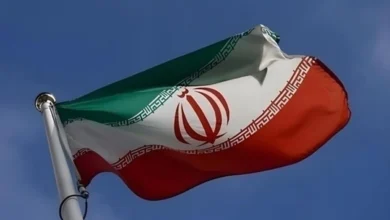
China Joins United States on List of Excluded Nations for Export Earnings Deposit Policy


Jakarta, Indonesia – In a significant development for Indonesia’s foreign exchange management, China has been identified as one of the nations that will be exempted from the mandatory deposit of export earnings from natural resources (Devisa Hasil Ekspor Sumber Daya Alam – DHE SDA) within the country. This announcement was made by Indonesian Minister of Finance, Purbaya Yudhi Sadewa, who revealed that China would join the United States on this exclusive list. While Minister Purbaya provided a glimpse into the composition of these exemptions, the full roster of excluded countries will be officially disclosed by Coordinating Minister for Economic Affairs, Airlangga Hartarto.
"There were several countries mentioned earlier, I forget them. Has Pak Airlangga not announced it yet? There are four countries, but Pak Airlangga will announce them later," Minister Purbaya stated at the Presidential Palace Complex in Central Jakarta on Thursday, July 23rd. He reiterated that while he could confirm China’s inclusion, the complete list remained under wraps pending the official announcement. "One more is China. I forget the others. Let Pak Airlangga announce it later," he added.
The rationale behind these exemptions, as explained by Minister Purbaya, stems from a multifaceted evaluation process by the government. Key considerations include the existence of bilateral or multilateral agreements between Indonesia and the respective nations, the substantial volume of investment these countries contribute to the Indonesian economy, and the established presence and longevity of their banking institutions operating within Indonesia. "There are bilateral or multilateral agreements. The second is that their investment is large, if I’m not mistaken. Then what else? Their banks have been established here for quite a long time. Roughly, that’s it," Minister Purbaya elaborated.
Understanding the DHE SDA Policy: Objectives and Scope
The DHE SDA policy, which has undergone revisions and implementations over time, fundamentally aims to bolster Indonesia’s foreign exchange reserves and enhance the stability of the national currency, the Rupiah. The core objective, as clarified by Minister Purbaya, is to target domestic companies that have accumulated significant export earnings abroad. This policy is not intended to penalize foreign companies actively engaged in business operations within Indonesia. "Basically, we are targeting domestic companies that have a lot of money in banks here and then put their money overseas. That is the main target. So, it’s not foreign companies that operate here," Minister Purbaya emphasized.
He further clarified that exemptions for foreign companies would apply to those structured under foreign direct investment (FDI) schemes, where foreign ownership exceeds 10 percent. This distinction is crucial, highlighting the policy’s focus on encouraging capital retention within the Indonesian financial system rather than impeding legitimate foreign investment.
Background and Evolution of the DHE SDA Policy
The current iteration of the DHE SDA policy is underpinned by Government Regulation (Peraturan Pemerintah – PP) Number 21 of 2026. This regulation mandates that exporters of natural resources must deposit a specified percentage of their export earnings into designated accounts within Indonesia. Previously, the United States was the sole trading partner exempted from this requirement.
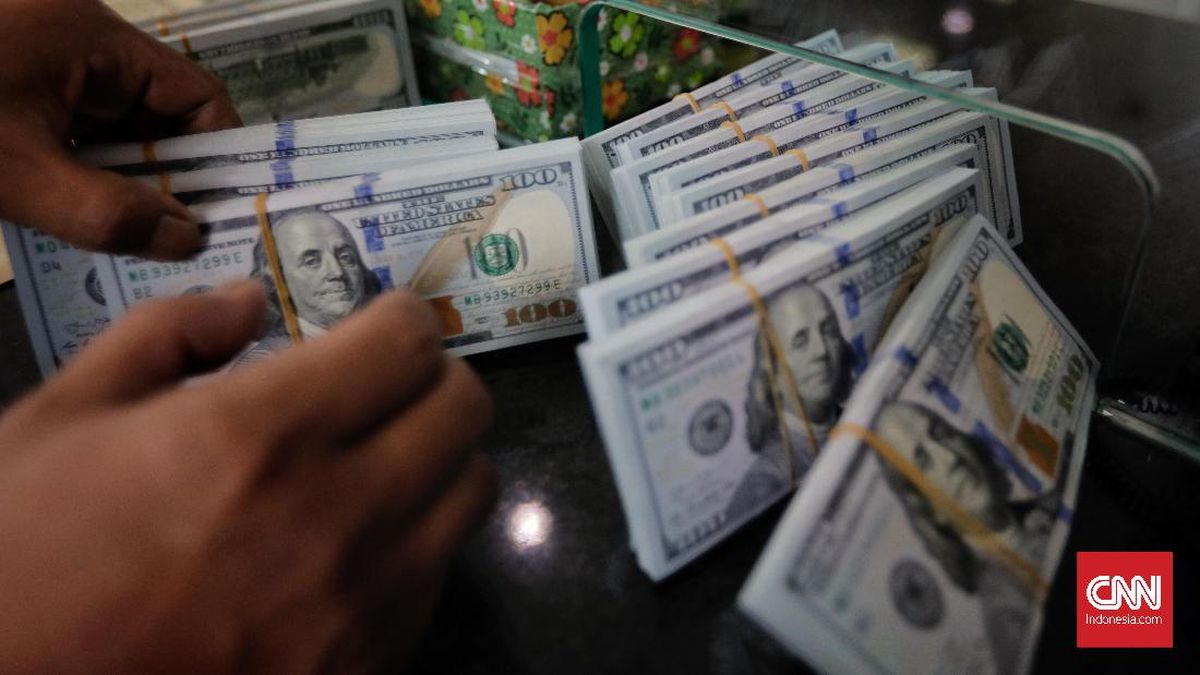
Under PP No. 21 of 2026, exporters are obligated to place 30 percent of their DHE SDA from the oil and gas (migas) sector and 100 percent from non-oil and gas sectors into special accounts held at state-owned banks (Himbara). These funds must be held for a minimum period of three months for the oil and gas sector and 12 months for the non-oil and gas sector.
Furthermore, the regulation introduced a significant adjustment to the conversion of foreign exchange earnings into Rupiah. The government lowered the maximum conversion limit from 100 percent to 50 percent. This measure is designed to encourage exporters to retain a larger portion of their foreign currency earnings within the country, thereby increasing the supply of foreign exchange in the domestic market and supporting the Rupiah’s stability.
Governmental Coordination and Implementation Framework
The formulation and implementation of the DHE SDA policy involve close collaboration among key government bodies. Minister Purbaya highlighted that discussions regarding the policy’s practical application have been ongoing, involving the Ministry of Finance, the Coordinating Ministry for Economic Affairs, Bank Indonesia (the central bank), the Financial Services Authority (Otoritas Jasa Keuangan – OJK), and the Indonesia Investment Authority (Dana Pensiun Badan Usaha Milik Negara – BPI Danantara).
These collaborative meetings have focused on critical aspects such as identifying the list of exempted countries, determining which financial institutions are eligible to hold the DHE, and ironing out the technical execution of the policy. This inter-agency coordination underscores the government’s commitment to ensuring a smooth and effective rollout of the DHE SDA regulations.
Analysis of Implications: Economic and Geopolitical Considerations
The inclusion of China in the list of DHE SDA exemptions carries significant implications. As Indonesia’s largest trading partner and a major source of investment, particularly in resource-intensive sectors like mining and infrastructure, China’s exemption reflects the strategic importance of this economic relationship. The large volume of Chinese investment and the deep integration of Chinese financial institutions in Indonesia are likely key drivers behind this decision, aligning with the criteria mentioned by Minister Purbaya.
Exempting China from the DHE SDA policy could facilitate continued robust trade and investment flows between the two nations. It removes a potential administrative hurdle for Chinese companies, ensuring that their export earnings are not subject to mandatory onshore placement, which could otherwise impact their liquidity management and repatriation of profits. This move signals a pragmatic approach by the Indonesian government, balancing the objective of strengthening domestic foreign exchange reserves with the imperative of maintaining strong economic ties with its most crucial trading partner.
The exemption of the United States, a long-standing exemption, reflects the established and complex economic relationship between Indonesia and the US, encompassing trade, investment, and financial linkages. The addition of China to this exclusive club suggests a recognition of China’s comparable economic significance and the potential impact of stringent DHE regulations on this vital partnership.
The inclusion of four countries in total, as alluded to by Minister Purbaya, suggests that other major economic partners might also be on the exemption list. The specific criteria – bilateral agreements, investment volume, and banking presence – point towards nations with substantial economic engagement with Indonesia. Potential candidates could include countries like Japan, South Korea, Singapore, or European Union member states, depending on the depth and breadth of their economic ties.
Potential Impacts on Indonesia’s Financial System
While the DHE SDA policy aims to increase foreign exchange onshore, the exemptions mean that a substantial portion of export earnings may still be held offshore by companies from these exempted nations. This could moderate the immediate impact on the growth of foreign exchange deposits within Indonesia. However, the policy’s focus on domestic companies is crucial. By encouraging Indonesian firms to bring their overseas earnings back home, the government can still achieve a significant increase in domestic foreign exchange liquidity, which can then be channeled into productive investments or used to manage the Rupiah’s exchange rate.
The requirement for mandatory conversion of a portion of foreign exchange earnings into Rupiah (up to 50 percent) remains a powerful tool for supporting the local currency. This mechanism ensures that even with exemptions, there is a consistent inflow of foreign currency into the domestic market for conversion, thereby bolstering the Rupiah’s stability against external shocks.
The selection of specific banks (Himbara) to hold these DHE funds is also strategic. It aims to strengthen the capital base of state-owned banks and potentially direct these funds towards national development projects or key industries. This centralizes the management of a significant portion of export earnings, allowing for more effective policy oversight and utilization.
Future Outlook and Policy Refinements
The ongoing refinement of the DHE SDA policy demonstrates the Indonesian government’s adaptive approach to managing its foreign exchange reserves and supporting economic stability. The explicit criteria for exemptions provide clarity and predictability for businesses engaged in international trade with Indonesia.
As the global economic landscape continues to evolve, it is plausible that the DHE SDA policy, including its exemption list, may undergo further adjustments. The government’s commitment to close coordination with Bank Indonesia, OJK, and other stakeholders suggests a continuous monitoring and evaluation process. This ensures that the policy remains effective in achieving its objectives while minimizing unintended consequences for international trade and investment.
The inclusion of China as a key exempted partner underscores the strategic importance of the bilateral relationship and the Indonesian government’s commitment to fostering a conducive environment for economic cooperation. The official announcement by Airlangga Hartarto will provide further details on the full scope of these exemptions and the government’s broader strategy for managing Indonesia’s foreign exchange resources in an increasingly interconnected global economy. The success of this policy will ultimately hinge on its effective implementation, the government’s ability to maintain market confidence, and its capacity to adapt to evolving economic dynamics.
Related posts: