
France Farmers Barricades Protests
France’s Farmers Blockade Roads: A Deep Dive into the Grievances, Triggers, and Socio-Economic Repercussions
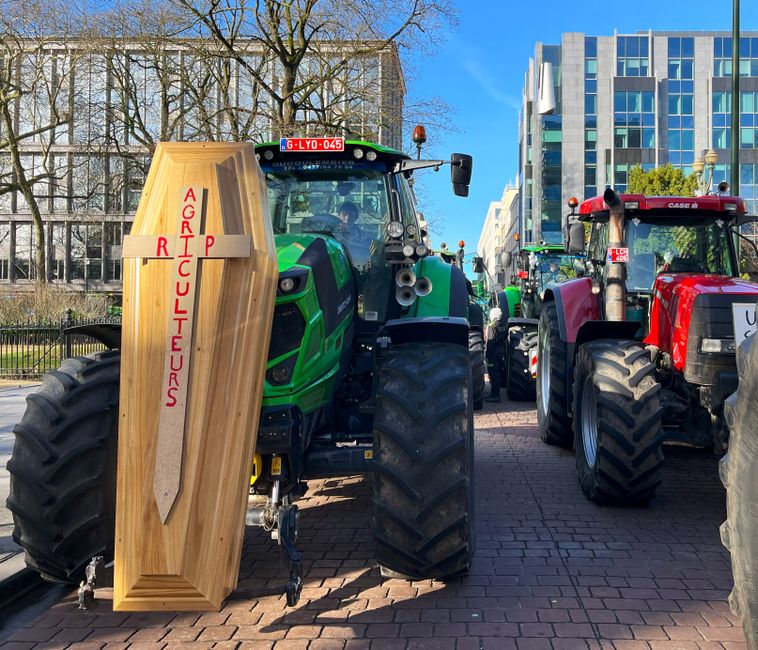
French farmers have erected widespread barricades across the nation, significantly disrupting traffic and bringing agricultural concerns to the forefront of public and political discourse. These protests, characterized by tractor blockades of major highways, the dumping of produce, and demonstrations at distribution centers and government buildings, are a visceral expression of deep-seated discontent within the agricultural sector. The immediate triggers for this escalation are multifaceted, but they largely stem from a perceived lack of economic viability, an onslaught of regulatory burdens, and a feeling of being undervalued and disregarded by both the French government and the European Union.
At the core of the farmers’ anger lies the persistent issue of low and often unremunerative prices for their produce. For years, French farmers have been squeezed by powerful supermarket chains and food processing companies that dictate terms, leaving producers with razor-thin profit margins. The imbalance of power in the food supply chain is a recurring theme, with farmers often bearing the brunt of cost increases for inputs – fuel, fertilizer, animal feed – while struggling to pass these on to consumers or receive fair compensation from their buyers. The notion of "fair price" is not merely an economic aspiration; it’s a matter of survival, allowing farmers to reinvest in their farms, support their families, and maintain their livelihoods. The current price of many agricultural products, particularly in sectors like livestock and grains, is often cited as being below the cost of production, forcing many to operate at a loss. This unsustainable economic model is a primary driver of the current wave of unrest.
Compounding the economic pressures is a perceived deluge of regulatory and administrative burdens. French farmers often feel they are subjected to some of the most stringent environmental and animal welfare regulations in Europe, while simultaneously facing competition from countries with less demanding standards. The EU’s Green Deal, while aiming for ambitious environmental goals, is seen by many farmers as an impractical and financially burdensome framework that disproportionately impacts their day-to-day operations. Specific grievances include restrictions on pesticide use, new rules on fertilizer application, and the costly implementation of various environmental protection measures. The constant need to adapt to evolving legislation, often with limited financial support for the necessary upgrades and changes, creates a perpetual state of uncertainty and financial strain. This regulatory creep is frequently framed as an existential threat, forcing farmers to question their ability to continue farming in France.
The specter of cheap imports also looms large in the farmers’ minds. They point to agricultural products entering France and the EU from countries with lower production costs and less stringent regulations, undercutting their ability to compete. Trade agreements negotiated by the EU are often a point of contention, with farmers arguing that these deals prioritize free trade over the protection of European agricultural producers. The recent trade deal with Mercosur (the South American trade bloc) has been a particular flashpoint, with farmers fearing a massive influx of beef and other products that would decimate their domestic markets. This perceived unfair competition, coupled with the aforementioned regulatory pressures, creates a sense of being systematically disadvantaged on both domestic and international fronts.
The protests are not solely about economics and regulation; they are also deeply rooted in a profound sense of cultural and social identity. Farming is more than just a business in France; it’s an integral part of the nation’s heritage, landscape, and identity. Farmers often feel that their way of life, their traditions, and their contribution to rural communities are being eroded by the forces of globalization, industrial agriculture, and urban-centric policymaking. The romanticized image of the French farmer, once a cornerstone of national pride, is increasingly clashing with the harsh realities of modern agricultural economics and policy. This erosion of identity and belonging fuels the anger and desperation seen on the barricades, as farmers fight not just for their income but for their very existence and the preservation of their cultural heritage.
The current wave of protests has been significantly amplified by the widespread availability of social media and the adept use of these platforms by farmer unions and associations. Videos of tractors blocking highways, tractors at symbolic locations like the Arc de Triomphe, and farmers dumping produce have gone viral, quickly capturing national and international attention. This media savvy allows farmers to bypass traditional media gatekeepers and directly communicate their grievances to a broader audience. The visual impact of the protests, with their iconic imagery of tractors and agricultural produce, is powerful and has been instrumental in shaping public opinion and putting pressure on the government. The speed and reach of social media have transformed the dynamics of protest, enabling rapid mobilization and sustained public engagement.
The socio-economic repercussions of these barricades are significant and far-reaching. The immediate impact is felt by consumers, who are experiencing disruptions to supply chains, leading to shortages and price increases for certain food items. Supermarkets have been targeted, with farmers dumping milk, vegetables, and other produce in front of their entrances to protest what they see as exploitative pricing. This direct action, while controversial, is a clear signal of the farmers’ desperation. Beyond consumer impact, the blockades have brought freight transport to a standstill, affecting businesses reliant on timely deliveries and contributing to broader economic disruption. The tourism sector, a vital component of the French economy, is also impacted by travel disruptions, especially as the protests often target major arterial routes.
Politically, the farmer protests present a formidable challenge for the French government, led by President Emmanuel Macron. The agricultural sector, while a relatively small percentage of the French workforce, wields considerable political influence, particularly in rural constituencies. Macron’s government has been forced to respond to the escalating protests with a series of concessions and promises. Initially, the government attempted to de-escalate the situation through dialogue and minor policy adjustments. However, as the protests gained momentum and spread across the country, more substantial measures were deemed necessary. These have included pledges to accelerate payments to farmers, review certain environmental regulations, and push for better prices within the EU. The effectiveness of these concessions remains to be seen, as farmers have often expressed skepticism about the government’s long-term commitment to addressing their fundamental concerns. The political balancing act for Macron involves placating the farming sector without alienating other constituencies or undermining the EU’s broader policy objectives.
The European Union’s Common Agricultural Policy (CAP) is often a focal point of the farmers’ critique. While the CAP aims to support European farmers and ensure food security, its implementation and evolving priorities are a source of contention. Farmers argue that the CAP has become overly bureaucratic, favors large agricultural enterprises over small family farms, and is increasingly focused on environmental targets at the expense of economic viability. The current CAP reforms and proposed future directions are closely scrutinized by French farmers, who often feel that their specific needs and challenges are not adequately addressed at the EU level. The aspiration for a more supportive and equitable CAP, one that genuinely secures the future of farming in Europe, is a driving force behind the protests.
The long-term implications of these farmer barricades extend beyond the immediate political and economic landscape. They highlight a fundamental disconnect between urban consumers, policymakers, and the realities of food production. The protests serve as a stark reminder of the essential role farmers play in society, not only in providing food but also in shaping the rural environment and maintaining national food sovereignty. If the underlying issues of economic viability, regulatory burden, and unfair competition are not effectively addressed, the future of French agriculture, and indeed European agriculture, remains uncertain. The persistent emigration from rural areas and the aging farming population are trends that these protests underscore, raising concerns about the succession of farms and the future of rural communities.
The international dimension of these protests cannot be overlooked. The issues raised by French farmers – low prices, regulatory burdens, and competition from imports – are not unique to France. Similar grievances have been voiced by farmers in other European countries, suggesting a broader European-wide agricultural crisis. The success or failure of the French farmers’ protests could therefore have ripple effects across the continent, influencing agricultural policy and farmer sentiment in neighboring nations. The potential for a pan-European farmer movement, united by common concerns, remains a possibility.
In conclusion, the current wave of farmer protests in France is a complex and deeply rooted phenomenon, driven by a potent mix of economic hardship, regulatory frustration, and a profound sense of cultural identity at stake. The barricades, while disruptive, are a powerful manifestation of farmers’ desperation and their demand for a sustainable and dignified future. The government’s response, the EU’s role, and the broader socio-economic implications will continue to unfold, shaping the future of French agriculture and serving as a critical case study in the ongoing dialogue between food producers, consumers, and policymakers. The enduring image of French farmers on the front lines of these protests is a potent symbol of their fight for survival and their unwavering commitment to a vital sector of the national economy and identity.
