Government Ministries in Indonesia Continue Intensive Cross-Sectoral Deliberations on Proposed Hybrid, PHEV, and REEV Automotive Incentives


Jakarta – The Indonesian government is maintaining its focus on formulating a comprehensive fiscal and non-fiscal support framework for hybrid electric vehicles (HEVs), plug-in hybrid electric vehicles (PHEVs), and range-extended electric vehicles (REEVs). Ministry-level discussions remain ongoing as policymakers attempt to balance national industrial growth, environmental transition goals, and fiscal prudence.
Minister of Industry Muhammad Sarmuji recently clarified that finalizing the incentive package requires extensive coordination across multiple government bodies. Because automotive policies intersect deeply with state finances, energy security, and macroeconomic stability, the formulation process cannot rely solely on the perspective of a single ministry.
"We cannot operate solely from the perspective of the Ministry of Industry," Sarmuji stated during recent commentary regarding the ongoing policy harmonization.
According to the Ministry of Industry, the regulatory framework involves active participation from the Ministry of Finance, the Ministry of Energy and Mineral Resources (ESDM), and the Coordinating Ministry for Economic Affairs. By bridging the distinct priorities of these institutions, the government aims to establish a cohesive incentive scheme that fosters the development of the domestic automotive sector while remaining fiscally responsible and aligned with national carbon reduction commitments.
The Chronology of Policy Development for Low-Emission Vehicles
Indonesia has steadily advanced its electrified vehicle roadmap over the past several years, predominantly focusing initial incentives on battery electric vehicles (BEVs). Pure BEVs have enjoyed various government-backed stimuli, including value-added tax (VAT) reductions, luxury goods sales tax (PPnBM) adjustments, and non-fiscal privileges such as exemptions from Jakarta’s odd-even license plate traffic restriction rules.
However, industry stakeholders and manufacturing associations have increasingly lobbied for policy expansion to cover transitional technologies—specifically hybrids, PHEVs, and REEVs. These technologies are viewed by many industry experts as a pragmatic stepping stone for consumers who are hesitant to transition directly to pure battery-powered mobility due to infrastructure limitations or driving range concerns.
The discourse surrounding hybrid and extended-range vehicles gained notable momentum in late 2024. The Ministry of Industry began evaluating specific proposals to introduce tailored assistance for locally manufactured PHEVs and REEVs. Officials have emphasized that while BEVs have received adequate regulatory support, vehicles equipped with internal combustion engines working in tandem with electric powertrains still lack a formalized incentive structure.
Throughout October 2024, inter-ministerial meetings intensified. Policymakers have sought to weigh the potential environmental benefits of reduced fossil fuel consumption against the immediate impact on state revenue and the existing manufacturing ecosystem, which has traditionally been anchored in internal combustion engine (ICE) production.
Understanding the Scope: HEVs, PHEVs, and REEVs
To appreciate the complexity of the current regulatory deliberations, it is essential to examine the technological distinctions between the vehicle types under review.
- Hybrid Electric Vehicles (HEVs): These vehicles combine a conventional internal combustion engine with an electric motor and a small battery. The battery is charged entirely through regenerative braking and the internal engine; it cannot be plugged into an external power source. HEVs offer improved fuel efficiency and reduced emissions compared to standard ICE vehicles without requiring charging infrastructure.
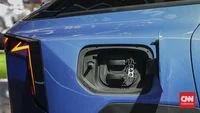
- Plug-In Hybrid Electric Vehicles (PHEVs): PHEVs feature larger batteries that can be charged by plugging into an external electrical outlet or charging station. They can travel a significant distance on electric power alone before transitioning to gasoline or diesel, bridging the gap between traditional hybrids and pure EVs.
- Range-Extended Electric Vehicles (REEVs): REEVs are driven entirely by an electric motor. However, they include an onboard internal combustion engine whose sole purpose is to act as a generator to recharge the battery, thereby extending the vehicle’s operational range without requiring a direct connection to a charging station.
Ministry officials have highlighted that promoting PHEVs and REEVs holds substantial promise for lowering domestic consumption of subsidized fossil fuels, such as Pertalite. By encouraging the adoption of vehicles that utilize electricity for a large portion of daily commuting, the government aims to alleviate the fiscal burden associated with energy subsidies.
Proposed Incentive Schemes: Fiscal and Non-Fiscal Measures
The Ministry of Industry has outlined a dual-track approach for the forthcoming policy, categorizing proposed assistance into fiscal and non-fiscal mechanisms.
Fiscal Incentives
Fiscal deliberations—led primarily in coordination with the Ministry of Finance—revolve around potential tax adjustments. These may include calibrated luxury tax structures or import duty reliefs for manufacturing components, provided that automakers meet specific domestic
content level (TKDN) thresholds. The objective is to make the local production of hybrid and extended-range vehicles economically viable for major automotive brands operating in Indonesia.
Non-Fiscal Incentives
In addition to monetary policies, the government is considering non-fiscal measures designed to enhance the daily utility and consumer appeal of transitional green vehicles. These proposed benefits mirror those previously granted to BEVs and include:
- Exemption from urban odd-even traffic gating regulations in major metropolitan centers like Jakarta.
- Allocation of dedicated parking spaces in public facilities and commercial centers.
- Improved integration with urban electric vehicle charging infrastructure networks.
Minister Sarmuji noted that these non-fiscal advantages serve as an immediate, low-cost method to stimulate consumer interest while the broader fiscal framework undergoes final bureaucratic alignment.
Stakeholder Engagement and Industry Consultations
As the policy discussions progress, the Ministry of Industry has maintained an open-door policy for industry associations and automotive manufacturers. Dialogue channels have been established with groups such as the Indonesian Electric Vehicle Industry Association (Periklindo) to gather ground-level feedback regarding production realities, market demand, and investment timelines.
Periklindo leadership has actively sought formal audiences with government officials to present industry perspectives. These consultations ensure that regulatory frameworks reflect the commercial capacities of manufacturers and the evolving preferences of Indonesian consumers.
Automotive analysts observe that maintaining clear and predictable regulatory signals is vital for maintaining investor confidence. Major global automakers—many of which have made substantial investments in Indonesian manufacturing plants—are closely monitoring the policy announcements to determine their production strategies for the coming decade.
Economic and Environmental Implications
The eventual rollout of incentives for hybrid, PHEV, and REEV models carries profound implications for Indonesia’s macroeconomic landscape and its broader environmental commitments.
From an environmental standpoint, accelerating the adoption of partial and full electrification aligns with Indonesia’s Nationally Determined Contribution (NDC) targets and its long-term ambition to achieve net-zero emissions. Transport sector emissions represent a growing share of urban pollution; therefore, any policy that successfully transitions motorists away from conventional fossil-fuel-powered vehicles contributes to improved air quality and reduced greenhouse gas emissions.
Economically, Indonesia occupies a strategic position in the global electric vehicle supply chain, largely due to its vast reserves of nickel, a critical component in lithium-ion batteries. By broadening the incentive structure beyond pure BEVs to encompass transitional technologies, the government aims to protect employment within the established automotive manufacturing sector while simultaneously upgrading technological capabilities.
However, challenges remain. Economists from the Ministry of Finance continue to scrutinize the potential trade-offs, particularly regarding short-term tax revenue losses versus long-term savings on energy imports. Subsidized fossil fuels have historically placed a heavy burden on the state budget; thus, any policy that successfully curbs fuel consumption yields long-term fiscal relief, even if it requires upfront tax concessions.
Conclusion and Outlook
The ongoing deliberations underscore the complexity of designing industrial policies in a developing economy aiming for rapid technological modernization. While the Ministry of Industry remains eager to finalize the incentive framework to sustain momentum in the automotive sector, the necessity of inter-ministerial consensus ensures a thorough and methodical review process.
As discussions continue between the Ministry of Industry, the Ministry of Finance, the Ministry of ESDM, and the Coordinating Ministry for Economic Affairs, stakeholders await a definitive ministerial regulation. Once enacted, this comprehensive framework is expected to reshape the Indonesian automotive market, offering consumers a wider array of electrified mobility options while supporting the nation’s dual goals of economic growth and energy transition.
Related posts: