Hari Olahraga Nasional: Reflecting on the Historical Legacy and Future Aspirations of Indonesian Sports

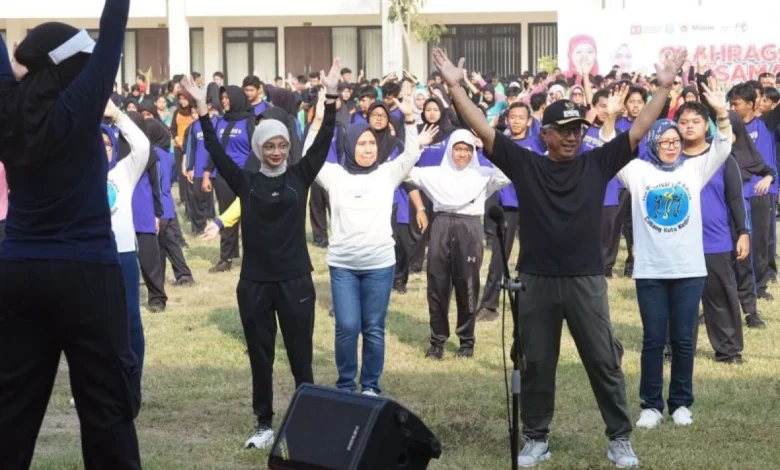
September 9 serves as a cornerstone in the Indonesian calendar, marking the Hari Olahraga Nasional (Haornas), or National Sports Day. Beyond the ceremonial festivities, this date serves as a profound reminder of the nation’s resilience, the evolution of its sporting infrastructure, and the ongoing mission to cultivate a physically active society. As Indonesia observes the 43rd anniversary of this commemoration in 2026, the spirit of the day remains deeply rooted in the historic events of 1948, when the nation first demonstrated its sovereignty through the lens of athletic competition.
The Genesis of National Pride: The 1948 PON
The foundation of Haornas is inextricably linked to the inaugural Pekan Olahraga Nasional (PON), held in Solo, Central Java, from September 9 to 12, 1948. At that time, the newly independent Republic of Indonesia was navigating a volatile political landscape, facing diplomatic isolation and significant internal challenges. The decision to hold the first national games was not merely a recreational endeavor; it was a calculated political move to signal to the international community that Indonesia was a functioning, organized, and unified state.
The impetus for this historic event was the rejection of Indonesia’s participation in the 1948 London XIV Olympiad. At the time, the International Olympic Committee did not recognize Indonesia as a sovereign nation, requiring its athletes to compete under the Dutch colonial banner. Rejecting this indignity, the Indonesian leadership, spearheaded by figures like Sri Sultan Hamengkubuwono IX, chose to host their own multi-sport event. By successfully organizing the first PON, Indonesia effectively asserted its identity, proving that despite the shadow of colonialism, the nation possessed the administrative capacity and the spirit to govern its own athletic affairs.
Formalization and Legislative Milestones
While the spirit of sportsmanship was established in 1948, it took several decades for the date to be codified into a national celebration. The official designation of September 9 as Hari Olahraga Nasional was inaugurated by President Soeharto in 1983. During the ceremony commemorating the renovation of the historic Sriwedari Stadium in Surakarta—the very site of the first PON—the government sought to institutionalize the culture of fitness.
This initiative was later reinforced by Presidential Decree (Keppres) Number 67 of 1985. This legal instrument was designed to provide a systematic framework for the development of sports, moving from a culture of occasional competition to one of sustainable, nationwide physical development. Since 1983, the observance of Haornas has evolved, reflecting the changing priorities of the Indonesian government, from basic mass participation to the pursuit of global excellence and the modernization of sports science.
The Evolution of the Sporting Landscape
The journey from 1948 to 2026 illustrates a massive transformation in Indonesia’s approach to sports. Initially, the focus was on national unity and anti-colonial sentiment. Today, the focus has shifted toward high-performance sports, the integration of sports into the economy, and the role of physical activity in public health.
Modern sports management in Indonesia now involves complex infrastructure projects. The Ministry of Youth and Sports (Kemenpora) has recently emphasized the necessity of a Rp1.5 trillion investment to construct high-performance academies and integrated training centers. This shift signals a transition from amateur-led events to a professionalized model that mirrors international standards. By centralizing training, the government aims to bridge the gap between regional potential and international podium finishes.
Moreover, the conceptualization of the 2028 PON, which intends to transform Sumba Timur into a "sport tourism" hub, highlights a new strategic direction: the marriage of athletics with economic development. By utilizing sporting events as catalysts for regional tourism, the state aims to generate long-term economic benefits, proving that the legacy of 1948 has expanded into a multi-faceted industry.
The Societal Impact: Health, Character, and Unity
Beyond the medals and the economic figures, the core mission of Haornas remains the democratization of exercise. Public health data suggests that sedentary lifestyles have become a growing concern in urban Indonesia. Consequently, the annual commemoration of Haornas serves as a rallying cry for the Ministry of Youth and Sports to promote the "Sports Industry, Sports Tourism, and Sports Science" trinity.
The pedagogical value of sports is also a central theme in recent government discourse. Sports are promoted as a vehicle for character building—teaching the values of discipline, fair play, and perseverance. In a country as geographically and ethnically diverse as Indonesia, sports have historically served as a neutral ground where regional rivalries are channeled into healthy competition, fostering a sense of national cohesion.
Official Perspectives and Policy Directions
In anticipation of the 2026 commemoration, government officials have emphasized that the development of the sports ecosystem is not merely a government responsibility but a collective one. The Ministry of Youth and Sports has frequently highlighted that advancements in sports lead to substantial economic and health dividends.
"The development of sports should not be seen as an isolated sector," a government representative recently noted in a policy briefing. "It is a fundamental pillar of national productivity. A healthy society is a more productive society, and a flourishing sports industry provides jobs, infrastructure, and international prestige."
Recent legislative discussions have also centered on the need for private-sector involvement. To reach the ambitious goals set for the coming decade, the state acknowledges that it cannot rely solely on the national budget. Public-private partnerships (PPP) are becoming increasingly vital for building specialized facilities, such as the proposed sports academies, which require high-tech equipment and international-standard coaching staff.
Chronology of Indonesian Sports Milestones
- 1948: The inaugural PON is held in Solo, establishing the fundamental principle of Indonesian sporting autonomy.
- 1983: President Soeharto officially declares September 9 as Hari Olahraga Nasional at the Sriwedari Stadium.
- 1985: Presidential Decree (Keppres) No. 67/1985 is enacted, providing the legal basis for the annual observance.
- 2000s–2010s: Indonesia shifts focus toward hosting major international events, including the 2018 Asian Games, which redefined the nation’s capacity for sporting logistics.
- 2024–2026: Strategic planning focuses on decentralizing sports infrastructure, including plans for regional "sport tourism" hubs in areas like Sumba.
Analysis: Challenges and Future Outlook
Despite the growth of the sector, the Indonesian sports landscape faces distinct challenges. One significant hurdle is the disparity in infrastructure quality between Java and the outer islands. While major cities possess modern stadiums, rural regions often lack basic facilities, which can lead to a talent drain.
Furthermore, the integration of "Sports Science" remains in its nascent stages. For Indonesia to compete consistently at the Olympic level, the reliance on raw talent must be replaced by data-driven training regimens, nutritional science, and psychological support for athletes. The recent advocacy for a Rp1.5 trillion investment is a recognition of this need. If executed correctly, this funding could provide the technical backbone required to sustain a long-term competitive edge on the world stage.
Another challenge lies in the sustainability of sports facilities. Many large stadiums built for previous PON events have faced maintenance issues post-games. The current policy shift toward "sport tourism" and multi-purpose facilities is an attempt to address this by ensuring that venues remain economically viable throughout the year, rather than sitting idle between major tournaments.
Conclusion: The Path Forward
As Indonesia marks the 43rd year of its National Sports Day, the narrative has come full circle. From the humble, defiant beginnings in 1948 to the sophisticated, multi-billion-rupiah industry of 2026, the journey of Indonesian sports is a testament to the nation’s growth.
Haornas is no longer just a day for celebration; it is an annual diagnostic check-up for the nation’s physical health and competitive capability. By encouraging the public to engage in daily physical activity and demanding high standards for its elite athletes, Indonesia continues to build upon the foundation laid by the pioneers in Solo. As the nation looks toward the future, the integration of sports into the economy and public life will be essential in shaping a more resilient and disciplined society, ensuring that the legacy of the 1948 pioneers continues to inspire generations of Indonesians to come. Whether through a simple morning jog or a professional commitment to high-performance training, the spirit of September 9 serves as a constant reminder that for Indonesia, sports is, and always will be, a fundamental expression of national identity.
Related posts: