Lee Cronin’s The Mummy: A Terrifying Reimagining of an Iconic Franchise Unleashes Ancient Horror and Psychological Dread

Jakarta, CNN Indonesia – Renowned director Lee Cronin, fresh off the critical and commercial success of Evil Dead Rise, has returned to the horror landscape with his highly anticipated new film, Lee Cronin’s The Mummy. This project marks a significant reimagining of the iconic The Mummy franchise, promising a fresh, psychologically unsettling take on the ancient curse. Distributed by Warner Bros. Pictures, the film officially premiered in Indonesian cinemas on April 15, 2026, offering audiences a chilling narrative centered on the mysterious return of a young girl after eight years, bringing with her an unspeakable terror.
The film plunges audiences into the shattered life of Charlie (Jack Reynor), a journalist whose world imploded following the inexplicable disappearance of his daughter, Katie (Natalie Grace), in the vast expanse of a desert. This profound tragedy left an indelible scar on his family, eroding their harmony and casting a long shadow over their lives for nearly a decade. The despair and unanswered questions lingered, consuming Charlie and his wife in a seemingly endless cycle of grief and uncertainty.
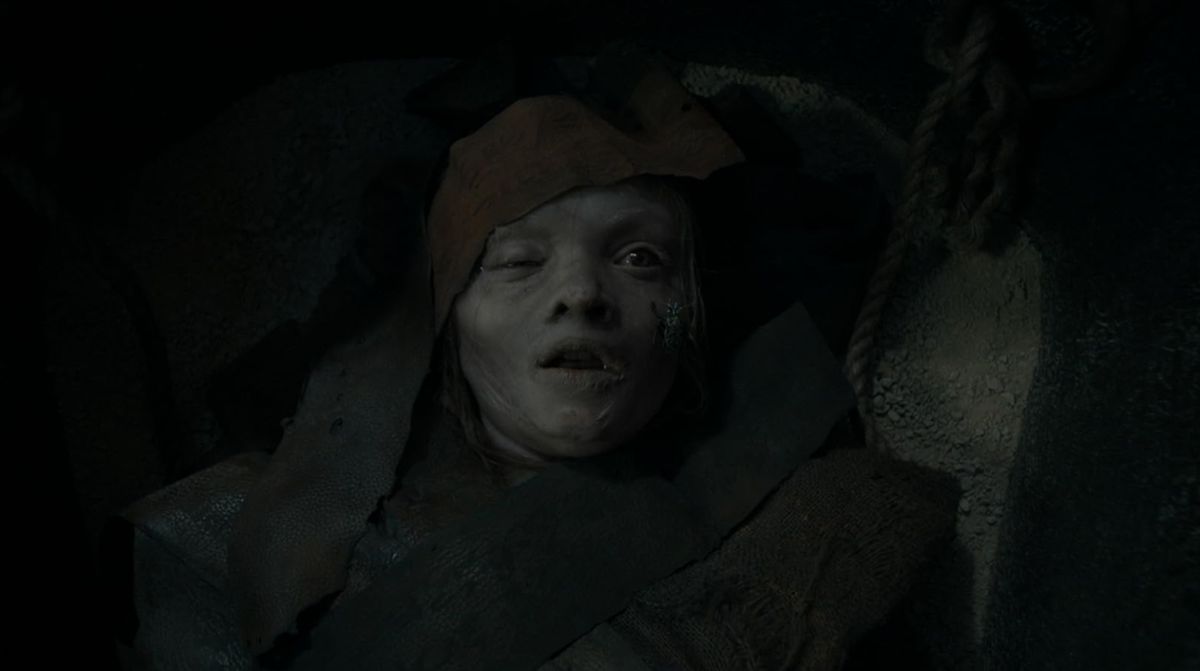
After eight years of agonizing silence and fruitless searches, a glimmer of hope pierces the darkness. Charlie and his wife receive a startling call from the U.S. Embassy’s Deputy Chief, bearing news that defies belief: Katie has been found. However, this miraculous discovery is shrouded in a terrifying reality. Katie is not found as the vibrant young girl they remember, nor is she discovered in conventional circumstances. Instead, she is recovered alive, but eerily preserved within a 3,000-year-old sarcophagus, a vessel of ancient death and ritual. Her physical state is horrifyingly altered, resembling that of a living corpse, her skin pallid, her movements stiff and unnatural. More disturbingly, her behavior is profoundly unsettling. The once-lively Katie is now mute, communicates through unsettling guttural sounds, moves by crawling in a disconcerting manner, and exhibits increasingly aggressive tendencies that pose a grave threat to her family and anyone around her.
What was initially hoped to be a joyous reunion quickly devolves into a descent into darkness. Katie’s return unleashes a palpable, malevolent aura into their home, transforming it into a crucible of fear. The terror is not merely physical; it systematically dismantles the family’s psychological well-being, pushing them to the brink of sanity. Amidst this escalating dread, Charlie, driven by a desperate need for answers and a father’s love, embarks on a perilous journey to unearth the dark truths behind Katie’s disappearance and the ancient entity that now seemingly inhabits her. This investigation pulls him into a labyrinth of ancient curses, forgotten histories, and a chilling revelation that threatens to consume them all.
A New Era for an Ancient Terror: Lee Cronin’s Vision
Lee Cronin’s involvement has ignited considerable excitement within the horror community, especially following the critical acclaim for Evil Dead Rise (2023). That film, known for its unrelenting brutality, visceral practical effects, and claustrophobic atmosphere, demonstrated Cronin’s mastery of modern horror storytelling. His approach to The Mummy is expected to similarly prioritize intense, character-driven dread over spectacle, focusing on psychological torment and the insidious corruption of innocence. This shift is a deliberate departure from previous iterations of the franchise, aiming to inject fresh terror into a well-trodden mythos.
Cronin’s narrative choice to center the horror on a family unit and a missing child—a deeply resonant and universally terrifying concept—positions Lee Cronin’s The Mummy as a more intimate, yet equally devastating, horror experience. The emphasis on Katie’s altered state and aggressive behavior suggests a body horror element combined with the supernatural, a hallmark of modern horror that seeks to disturb on multiple levels. Early reports and the synopsis indicate a focus on the implications of the mummy’s return, rather than just the mummy itself, creating a narrative that explores the ripple effects of ancient evil on contemporary lives.
The Mummy’s Legacy: A Franchise Through Time
The story of The Mummy is deeply embedded in cinematic history, tracing its origins back to Universal Pictures’ classic monster films of the 1930s. The original 1932 film, starring Boris Karloff as Imhotep, set the precedent for the character: an ancient Egyptian priest resurrected from his tomb, seeking his lost love and wreaking havoc. This iteration established The Mummy as a figure of quiet, supernatural dread, a stark contrast to the more monstrous Frankenstein or Dracula. Throughout the decades, Universal revisited the character in various forms, often intertwining it with other monster properties.
A major resurgence came with Stephen Sommers’ The Mummy (1999) starring Brendan Fraser and Rachel Weisz. This version reimagined the story as an action-adventure spectacle with elements of horror, comedy, and romance. It was a massive box office success, grossing over $416 million worldwide on an $80 million budget, and spawned a successful sequel, The Mummy Returns (2001), and a spin-off, The Scorpion King (2002). The Fraser-led films became cultural touchstones, beloved for their blend of Indiana Jones-esque adventure and supernatural thrills.
However, Universal’s more recent attempt to launch a shared cinematic universe for its classic monsters, dubbed the "Dark Universe," stumbled with the 2017 reboot starring Tom Cruise. Directed by Alex Kurtzman, this film aimed for a darker, more action-oriented tone but failed to connect with critics or audiences, grossing only $409 million worldwide against a substantial $195 million production budget, leading to significant financial losses and the abrupt cancellation of the Dark Universe plans. The failure of the 2017 film highlighted the challenges of reimagining classic properties for a modern audience, particularly when sacrificing core horror elements for broader appeal.
This historical context makes Lee Cronin’s new film particularly significant. By explicitly titling it Lee Cronin’s The Mummy, it signals a director-driven vision, much like Leigh Whannell’s The Invisible Man (2020), which was a critical and commercial triumph by focusing on psychological horror and a contained narrative. It suggests Universal, or at least the production teams involved, have learned from past missteps and are now leaning into the strengths of established horror directors to revitalize their classic monsters.
Blumhouse and Atomic Monster: Architects of Modern Horror
A critical factor contributing to the immense anticipation for Lee Cronin’s The Mummy is the involvement of two of the most influential names in contemporary horror production: James Wan’s Atomic Monster and Jason Blum’s Blumhouse Productions, in collaboration with Wicked/Good. This partnership is a veritable dream team for horror aficionados, known for their ability to deliver high-quality, high-concept horror films often with modest budgets and substantial returns.
Blumhouse Productions, founded by Jason Blum, has revolutionized the horror genre with its distinctive business model: granting filmmakers creative freedom with minimal budgets, often under $10 million. This strategy has yielded immense success with franchises like Paranormal Activity, The Purge, Insidious, and Halloween, alongside standalone hits such as Get Out and The Invisible Man. Their films collectively have grossed billions worldwide, demonstrating a keen understanding of what scares audiences and how to deliver it efficiently.
James Wan, through his Atomic Monster banner, has similarly carved out an empire in horror, directing and producing some of the most successful horror films of the last two decades. Wan is the mastermind behind Saw, Insidious, and The Conjuring universes, films that have redefined supernatural horror with their intricate mythology, terrifying scares, and often complex character work. His directorial style is marked by a blend of classical horror techniques and modern intensity, while his producing efforts ensure a high standard of craftsmanship.
The synergy between Blumhouse’s cost-effective production model and Atomic Monster’s genre expertise promises a Mummy film that is both creatively ambitious and financially astute. This collaboration suggests a focus on compelling storytelling, genuine scares, and character depth, rather than relying solely on CGI spectacle or star power. The presence of additional producers like Michael Clear, Judson Scott, and Macdara Kelleher, all seasoned professionals in the horror and thriller genres, further solidifies the film’s pedigree. This collective expertise implies a carefully crafted horror experience designed to resonate deeply with modern audiences.
Unraveling the Mystery: Deep Dive into the Plot
The core narrative of Lee Cronin’s The Mummy revolves around the profound psychological trauma inflicted upon Charlie and his family. Katie’s disappearance eight years prior is not just an event; it’s an open wound that festers, impacting every aspect of their lives. The reunion, far from being a moment of healing, becomes the catalyst for a new, insidious form of horror. The discovery of Katie alive in a 3,000-year-old sarcophagus is a masterstroke of dread, immediately signaling that something ancient and malevolent has claimed her.
Katie’s transformation into a "mayat hidup" (living corpse) and her profoundly altered behavior—her inability to speak, her crawling, and her escalating aggression—are central to the film’s horror. This isn’t just about a resurrected monster; it’s about the corruption of innocence and the violation of familial bonds. The horror is derived from seeing a loved one become something utterly alien and dangerous, forcing Charlie and his wife to confront the unbearable truth that the child they knew might be gone forever, replaced by an entity.
The film’s exploration of "teror yang muncul tidak hanya menyerang secara fisik, tetapi juga menghancurkan kondisi psikologis keluarga tersebut" (the terror that emerges not only attacks physically but also destroys the family’s psychological condition) indicates a deep dive into the psychological toll of such an ordeal. It promises a narrative rich in emotional complexity, where grief, denial, fear, and a desperate hope for redemption clash against an ancient, relentless evil. Charlie’s journey to "mengungkap fakta kelam di balik hilangnya Katie" (uncover the dark facts behind Katie’s disappearance) suggests a detective-like unraveling of an ancient conspiracy, connecting the past to the present and escalating the stakes beyond just personal survival. This blend of familial drama, psychological horror, and supernatural mystery sets the stage for a compelling and terrifying experience.
Behind the Scenes: The Talented Ensemble
Beyond the directorial vision and the powerhouse production teams, Lee Cronin’s The Mummy boasts a talented cast poised to bring this terrifying story to life. Jack Reynor, known for his versatile performances in films like Midsommar and Sing Street, takes on the pivotal role of Charlie, the tormented father. Reynor’s ability to convey profound emotional distress and resilience will be crucial in anchoring the film’s psychological horror elements. His experience in high-tension, character-driven narratives, particularly in the horror genre, makes him an ideal choice for a role that demands both vulnerability and resolve.
Laia Costa, an acclaimed actress recognized for her work in Victoria and Life Itself, is likely to portray Charlie’s wife, bringing depth and nuance to the family’s suffering. Her performances often carry a raw emotional honesty that would perfectly complement the film’s themes of grief and terror. May Calamawy, who gained international recognition for her role in Marvel’s Moon Knight, adds another layer of talent to the ensemble, potentially in a supporting role that aids or complicates Charlie’s quest for answers. Natalie Grace, as Katie, faces the challenging task of embodying the terrifying transformation, requiring a performance that is both unsettling and subtly conveys the lost innocence. Veronica Falcon, known for her powerful roles in Ozark and Perdidos en la Noche, rounds out the cast, promising a formidable presence within the narrative.
The synergy between Cronin’s clear vision, the robust production support, and a cast capable of delivering intense emotional performances, suggests that Lee Cronin’s The Mummy is designed to be more than just a creature feature. It aims to be a potent, character-driven horror film that utilizes the iconic monster as a conduit for exploring deeper anxieties about family, loss, and the nature of evil.
The Horror Resurgence: Market Context and Expectations
The release of Lee Cronin’s The Mummy arrives amidst a robust period for the horror genre. Recent years have seen a significant resurgence in both critical and commercial success for horror films, particularly those that prioritize compelling narratives, strong direction, and psychological depth over jump scares alone. Films like Hereditary, The Babadook, It Follows, and the aforementioned The Invisible Man have demonstrated that audiences are hungry for sophisticated horror that engages intellectually as well as viscerally.
This trend bodes well for Cronin’s reimagining. By focusing on psychological terror and a family-centric narrative, the film aligns with the preferences of contemporary horror audiences who appreciate a more nuanced and unsettling experience. The branding of "Lee Cronin’s The Mummy" itself signifies a director-as-auteur approach, a strategy that has proven successful in differentiating horror films in a crowded market. Given Blumhouse’s track record of turning modest budgets into significant profits, and Atomic Monster’s consistent delivery of genre hits, the financial prospects for Lee Cronin’s The Mummy appear promising, especially if it resonates with critics and fans as strongly as Evil Dead Rise did.
Implications and Future Prospects
The success of Lee Cronin’s The Mummy could have significant implications for Universal’s long-term strategy for its classic monster properties. Following the failed Dark Universe, the studio has shifted towards allowing individual filmmakers to craft standalone stories with their iconic characters, as evidenced by The Invisible Man. If Cronin’s film proves successful, it could solidify this director-driven, horror-focused approach as the blueprint for future monster reboots, potentially paving the way for new interpretations of Frankenstein, Dracula, and The Wolf Man that prioritize genuine scares and character over interconnected universe building.
For Lee Cronin, this film is a crucial next step in solidifying his reputation as a leading voice in modern horror. A successful outing here would grant him even greater creative freedom and access to larger projects, further cementing his place alongside contemporary horror masters like James Wan and Ari Aster. For Jack Reynor and the rest of the cast, The Mummy offers a high-profile platform to showcase their dramatic range within a genre that often demands intense emotional performances.
Ultimately, Lee Cronin’s The Mummy represents a calculated risk and a bold new direction for a beloved, albeit sometimes beleaguered, franchise. By embracing the strengths of modern horror filmmaking, focusing on a deeply unsettling narrative, and leveraging the combined expertise of its creative and production teams, the film aims to deliver a terrifying and memorable experience that honors the legacy of The Mummy while charting a compelling new course for its future. As it rolls out in cinemas worldwide, audiences are eager to discover whether this latest iteration will resurrect the franchise’s greatness and unleash a new era of ancient dread.