JAKARTA — In a strategic move designed to fortify the nation’s youth against increasingly sophisticated financial threats, the Financial Services Authority of Indonesia (Otoritas Jasa Keuangan or OJK) has formally partnered with the Ministry of Primary and Secondary Education (Kemendikdasmen). This landmark collaboration aims to embed digital financial literacy directly into the national school curriculum, equipping students with essential risk management skills and financial comprehension from an early age.
The initiative, formalized through a memorandum of understanding signed on Thursday, September 24, addresses a growing urgency in Southeast Asia’s largest economy. As digital financial ecosystems expand rapidly, Indonesian consumers—particularly younger demographics—face unprecedented vulnerabilities to cyber-enabled financial crimes, predatory lending schemes, and systemic monetary mismanagement.
A Structural Shift in Education: The Curriculum Integration
The core of this educational reform is driven by the implementation of the Phase E and Phase F Financial Literacy Teaching Materials, which will be seamlessly integrated into active classroom learning environments. According to Dicky Kartikoyono, OJK’s Chief Executive of Financial Services Business Conduct Supervision, these specialized teaching materials have been carefully curated to intersect with three critical academic subjects: economics, mathematics, and structured co-curricular activities.
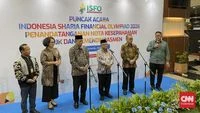
Speaking at the launch event during the Indonesia Sharia Financial Olympiad (ISFO) 2026, held at the Ministry of Primary and Secondary Education headquarters in Central Jakarta, Dicky emphasized the long-term necessity of this systemic curriculum shift.
"Moving forward, we will be able to weave an understanding of the digital financial ecosystem directly into our curriculum. This is exceptionally critical," Dicky stated during the event. "We must recognize the immense risks we face within the financial system when individuals are unable to comprehend the actual business models operating within the digital economic and financial ecosystem."
The integration focuses heavily on demystifying complex modern financial products, ranging from electronic payment gateways and peer-to-peer lending platforms to investment applications and digital assets. By grounding students in the fundamentals of how these systems function, the government hopes to transition youth from passive digital consumers to active, risk-aware participants in the modern economy.
The Backdrop: A Rising Tide of Digital Financial Crime
The urgency behind the OJK-Kemendikdasmen partnership is underscored by alarming national statistics regarding digital fraud. Despite aggressive regulatory crackdowns by the OJK, law enforcement agencies, and the Ministry of Communication and Digital Affairs, illegal online loans (pinjaman online or pinjol), illegal online gambling (judi online), sophisticated phishing scams, and digital identity fraud continue to victimize thousands of Indonesians daily.
Vulnerable populations, including university students, fresh graduates, and households with limited exposure to formal banking structures, have frequently fallen prey to predatory lenders who promise quick liquidity through predatory terms hidden behind deceptive user interfaces. Furthermore, the proliferation of online gambling platforms—frequently disguised as mobile games or investment schemes—has drained household savings and fueled a rise in personal bankruptcy among young adults.
Dicky highlighted that these daily occurrences of financial victimization served as the primary catalyst for the new initiative. "Every single day, there are still victims of online loans, online gambling, scams, and fraud coloring the financial system in Indonesia," he noted. "This harsh reality compels us to continuously strengthen the financial system while simultaneously ensuring that the public possesses a robust and practical understanding of financial mechanics."
By intervening at the high school level (phases E and F generally correspond to senior high school education tiers, encompassing students aged 15 to 18), the government aims to inoculate the demographic cohort that is most digitally active and most frequently targeted by cybercriminals.
Accessibility and Implementation: The Digital Resource Hub
Addressing the practicalities of rolling out nationwide educational materials, Minister of Primary and Secondary Education Abdul Mu’ti outlined the distribution framework. The newly developed Phase E and Phase F Financial Literacy Teaching Materials will not be restricted by traditional logistical bottlenecks associated with physical textbook printing and distribution. Instead, they will be made universally accessible through official digital platforms.
"We have a service called Rumah Pendidikan (The Education House), which includes a dedicated space where we provide opportunities for the public to access books for free—both core curriculum textbooks as well as supporting and non-textbook literature," Mu’ti explained. "One of these primary offerings will be the comprehensive books on sharia financial literacy compiled and vetted by the OJK."
The inclusion of both conventional and sharia-compliant financial literacy modules ensures a holistic educational approach that respects Indonesia’s diverse economic landscape. The materials are designed to be dynamic, allowing educators to adapt lessons to real-world case studies involving emerging scams, budgeting practices, debt management, and savings strategies.
Cultivating a Productive and Protected Generation
Beyond mere risk mitigation and fraud prevention, the OJK envisions this educational reform as a macroeconomic growth driver. Financial literacy, when introduced early, lays the foundation for entrepreneurial confidence, responsible credit utilization, and sustainable personal wealth creation.
Dicky articulated a four-pillared vision for the nation’s youth resulting from this curriculum integration: competence, wisdom, productivity, and protection.
"We want a young generation that is competent, wise, productive, and protected," Dicky elaborated. "Competent because they thoroughly understand finance; wise because they are capable of selecting products that align with their actual needs and financial capacity; productive because their knowledge translates into added value that can drive economic growth; and protected because they understand their rights and comprehend the inherent risks."
Economists and financial analysts have long argued that Indonesia’s demographic dividend—characterized by a massive working-age population—can only be fully optimized if the labor force is financially literate. Without proper financial education, rising incomes risk being eroded by high-interest consumer debt, low formal savings rates, and systemic vulnerability to investment scams.
Broader Implications and Future Outlook
The collaboration between the OJK and Kemendikdasmen marks a significant evolution in Indonesia’s regulatory strategy. Historically, consumer protection and financial literacy campaigns relied heavily on public service announcements, sporadic seminars, and reactive warning lists published by regulators. While these measures remain active, experts agree that long-term behavioral change requires institutionalized education integrated into formative years.
As the curriculum rolls out through Rumah Pendidikan and enters classrooms under the guidance of trained educators, its long-term success will depend on continuous updates to the teaching materials. Given the rapid evolution of financial technology—including artificial intelligence in banking, decentralized finance, and new digital payment structures—the curriculum must remain agile to address emerging threats.
For Indonesia, successfully bridging the gap between education and financial regulation could serve as a benchmark for emerging economies grappling with the dual pressures of rapid digitalization and consumer financial vulnerability. By transforming classrooms into the first line of defense against financial fraud, the state is investing not just in the protection of individual citizens, but in the structural stability and resilience of the national economy for decades to come.
Related posts: