Queen Máxima Concludes Pivotal Indonesian Visit, Championing Financial Inclusion and Economic Resilience as UNSGSA

Jakarta, Indonesia – Her Majesty Queen Máxima of the Netherlands recently concluded a significant working visit to Indonesia, spanning from Monday, November 24, to Thursday, November 27, 2025. Her presence in the archipelago was not in her capacity as Queen of the Netherlands, but rather as the United Nations Secretary-General’s Special Advocate (UNSGSA) for Inclusive Finance for Development, a role she has held since 2009. This distinction underscored the technical and developmental focus of her engagements, which centered on advancing financial health and inclusive economic growth across the Indonesian populace.
A Decisive Mandate for Global Financial Inclusion
In her capacity as UNSGSA, Queen Máxima works globally to promote universal access to affordable, effective, and responsible financial services. Her advocacy is rooted in the conviction that financial inclusion is a critical enabler for achieving the United Nations Sustainable Development Goals (SDGs), particularly those related to poverty eradication (SDG 1), gender equality (SDG 5), decent work and economic growth (SDG 8), and reducing inequalities (SDG 10). During her three-day mission from Tuesday, November 25, to Thursday, November 27, 2025, Queen Máxima embarked on a comprehensive itinerary, traversing various regions including Sragen Regency and Solo City in Central Java, the capital city of Jakarta, and Bekasi Regency in West Java. This extensive travel allowed her to gain firsthand insights into the diverse landscape of financial inclusion initiatives and challenges in Indonesia.
This visit marked Queen Máxima’s fifth trip to Indonesia, signaling a sustained commitment to the country’s progress in financial inclusion. Her previous visits as UNSGSA occurred in 2012, 2016, and 2018, each building upon previous engagements and assessing the evolving financial ecosystem. Additionally, she accompanied King Willem-Alexander during a state visit in 2020, demonstrating the multifaceted ties between the two nations. Born on May 17, 1971, Queen Máxima married King Willem-Alexander in Amsterdam, the Netherlands, in 2002. Her background in international finance and emerging markets prior to her royal duties lends profound expertise to her advocacy work, making her a uniquely qualified voice in the global discourse on financial development.
Indonesia, as the world’s fourth most populous nation and a vibrant emerging economy, presents both immense opportunities and complex challenges for financial inclusion. While significant progress has been made in recent years, with the adult population accessing formal financial services increasing substantially, disparities persist, particularly among rural communities, women, micro, small, and medium enterprises (MSMEs), and low-income segments. The government of Indonesia has set ambitious targets for financial inclusion, recognizing its pivotal role in national development, poverty alleviation, and fostering a resilient economy. The UNSGSA’s visit served as a timely platform to review these efforts, highlight successful models, and identify areas for further collaborative action.
Detailed Chronology of Engagements
The meticulously planned itinerary provided Queen Máxima with a holistic view of Indonesia’s financial landscape, from grassroots initiatives to high-level policy discussions.
Tuesday, November 25, 2025: Focus on Grassroots Empowerment and SME Development
Queen Máxima commenced her working visit in Central Java, a region known for its rich cultural heritage and burgeoning industrial and artisanal sectors. Her first stop was a garment factory in Sragen Regency. The choice of a garment factory was strategic, as this sector often employs a large number of women, who are frequently the primary targets for financial inclusion efforts due to their crucial role in household economies and their potential as entrepreneurs. Here, she engaged with workers, many of whom are benefiting from improved access to financial services such as digital wage payments, micro-savings accounts, and basic insurance products. Discussions focused on how financial literacy and accessible financial tools contribute to their economic resilience, capacity to save, and ability to manage household finances more effectively. Factory management also shared insights into how facilitating financial inclusion for their employees leads to improved morale, reduced absenteeism, and increased productivity, demonstrating a clear business case for corporate involvement in employee financial well-being.
Following her visit to Sragen, Queen Máxima traveled to Solo City, specifically to Kampung Batik Laweyan, a historic batik village. Batik, a traditional Indonesian art form, is a significant source of livelihood for many artisans and small business owners. Her discussions in Laweyan revolved around the financial health of these artisans and small enterprises. Topics included access to microcredit for raw materials, digital payment solutions for sales, and financial planning for business expansion and succession. The artisans shared their experiences with formal financial services, highlighting both successes and persistent barriers, such as complex application processes or lack of collateral. The dialogue underscored the importance of tailored financial products that meet the unique needs of cultural heritage businesses.
Later that day, Queen Máxima attended a pivotal event hosted by Women’s World Banking at Pura Mangkunegaran in Solo. Pura Mangkunegaran, a historical palace, provided a culturally significant backdrop for conversations about financial empowerment. Women’s World Banking is a global non-profit devoted to giving low-income women in developing countries access to financial tools and resources. At this event, Queen Máxima engaged in extensive dialogues with young people, university students, and entrepreneurs. These conversations were designed to gather firsthand accounts of their experiences using various financial products and services, including mobile banking, digital wallets, and peer-to-peer lending platforms. The discussions illuminated the transformative power of digital financial services, particularly for younger generations and women entrepreneurs who often face greater hurdles in accessing traditional banking. Participants shared how digital tools have enabled them to manage their finances, grow their businesses, and achieve greater financial independence, while also identifying areas where financial literacy and consumer protection could be further strengthened.
Wednesday, November 26, 2025: Policy Dialogue, Private Sector Partnership, and Affordable Housing
The second day of the visit commenced in Jakarta with a roundtable discussion at the local United Nations office. Queen Máxima participated in a high-level dialogue with various development organizations, including UN agencies, international NGOs, and local civil society groups. The discussion centered on synergistic approaches to advance the SDGs through financial inclusion. Key themes included leveraging digital innovations to reach underserved populations, strengthening regulatory frameworks for consumer protection, and integrating financial services with other development interventions such as health, education, and climate resilience. The collective expertise gathered at this forum allowed for a comprehensive review of ongoing projects and the identification of strategic priorities for future collaboration.
Subsequently, Queen Máxima visited the International Finance Corporation (IFC), a member of the World Bank Group. The IFC plays a crucial role in promoting private sector development in emerging markets. The discussions with IFC representatives focused on strategies for developing and expanding loans that contribute directly to economic growth and enhance the financial health of businesses and individuals. Specific areas explored included financing for small and medium-sized enterprises (SMEs), green finance initiatives to support sustainable development, and innovative financing mechanisms for infrastructure projects that benefit low-income communities. The role of the private sector as an engine for job creation and a critical partner in expanding financial access was a central theme, with an emphasis on responsible lending practices and impact investing.
A significant highlight of the day was Queen Máxima’s visit to the Gran Harmoni Cibitung subsidized housing complex in Bekasi Regency, West Java. This complex represents a vital government initiative to provide affordable, low-emission housing for low- and middle-income communities. Indonesia faces a significant housing deficit, and programs like Gran Harmoni Cibitung are crucial for addressing this challenge. During her visit, Queen Máxima personally visited a resident’s home, engaging in a candid conversation about the financial implications of homeownership, the challenges of managing mortgage payments, and the overall impact on family well-being. She also interacted with representatives of first-time homebuyers, understanding their journey towards securing a home.
A particularly innovative aspect observed at the housing complex was the "bank sampah" (waste bank) initiative. This program allows residents to pay a portion of their house installments by depositing sorted recyclable waste, which is then processed and sold. Queen Máxima keenly observed the operational process of the waste bank, recognizing its dual benefit: promoting environmental sustainability through waste management and providing an alternative, accessible method for residents to meet their financial obligations. This model exemplifies how creative solutions can bridge financial gaps and foster community engagement. She also witnessed the symbolic signing of purchase agreements for dozens of prospective homeowners, a moment that underscored the tangible impact of affordable housing programs on individual lives and national development.
In the afternoon, Queen Máxima concluded her engagements in Jakarta with a visit to Deloitte Indonesia. Here, she held discussions with employers about their role in fostering the financial health of their employees and clients. The conversation covered best practices in corporate financial wellness programs, including financial literacy training, access to affordable credit unions, retirement planning assistance, and stress management related to finances. The dialogue highlighted how investing in employee financial health leads to a more engaged, productive, and loyal workforce, ultimately benefiting the company’s bottom line. The session also touched upon how professional services firms like Deloitte can advise clients on integrating financial inclusion principles into their business strategies.
Thursday, November 27, 2025: High-Level Policy and Bilateral Engagement
The final day of Queen Máxima’s visit was dedicated to high-level policy discussions and a significant meeting with the Head of State. She began by participating in a crucial agenda on financial literacy with key Indonesian financial authorities: the Financial Services Authority (OJK), Bank Indonesia (BI), and the Ministry of Finance (Kemenkeu RI). These institutions are instrumental in shaping Indonesia’s financial sector policies and implementing national financial inclusion strategies. The discussions focused on enhancing financial literacy programs across the country, leveraging digital platforms for broader reach, and ensuring consumer protection within an increasingly complex financial landscape. The OJK presented its national strategy for financial literacy, BI highlighted its role in payment system innovation, and Kemenkeu discussed its fiscal policies supporting financial access and stability. The collaborative nature of this meeting underscored Indonesia’s integrated approach to financial sector development.
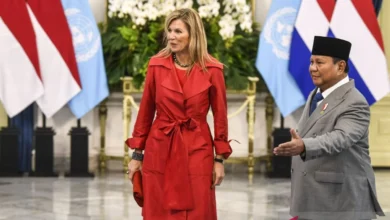
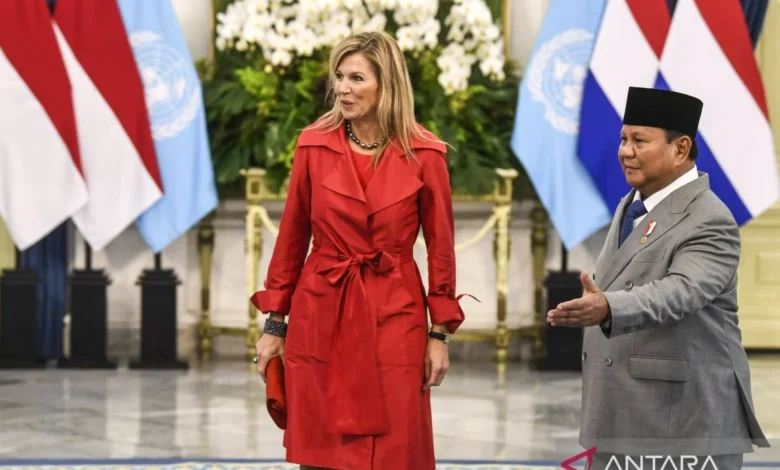
The culmination of Queen Máxima’s visit was a meeting with President of Indonesia, Prabowo Subianto, at the Istana Merdeka in Jakarta. This high-level engagement provided an opportunity for the UNSGSA to convey her findings, observations, and impressions from her extensive tour across the country. The meeting included a private discussion followed by a luncheon, allowing for in-depth dialogue on Indonesia’s progress in financial inclusion, remaining challenges, and potential areas for further international cooperation. Queen Máxima likely presented specific recommendations derived from her field visits and expert consultations, advocating for continued policy reforms, greater investment in digital infrastructure, and targeted interventions for vulnerable groups. President Prabowo, in turn, reiterated Indonesia’s commitment to advancing financial inclusion as a cornerstone of its national development agenda and expressed appreciation for the Queen’s sustained advocacy and support. The meeting reaffirmed the strong bilateral ties between Indonesia and the Netherlands, particularly in the realm of sustainable development and economic cooperation.
Broader Impact and Implications
Queen Máxima’s fifth visit to Indonesia as UNSGSA carries significant weight for several reasons. Firstly, it underscores the persistent global commitment to financial inclusion as a critical driver for sustainable development. Her consistent engagement provides a high-profile platform for Indonesia to showcase its achievements and draw attention to its ongoing needs.
Secondly, the detailed itinerary, covering grassroots initiatives to high-level policy dialogues, ensures that her recommendations are well-informed and grounded in reality. The insights gathered from Sragen’s garment workers, Solo’s batik artisans, Bekasi’s homeowners, and Jakarta’s financial regulators offer a comprehensive picture that can shape future policy frameworks. For instance, the "bank sampah" innovation in Bekasi, which garnered her appreciation, could serve as a replicable model for other regions or even other developing nations struggling with similar challenges of waste management and affordable housing finance. This model exemplifies how local innovations, when scaled, can contribute to global SDGs.
Thirdly, her discussions with OJK, BI, and Kemenkeu are expected to reinforce national strategies for financial literacy and consumer protection. With the rapid acceleration of digital financial services, ensuring that users are well-informed and protected from risks is paramount. Her advocacy can catalyze further inter-agency collaboration and accelerate the implementation of robust regulatory frameworks.
Finally, the meeting with President Prabowo Subianto solidifies the political will at the highest level to prioritize financial inclusion. This endorsement is crucial for translating policy recommendations into concrete actions and allocating necessary resources. It also signals Indonesia’s openness to international partnerships and its role as a leader in regional development efforts. The visit is anticipated to foster enhanced collaboration between Indonesia, the United Nations, and the Netherlands, not only in financial inclusion but also in broader areas of economic development and sustainable growth. The continuity of such high-level advocacy serves as a powerful reminder that universal access to financial services is not merely an economic goal, but a fundamental human right that underpins a more equitable and prosperous future.