King Abdullah II of Jordan Embarks on State Visit to Indonesia, Deepening Strategic Cooperation and Personal Ties with President Prabowo Subianto

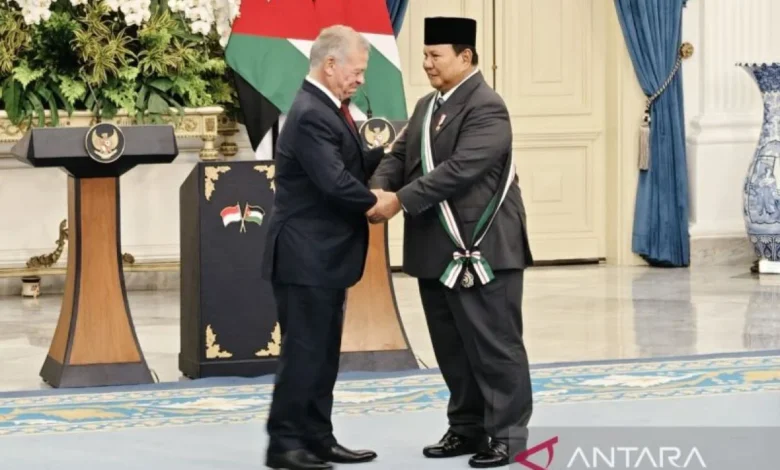
Jakarta is set to host a pivotal state visit by His Majesty King Abdullah II bin Al-Hussein of the Hashemite Kingdom of Jordan this Friday afternoon, marking a significant moment for bilateral relations between the two nations. The Jordanian monarch’s itinerary includes high-level discussions with Indonesian President Prabowo Subianto, as well as engagements with representatives from Danantara Indonesia, culminating in the ceremonial signing of a bilateral memorandum of understanding (MoU). This visit is poised to strengthen diplomatic, economic, and security cooperation, underpinned by a remarkable and enduring personal friendship between the two leaders that spans decades.
A Strategic Tour Across Asia
King Abdullah II’s presence in Indonesia is part of a broader diplomatic tour across several key Asian nations, underscoring Jordan’s strategic outreach and commitment to fostering stronger ties beyond the Middle East. Prior to his arrival in Jakarta, His Majesty has visited, or is slated to visit, Japan, Vietnam, Singapore, and Pakistan. This multi-country tour highlights Jordan’s proactive foreign policy, seeking to diversify its partnerships, attract investment, and build consensus on regional and global issues. Each stop on this tour carries specific strategic objectives, from economic collaboration to security dialogue, reflecting Jordan’s crucial role in regional stability and its pursuit of sustainable development through international cooperation.
The Indonesian leg of this tour holds particular significance due to the deep-seated historical and personal connections. It follows President Prabowo Subianto’s recent visit to Jordan, where he held a private meeting with King Abdullah II at the Al Husseiniya Palace in Amman. This reciprocal visit underscores the mutual respect and strategic importance both leaders place on their bilateral relationship. During President Prabowo’s visit, a striking display of personal camaraderie was observed when King Abdullah II himself drove President Prabowo, who was seated in the passenger seat, to his hotel in downtown Amman. This gesture, far from mere protocol, served as a powerful symbol of their profound personal bond, signaling to the world the exceptional nature of their relationship.
The Unbreakable Bond: A Friendship Forged in Military Service
The personal friendship between King Abdullah II and President Prabowo Subianto is a narrative that intertwines their shared formative experiences and professional trajectories, predating their current roles as heads of state. Both leaders, from a young age, cultivated a friendship rooted in their mutual backgrounds in elite military training and special forces command. A cornerstone of this shared history is their alumni status from the prestigious U.S. Army Ranger School at Fort Benning, Georgia.
Fort Benning, now Fort Moore, is renowned globally for its grueling and demanding Ranger School program, designed to develop leadership skills, physical endurance, and mental toughness under extreme conditions. Graduates emerge with a unique understanding of strategic operations, command principles, and the importance of camaraderie. For future leaders like King Abdullah II and President Prabowo, this shared experience provided a foundational understanding of military discipline, strategic thinking, and the pressures of leadership. It instilled in them a common language and a mutual respect that transcended national borders.
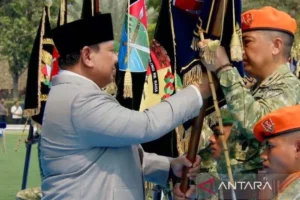
Their paths first formally crossed on December 4, 1995, during the inauguration ceremony of Prabowo Subianto as the Commander General (Danjen) of Kopassus, Indonesia’s elite special forces command. At the time, King Abdullah II, then a prince, had already forged a distinguished military career, having served as Commander of Jordan’s Special Operations Command in 1994. This parallel career trajectory – both leading their respective nations’ premier special forces units – further solidified their bond, as they understood the unique challenges and responsibilities associated with such demanding roles. Their shared military background fostered a deep sense of trust and mutual understanding, which has proven invaluable in their subsequent diplomatic engagements.
A Sanctuary in Times of Adversity
The strength of their personal friendship was perhaps most poignantly demonstrated during a tumultuous period in President Prabowo’s life. Following political upheaval in Indonesia in 1998, Prabowo left the country and sought refuge in Jordan. His arrival in the Hashemite Kingdom was met with exceptional honor and hospitality, personally extended by King Abdullah II. Such was the warmth and respect accorded to him that the former Indonesian Minister of Defense was reportedly offered Jordanian citizenship. However, Prabowo ultimately chose to retain his Indonesian citizenship, a decision that underscored his enduring commitment to his homeland, even as he found a supportive sanctuary in Jordan. This period of personal exile, far from weakening their bond, served to deepen it, transforming a professional acquaintance into an unbreakable personal alliance built on trust and loyalty.
Their paths converged again in 2014 when King Abdullah II undertook a state visit to Indonesia. By then, King Abdullah II had ascended to the throne in 1999, becoming the monarch of Jordan. Prabowo, though not yet President, was a prominent political figure in Indonesia. Their reunion then reaffirmed the continuity of their friendship, irrespective of their evolving political landscapes.
Today, both men stand at the apex of power in their respective nations. King Abdullah II continues to lead Jordan, guiding it through complex regional dynamics, while Prabowo Subianto is set to be inaugurated as the President of Indonesia on October 20, 2024. This unique circumstance—two long-standing friends now leading their countries—lends an extraordinary dimension to their state-to-state relations, promising a future of robust and deeply trusted cooperation.
Deepening Economic and Security Cooperation
The upcoming bilateral discussions are expected to cover a wide array of strategic areas, with a particular focus on economic cooperation. The meeting with representatives from Danantara Indonesia, a key agenda item, is indicative of specific economic interests. Danantara Indonesia is likely involved in the phosphate industry, a sector where Jordan holds significant global importance. Jordan is one of the world’s largest producers and exporters of phosphates, a critical raw material for fertilizers, essential for agricultural productivity. Indonesia, with its vast agricultural sector and growing food security needs, is a major importer of these raw materials.
This collaboration could entail long-term supply agreements, joint ventures in fertilizer production, or technology transfer to enhance agricultural output in both nations. Beyond phosphates, discussions could explore broader trade and investment opportunities in renewable energy, digital technology, tourism, and the halal industry, given Indonesia’s status as the world’s largest Muslim-majority nation and Jordan’s role as a regional hub. Bilateral trade between Indonesia and Jordan, while modest compared to other partners, has shown potential for growth, driven by commodities like palm oil, textiles, and electronics from Indonesia, and phosphates, potash, and pharmaceuticals from Jordan. This visit aims to significantly expand and diversify this economic partnership.
On the security front, given the leaders’ backgrounds, defense cooperation is a natural area for discussion. This could range from military training exchanges, intelligence sharing on counter-terrorism efforts—a critical concern for both nations—to potential collaboration in defense industry development. Both countries face complex security challenges, and shared expertise from their special forces backgrounds could translate into practical and effective security partnerships.
Addressing Regional and Global Challenges: The Palestinian Question
A crucial component of the discussions will undoubtedly revolve around regional and global geopolitical issues, most notably the protracted Israeli-Palestinian conflict and the humanitarian crisis in Gaza. Both Indonesia and Jordan share a steadfast and unwavering commitment to the Palestinian cause. Jordan, as the Hashemite Custodian of Muslim and Christian holy sites in Jerusalem, holds a unique and historically significant position. King Abdullah II has been a vocal proponent of a two-state solution, tirelessly advocating for a just and lasting peace that guarantees the rights of the Palestinian people and establishes an independent Palestinian state with East Jerusalem as its capital.
Indonesia, too, has consistently championed the Palestinian cause on the international stage, providing humanitarian aid and diplomatic support. President Prabowo has reiterated Indonesia’s readiness to send peacekeeping forces to Gaza, as well as medical personnel and supplies, to assist in humanitarian efforts and contribute to post-conflict stability. This alignment of views on such a critical issue forms a strong basis for coordinated diplomatic efforts in international forums. The leaders are expected to reaffirm their joint commitment to humanitarian aid, advocate for a permanent ceasefire, and discuss strategies to mobilize greater international support for a two-state solution. Their combined voices carry significant weight, particularly within the Organization of Islamic Cooperation (OIC) and the broader international community.
Broader Implications and Future Outlook
This state visit transcends mere diplomatic protocol; it represents a convergence of personal history and national interest. The profound personal bond between King Abdullah II and President Prabowo Subianto provides a unique foundation for accelerated and trusted cooperation between their respective nations. It signifies a strengthening of South-South cooperation, where developing nations build robust partnerships independent of traditional power blocs.
For Indonesia, hosting King Abdullah II underscores its growing diplomatic stature and its active role in global affairs, particularly as a voice for peace and justice. For Jordan, this visit is an opportunity to solidify alliances in Asia, diversify its economic partnerships, and garner broader support for its regional stability efforts, especially concerning the Palestinian issue. The personal rapport between the leaders is expected to facilitate more candid and effective dialogue, potentially leading to swift decisions and tangible outcomes across economic, security, and humanitarian fronts.
The long-term implications of this visit could see a significant uptick in bilateral trade and investment, enhanced defense and security collaboration, and more coordinated diplomatic action on critical global issues. As two leaders with a proven track record of strategic thinking and a deep understanding of complex challenges, their renewed partnership holds immense promise for the prosperity and stability of both the Middle East and Southeast Asia, fostering a new era of cooperation built on trust, shared values, and a friendship that has truly stood the test of time.