President Joko Widodo Visits Sikka Regency in East Nusa Tenggara to Meet Earthquake Victims and Assess Post-Disaster Recovery Efforts

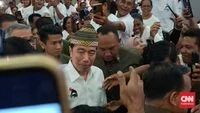
Jakarta, Indonesia — President Joko Widodo arrived in East Nusa Tenggara (NTT) on Wednesday morning as part of an official working visit aimed at inspecting post-disaster recovery efforts and engaging directly with communities affected by a significant earthquake that struck the region in mid-August. The presidential aircraft touched down in Sikka Regency, marking another high-profile regional outreach initiative by the Indonesian leader to address regional humanitarian concerns and infrastructure rehabilitation.
According to preliminary schedules confirmed by local government officials, the presidential entourage arrived in Sikka Regency at approximately 13:00 WITA. Local authorities and regional disaster management agencies had mobilized resources to ensure the visit proceeded smoothly, emphasizing the administration’s ongoing commitment to swift disaster response and community welfare in Indonesia’s eastern islands.
Humanitarian Focus: Reaching Out to August Earthquake Survivors
The primary objective of President Widodo’s current visit to NTT is to meet directly with residents of Sikka Regency who sustained losses and property damage during the tectonic tremor that rattled the province on August 15. The earthquake, which prompted widespread panic and structural assessments across multiple districts, left numerous homes, public facilities, and community infrastructure compromised.
During his itinerary, the President planned to hold dialogue sessions with displaced families, local community leaders, and local government representatives to evaluate the distribution of emergency relief funds, temporary shelter provisions, and the progress of long-term reconstruction projects. Regional officials noted that the presidential presence serves a dual purpose: offering psychological reassurance to traumatized residents and exerting direct oversight on the efficacy of central and local disaster relief coordination.
While official details regarding the complete composition of the presidential entourage were not immediately released prior to his arrival, regional visits of this nature typically involve coordinating ministers, heads of national disaster management authorities, and local military and police leadership to ensure immediate policy adjustments can be authorized on the ground if bottlenecks in the recovery process are identified.
Broader Context of Recent Presidential Travel and Regional Engagement
President Widodo’s arrival in NTT follows a densely packed schedule of domestic travel designed to maintain close contact with diverse segments of the Indonesian population across the archipelago. The Chief Executive has maintained a rigorous travel tempo, balancing national strategic governance with grassroots public diplomacy.
Just days prior to the NTT deployment, President Widodo traveled to Cirebon, West Java, on Saturday, September 12. During that visit, he attended a traditional community gathering and a ceremonial event hosted at the Islamic boarding school foundation led by KH Muhammad Busthomi. The President was accompanied by local chapters of the Indonesian Solidarity Party (PSI) and his youngest son, Kaesang Pangarep, who serves as the General Chairperson of the PSI Central Executive Board. The Cirebon trip highlighted the President’s continued engagement with religious leaders, educational institutions, and youth-oriented political figures.
Furthermore, this visit marks President Widodo’s second major official deployment to Nusa Tenggara Timur within a relatively brief timeframe. Earlier in the operational calendar, the President executed an extensive multi-day working visit to Kupang, the provincial capital of NTT, spanning from July 31 through August 2.
That multi-day itinerary in Kupang featured a diverse array of public engagements and economic inspections. Among the notable highlights of the Kupang tour were inspections of seaweed cultivation initiatives and direct dialogues with local seaweed farmers along Oesina Beach in Kupang Regency. Additionally, the President participated in regional political consolidation events, attended a regional coordination meeting (Rakorda) for the PSI Kupang City branch, mingled with thousands of citizens during a Car Free Day (CFD) public health walk, and graced a vibrant local cultural carnival celebrating the indigenous heritage of the Lesser Sunda Islands.
Beyond NTT and West Java, the President’s recent domestic agenda has included high-profile visits to Lampung Province on the island of Sumatra. While touring Lampung, President Widodo participated in a traditional indigenous ceremony. The cultural event—which included customary rituals such as stepping on a traditional buffalo head as part of local accession customs—drew widespread public discussion, media analysis, and cultural discourse across national digital platforms, reflecting the high visibility that accompanies presidential cultural engagements throughout the republic.
Chronology of Events Surrounding the NTT Disaster Response
To fully understand the gravity of President Widodo’s current humanitarian mission to Sikka Regency, it is essential to examine the timeline of seismic activity and subsequent government interventions in Nusa Tenggara Timur:
- Mid-August (August 15): A notable tectonic earthquake strikes regions within East Nusa Tenggara, causing structural damage to residential dwellings, public buildings, and local infrastructure, prompting emergency responses from regional disaster mitigation agencies (BPBD).
- Late August to Early September: Local governments conduct initial damage assessments, distribute emergency food supplies, and establish temporary shelters for displaced families while coordinating with the National Agency for Disaster Countermeasure (BNPB) for financial assistance regarding housing reconstruction.
- Saturday, September 12: President Widodo undertakes a working visit to Cirebon, West Java, interacting with religious figures and local communities alongside PSI leadership.
- Wednesday, September 16 (Morning): President Widodo departs for Nusa Tenggara Timur, focusing his itinerary on Sikka Regency.
- Wednesday, September 16 (13:00 WITA): The presidential aircraft arrives in Sikka Regency, where the head of state begins direct inspections of earthquake-affected zones and meets with survivors.
Economic and Social Implications of Presidential Disaster Diplomacy
Political analysts and governance experts note that frequent on-the-ground visits by the head of state to disaster-stricken areas serve critical administrative and sociological functions within Indonesia’s decentralized governance framework.
First, direct presidential oversight acts as a powerful administrative catalyst. In regions where bureaucratic friction or logistical hurdles might otherwise slow down the disbursement of rehabilitation funds—often referred to as dana siap pakai or ready-to-use funds managed by BNPB—the physical presence of the nation’s leader compels local agencies and regional ministries to accelerate administrative clearances. This ensures that rebuilding materials reach affected families before seasonal weather patterns complicate construction efforts.
Second, disaster diplomacy reinforces national solidarity. Indonesia, situated along the volatile Pacific Ring of Fire, experiences frequent seismic and volcanic events. By personally visiting communities in remote or peripheral provinces like Nusa Tenggara Timur, the central government projects an inclusive message that the welfare of eastern Indonesian populations receives equal priority compared to densely populated urban centers on Java.
Furthermore, these regular regional deployments allow the executive branch to independently verify the accuracy of reports submitted by regional ministries. Ground-level inspections of damaged schools, health clinics, and local markets provide firsthand intelligence that directly informs the formulation of subsequent fiscal year budgets and national disaster resilience strategies.
Looking Ahead: Sustainable Reconstruction in Sikka Regency
As President Widodo concludes his engagements in Sikka Regency, attention will shift toward the execution of the pledges made during his dialogue with local residents. The primary challenge facing regional authorities remains the transition from emergency humanitarian relief to permanent housing reconstruction and economic revitalization for farmers and fishermen whose livelihoods were disrupted by the August tremor.
Local administrations in NTT are expected to accelerate the disbursement of housing assistance categories—ranging from lightly damaged to heavily damaged structures—utilizing standardized financial models established by the central government. Meanwhile, community leaders in Sikka have expressed optimism that the presidential visit will attract sustained institutional support, ensuring that local infrastructure is rebuilt to higher seismic resilience standards to safeguard the population against future tectonic eventualities.