Raffi Ahmad Issues Public Apology Following Public Backlash Over Attendance at Controversial Youth Event in Jakarta

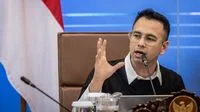
Jakarta — Special Presidential Envoy for Youth Development and Art Workers, Raffi Ahmad, has formally released a video statement addressing public criticism surrounding his attendance at the Indonesian Youth and Student Pledge Declaration 2026. The high-profile event, held in Jakarta, drew immediate public scrutiny and subsequent controversy after investigations revealed that a significant portion of the attendees introduced as university students did not possess valid student credentials.
The controversy ignited widespread debate across digital platforms, placing public figures and law enforcement organizers under intense public microscopic examination. In response to the growing storm, Raffi took to his official Instagram account to clarify his involvement, offer an unreserved apology, and outline his perspective on the incident. The unfolding crisis has since prompted both institutional accountability from the event organizers and a broader conversation regarding the due diligence required of public officials when attending civic gatherings.
Background Context of the Event and Initial Controversy
The Indonesian Youth and Student Pledge Declaration 2026 was designed as a ceremonial gathering intended to honor the historical significance of the Indonesian Youth Pledge (Sumpah Pemuda). The event aimed to unite young minds, student representatives, and public figures to reaffirm national values, foster patriotism, and encourage youth participation in national development.
However, the event quickly unraveled in the court of public opinion shortly after its conclusion on October 29. Investigative reports and social media investigations revealed a major discrepancy: many of the individuals seated in the auditorium representing the nation’s student body were not, in fact, active university students. This revelation triggered widespread skepticism, accusations of staged representation, and sharp criticism directed at both the authenticity of the program and the prominent figures who lent their prestige to the gathering by attending.
As a prominent celebrity-turned-government official, Raffi Ahmad’s presence at the venue served as a major drawing point for media coverage. Consequently, when the legitimacy of the audience came into question, public anger spilled over, targeting not only the event coordinators but also the high-profile guests who appeared to endorse the proceedings through their presence.
Chronology of Events
The sequence of events leading up to and following the controversy unfolded across a high-tension timeline spanning late October:
October 29: The Indonesian Youth and Student Pledge Declaration 2026 takes place in Jakarta. Raffi Ahmad attends the event alongside other public figures, such as content creator Willie Salim, responding to what they later confirmed were official invitations.
October 30–31: Public scrutiny intensifies on social media platforms. Netizens and student organizations begin posting evidence indicating that individuals who participated as student delegates lacked official university identification or enrollment status. The legitimacy of the gathering is openly challenged across digital news outlets.
October 31: Recognizing the escalating public discontent, the Polda Metro Jaya (Jakarta Metropolitan Police), which acted as the event organizer, issues an official statement addressing the controversy and offering a public apology.
November (Late): Raffi Ahmad publishes an official clarification and apology video on his verified Instagram account, detailing his intentions, acknowledging the oversight, and framing the incident as a vital learning curve for his ongoing public service career.
Official Statements and Clarifications from Key Figures
In his video message, Raffi Ahmad emphasized that his participation was driven entirely by honorable intentions and a desire to support the nation’s younger generation. Speaking with visible humility, the presidential envoy addressed his followers and the wider public directly.
"Assalamualaikum warahmatullahi wabarakatuh. I am Raffi Ahmad. With all humility, allow me to convey several matters regarding the event on October 29," Raffi stated in his video.
He explicitly noted that he attended the gathering strictly as an invited guest, operating under the umbrella of youth empowerment initiatives. "As previously explained by the Polda Metro Jaya as the event organizer, I attended the youth activity as an invitee. I came with a sincere intention and good faith, with no intention whatsoever to undermine, let alone hurt, the spirit of the younger generation’s struggle."
Acknowledging the subsequent public outcry, Raffi offered a sincere apology for the friction and confusion the event caused in the public sphere. He conceded that good intentions alone are insufficient without rigorous operational verification.
"I apologize from the bottom of my heart for the commotion arising from my presence. I deeply understand that good intentions must still be accompanied by thorough scrutiny of every activity one attends," he added.
Drawing from his personal philosophy on media literacy, Raffi reminded the public of the dangers of unverified information while simultaneously turning the lens inward on his own practices. "Throughout this time, I have urged the public not to spread unverified information, to steer clear of hate speech, let alone behavior accompanied by insults and slander. This incident serves as a reminder for me to be more thorough, understand information better, and exercise greater caution in taking steps."
Polda Metro Jaya Takes Responsibility
As the primary institution behind the organization of the event, the Jakarta Metropolitan Police (Polda Metro Jaya) stepped forward to shoulder the institutional blame, explicitly absolving Raffi Ahmad and fellow guest Willie Salim of any malicious intent or organizational culpability.
In an official statement released on October 31, the Head of Public Relations for Polda Metro Jaya, Senior Commissioner Budi Hermanto, offered an unreserved apology to the public.
"On behalf of Polda Metro Jaya, we apologize to the entire community. We understand that the activity generated diverse responses, and every criticism delivered is received with an open heart to serve as our evaluation," Budi stated.
Addressing the presence of the public figures, Budi clarified that neither Raffi Ahmad nor Willie Salim played a role in the planning or execution of the program. "Brother Raffi Ahmad and Brother Willie Salim came at our invitation as the organizers. Both had good intentions to help embody the true meaning of the Youth Pledge."
Implications and Broader Analysis of the Incident
The fallout from the Indonesian Youth and Student Pledge Declaration 2026 highlights several critical implications for public governance, celebrity endorsement, and institutional accountability in modern Indonesia.
First, the incident underscores the heightened sensitivity surrounding the representation of students and youth organizations in national forums. In a country where student movements hold historical reverence—having played decisive roles in major political transitions—any perceived co-optation, misrepresentation, or staged participation of student bodies is treated by civil society with extreme gravity.
Second, the controversy places a harsh spotlight on the responsibilities held by public officials who also maintain massive celebrity status. As a Special Presidential Envoy, Raffi Ahmad occupies a unique nexus between state authority and popular culture. The incident demonstrates that public figures in official government roles cannot rely solely on the prestige of their attendance; they are increasingly held to rigorous standards of due diligence regarding the provenance, sponsorship, and authenticity of the events they grace.
Finally, the transparent response from both the Jakarta Police and Raffi Ahmad reflects a modern shift in crisis management for public institutions and high-profile individuals. By swiftly acknowledging missteps, accepting constructive criticism, and utilizing digital platforms for direct communication, the parties involved sought to mitigate long-term reputational damage. Nevertheless, analysts note that rebuilding absolute public trust will require consistent follow-through, tighter institutional protocols, and a demonstrable commitment to authenticity in future youth-centric state programs.
As Raffi Ahmad concluded in his address: "I hope the explanation provided helps clarify the situation as it truly happened, and that this serves as a learning experience and evaluation for all parties, including myself. Warm regards to us all. Wassalamualaikum warahmatullahi wabarakatuh."
Related posts: