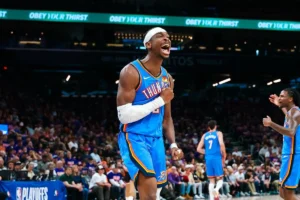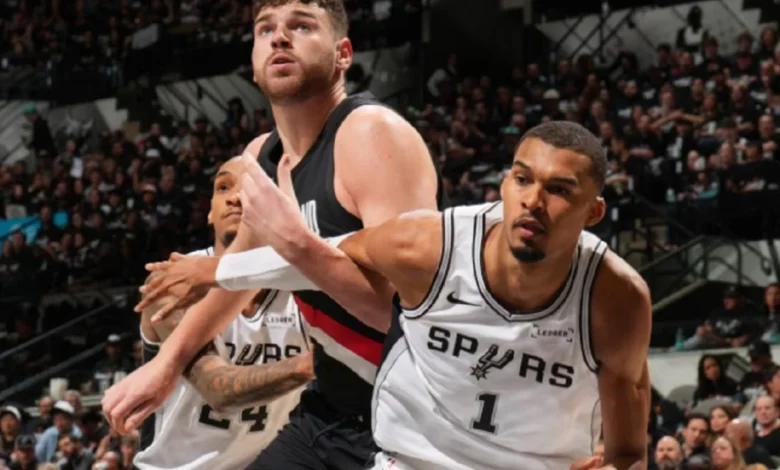
The landscape of the National Basketball Association has shifted dramatically as the San Antonio Spurs, once defined by the cautious optimism of a rebuilding project, officially pivot toward a championship-or-bust mentality for the 2026/2027 campaign. Following a breathtaking run to the 2026 NBA Finals, the franchise has shed the label of "up-and-coming" to assume its place among the league’s elite. With the regular season tipping off on October 20, 2026, the Spurs are poised to test their growth immediately, facing a familiar foe in the Oklahoma City Thunder at the Frost Bank Center.
This opening matchup, scheduled for 8:30 PM local time, serves as more than just a season curtain-raiser; it is a high-stakes rematch of the 2026 Western Conference Finals, a seven-game thriller that cemented the rivalry between these two juggernauts. As the league enters this new cycle, the Spurs find themselves under the intense microscope of heightened expectations, tasked with proving that last season’s success was a permanent evolution rather than a transient anomaly.
A Meteoric Rise: The 2025/2026 Transformation
The trajectory of the San Antonio Spurs over the last twenty-four months represents one of the most rapid turnarounds in professional sports history. In the 2024/2025 season, the team struggled through a transitional phase, finishing with a sub-.500 record of 34-48. This lackluster performance, however, served as the crucible for the current iteration of the team.
The following season, the Spurs orchestrated an unprecedented 28-win improvement, concluding the 2025/2026 regular season with a 62-20 record. This leap earned them the second seed in the Western Conference, trailing only the Oklahoma City Thunder, who finished with 64 wins. This statistical explosion was not merely a result of improved shooting percentages; it was the manifestation of a cohesive system built around the generational talent of Victor Wembanyama.
During the 2026 postseason, the Spurs demonstrated a level of resilience rarely seen in teams of such youth. They methodically dismantled the Portland Trail Blazers in the opening round and overcame a formidable Minnesota Timberwolves squad in the Conference Semifinals. The Western Conference Finals against Oklahoma City pushed the organization to its absolute limit, requiring a seven-game grit-and-grind display to secure a berth in the Finals. While the series against the New York Knicks ended in a 1-4 defeat, the experience provided the young roster with the empirical evidence needed to bridge the gap between "contender" and "champion."
The Wembanyama Effect: A Defensive Anchor and Offensive Catalyst
At the heart of the San Antonio resurgence stands Victor Wembanyama. Entering his fourth professional season, the French sensation has transcended the "prospect" status to become an undeniable pillar of the league. Standing 2.24 meters tall, Wembanyama redefined defensive standards in 2026, securing the Defensive Player of the Year award. His ability to act as a one-man defensive scheme—patrolling the paint, disrupting passing lanes, and forcing opponents to abandon their interior game plans—has given the Spurs a tactical floor that few teams can match.
Offensively, Wembanyama has evolved into a multi-level scorer. His ability to stretch the floor from behind the three-point line creates a mathematical dilemma for opposing head coaches: close out on him, and he drives past defenders; sag off, and he punishes the defense with high-efficiency perimeter shooting. Analysts suggest that the challenge for Wembanyama in 2026/2027 is no longer about individual statistical output, but about situational mastery—knowing exactly when to dominate the paint versus when to facilitate for his teammates.
Building a Sustainable Core: Castle and Harper
While Wembanyama provides the ceiling, the development of guards Stephon Castle and Dylan Harper has provided the foundation. Castle has emerged as a high-IQ playmaker, capable of manipulating pick-and-roll defenses to generate open looks for his teammates. His growth as a lead ball-handler has allowed the Spurs to move away from rigid offensive sets, encouraging a more fluid, transition-heavy style of play.
Dylan Harper complements this backcourt duo with an infusion of raw creativity and scoring punch. The depth provided by these two young guards ensures that the Spurs’ offense does not stagnate when Wembanyama is forced to play away from the ball. By integrating these two into the core rotation, the Spurs front office has successfully insulated the team against the risk of over-reliance on a single player, a common pitfall for teams built around a dominant frontcourt star.
Strategic Reinforcements: The Veteran Influence
The acquisition of De’Aaron Fox represents a calculated move by the Spurs’ front office to inject veteran stability and elite speed into their rotation. Fox, known for his relentless transition pace, provides a "second gear" for a team that sometimes relies too heavily on the half-court set. His ability to break down defenses in the closing seconds of the shot clock is a weapon that was notably absent in the 2026 Finals.
Coupled with the perimeter shooting of Devin Vassell, the Spurs now possess a balanced roster. Vassell remains the team’s primary floor-spacer, whose gravity as a shooter opens up the interior for Wembanyama. This synergy between the seasoned veterans and the rapidly improving youth core is the primary reason why industry experts view the Spurs as a "top-three" contender in the Western Conference.
Coaching Mandate: The Evolution of Mitch Johnson
Head coach Mitch Johnson faces the most difficult phase of his tenure: sustaining excellence. Managing the locker room expectations of a team that has already reached the NBA Finals requires a shift in leadership style. Johnson is no longer coaching for development; he is coaching for a title.
In recent media availabilities, insiders have noted that Johnson is emphasizing "situational efficiency." This involves refining the team’s late-game execution—a clear response to the shortcomings identified in the 2026 Finals. Johnson’s mandate includes optimizing the defense without Wembanyama on the floor, improving perimeter communication, and reducing the turnover rate that plagued the team during high-pressure playoff moments. His ability to maintain player health through load management, while simultaneously securing a high seed, will define the success of the 2026/2027 regular season.
The Competitive Landscape of the Western Conference
The path to the Larry O’Brien trophy remains treacherous. The Western Conference in 2026/2027 is arguably the deepest it has been in a decade. Oklahoma City, led by the tactical brilliance of Shai Gilgeous-Alexander, remains a direct threat, hungry for revenge after their Conference Finals exit. The Denver Nuggets, with the enduring brilliance of Nikola Jokic, continue to provide the gold standard for offensive execution.
Furthermore, teams like the Minnesota Timberwolves and the retooling Houston Rockets are pushing the competitive threshold higher, ensuring that no night on the schedule can be viewed as a "guaranteed win." The Spurs’ goal of finishing in the top six of the conference is not merely an aspiration; it is a tactical necessity to avoid the high-variance risks of the Play-In Tournament.
Looking Ahead: The Implication of Expectations
The primary question for the 2026/2027 season is whether the Spurs can handle the psychological burden of being a favorite. In 2025/2026, they were the "hunters," playing with the freedom of a team that had little to lose. This year, they are the "hunted." Every opponent will circle the Spurs on their calendar, treating every game against them as a measuring stick.
The analytical consensus suggests that the Spurs have the requisite tools to return to the Finals. Their defensive rating is projected to remain at the top of the league, and their offensive versatility provides a high floor for success. However, the difference between a Finals appearance and a championship ring often comes down to depth, health, and the ability to execute under the scrutiny of the postseason.
As the Spurs prepare for their opening night against the Thunder, the organization remains focused on the long-term objective. By prioritizing consistency, refining their tactical execution, and leaning on the maturity of their young core, San Antonio is not just participating in the 2026/2027 season—they are attempting to build a dynasty. The game on October 21 will be the first indicator of whether this group is ready to elevate their game from the level of a contender to that of a champion. The NBA world will be watching to see if the young Spurs can turn the heartbreak of the previous year into the motivation required to capture the franchise’s next title.