Spain Crowned 2026 FIFA World Cup Champions After Dramatic Extra Time Victory Over Argentina


The global football landscape reached a historic crescendo on July 20, 2026, as Spain secured their second FIFA World Cup title, defeating the defending champions Argentina in a grueling final at the MetLife Stadium in East Rutherford, New Jersey. In a match that pitted the tactical discipline of European football against the flair and resilience of South American giants, Spain emerged victorious with a 1-0 win. The decisive moment arrived in the 115th minute of extra time when Ferran Torres found the back of the net, shattering Argentine hopes of a consecutive title and cementing Spain’s place among the elite few nations to have won the prestigious trophy multiple times.
The 2026 FIFA World Cup was a landmark event, not only for the quality of play on the pitch but also for its unprecedented scale. As the first edition to feature 48 teams and the first to be hosted across three nations—the United States, Canada, and Mexico—the tournament represented a significant expansion of the beautiful game. The final match served as the ultimate conclusion to a month-long celebration of sport that saw 104 matches played across 16 host cities. For Spain, the victory marks their first world title since their historic 2010 triumph in South Africa, while for Argentina, the loss signals the end of a dominant era that began with their 2022 victory in Qatar.
The Tactical Battle: A Chronology of the Final
The final began under the bright lights of the New Jersey evening, with an atmosphere that reflected the high stakes of the encounter. Spain, led by a core of technically gifted midfielders, sought to control possession from the opening whistle. Argentina, however, utilized a high-pressing system designed to disrupt Spain’s rhythm and exploit the pace of their forward line. The first half was characterized by a cautious approach from both sides, with scoring opportunities kept to a minimum as defensive units remained disciplined.
In the second half, the intensity increased. Argentina’s captain and veteran leaders orchestrated several dangerous counter-attacks, testing the reflexes of the Spanish goalkeeper. Conversely, Spain’s patient build-up play began to find gaps in the Argentine defense, leading to a series of corners and set-piece opportunities. Despite several close calls, including a strike that hit the woodwork from the Argentine side in the 82nd minute, the regulation 90 minutes ended in a scoreless draw.
As the match moved into extra time, fatigue became a visible factor. Both managers utilized their expanded substitution benches to inject fresh energy into the game. The breakthrough finally arrived in the second period of extra time. Following a rapid transition from defense to attack, Spain worked the ball into the final third. A precise cross found Ferran Torres, who maintained his composure to slot the ball past the Argentine keeper, sparking scenes of jubilation among the Spanish supporters. Argentina launched a desperate offensive in the final five minutes, but the Spanish defense held firm until the final whistle.
Spain’s Path to a Second Star
Spain’s journey to the 2026 title was defined by consistency and a commitment to their identity of "tiki-taka" evolved for the modern era. Navigating through a challenging group stage, Spain demonstrated their intent early on with dominant performances against diverse international opposition. Their path through the knockout stages saw them overcome perennial powerhouses, showcasing a blend of youthful exuberance and veteran experience.
By securing this victory, Spain joins an exclusive group of nations with multiple World Cup titles. Their first title in 2010 was achieved through a golden generation that dominated world football. The 2026 squad, while different in personnel, proved that the Spanish footballing philosophy remains a potent force on the global stage. This victory elevates Spain to the same level as France and Uruguay, who also hold two titles each, and places them just behind the three-time winners Argentina.
Heartbreak for the Albiceleste
For Argentina, the defeat was a bitter pill to swallow. Entering the tournament as defending champions, the "Albiceleste" carried the weight of expectation from a nation that had only recently celebrated their third star in 2022. Throughout the 2026 campaign, Argentina showed the grit and tactical flexibility that had become their trademark. However, the inability to convert key chances in the final proved costly.
The loss prevents Argentina from joining Germany and Italy in the elite club of four-time winners. They remain at three titles (1978, 1986, and 2022). The 2026 final also likely marks a generational shift for the Argentine squad, as several key players who were instrumental in their recent successes are expected to transition away from international duty. Despite the loss, the Argentine team was praised by analysts for their resilience and for maintaining a high level of competitiveness throughout the expanded 48-team format.
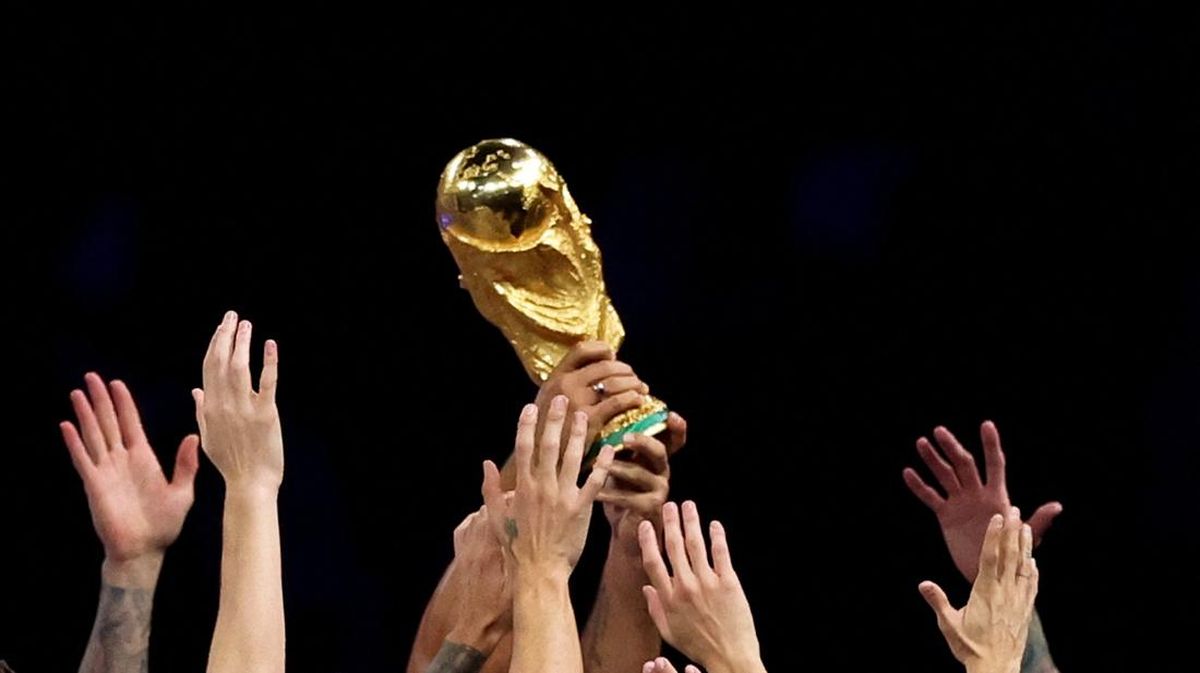
Historical Context: Winners from 1930 to 2026
The conclusion of the 2026 edition provides an opportunity to reflect on the long and storied history of the FIFA World Cup. Since its inception in 1930, the tournament has been the pinnacle of international sport, held every four years with the exception of 1942 and 1946 due to the Second World War.
The distribution of titles remains heavily concentrated in two continents: Europe and South America. To date, only eight nations have ever lifted the trophy. Brazil remains the most successful nation in the history of the competition, holding five titles (1958, 1962, 1970, 1994, 2002). They are followed closely by Germany (1954, 1974, 1990, 2014) and Italy (1934, 1938, 1982, 2006), both with four titles.
The complete list of winners illustrates the evolution of footballing dynasties:
- 1930: Uruguay (Host: Uruguay)
- 1934: Italy (Host: Italy)
- 1938: Italy (Host: France)
- 1950: Uruguay (Host: Brazil)
- 1954: West Germany (Host: Switzerland)
- 1958: Brazil (Host: Sweden)
- 1962: Brazil (Host: Chile)
- 1966: England (Host: England)
- 1970: Brazil (Host: Mexico)
- 1974: West Germany (Host: West Germany)
- 1978: Argentina (Host: Argentina)
- 1982: Italy (Host: Spain)
- 1986: Argentina (Host: Mexico)
- 1990: West Germany (Host: Italy)
- 1994: Brazil (Host: USA)
- 1998: France (Host: France)
- 2002: Brazil (Host: South Korea/Japan)
- 2006: Italy (Host: Germany)
- 2010: Spain (Host: South Africa)
- 2014: Germany (Host: Brazil)
- 2018: France (Host: Russia)
- 2022: Argentina (Host: Qatar)
- 2026: Spain (Host: USA/Canada/Mexico)
The Success of the 48-Team Expansion
The 2026 World Cup was a grand experiment by FIFA to broaden the reach of the tournament. By increasing the number of participants from 32 to 48, the organization aimed to provide more opportunities for emerging footballing nations from Africa, Asia, and North America. While critics initially feared that the expansion might dilute the quality of competition, the tournament produced several notable upsets and high-scoring matches that captivated global audiences.
The logistical feat of hosting matches across three massive countries was also a primary focus for organizers. The use of existing high-capacity stadiums in cities like Los Angeles, Mexico City, Toronto, and New York ensured record-breaking attendance figures. FIFA officials noted that the 2026 edition set new benchmarks for ticket sales and broadcast viewership, affirming the commercial and cultural viability of the multi-host model.
Official Reactions and Global Impact
In the aftermath of the final, Spanish manager Luis de la Fuente expressed immense pride in his squad’s performance. "This victory is the result of years of hard work and a belief in our style of play. To win against a team as strong as Argentina in a World Cup final requires extraordinary character," he stated during the post-match press conference. Spanish fans gathered in the thousands at the Plaza de Cibeles in Madrid and across the country to celebrate the return of the trophy.
On the other side, the Argentine camp remained dignified in defeat. While the disappointment was evident, coaching staff highlighted the achievement of reaching back-to-back finals. FIFA President Gianni Infantino hailed the 2026 tournament as "the greatest World Cup in history," citing the inclusivity of the 48-team format and the seamless collaboration between the three host nations.
The broader implications of Spain’s victory suggest a continued period of European dominance in international football, with European nations having won five of the last six World Cups. However, the spirited performance of South American teams and the narrowing gap between traditional powerhouses and emerging nations suggest that the 2030 edition—set to be another multi-continental event—will be more competitive than ever.
As the trophy travels back to Madrid, the 2026 FIFA World Cup concludes as a transformative chapter in sports history. It demonstrated that even as the tournament grows in size and complexity, the core essence of the competition—the pursuit of glory and the drama of the final whistle—remains as compelling as it was in 1930. Spain now stands at the summit of the football world, their second star a testament to their enduring excellence on the pitch.