Tragedy in the Java Sea: Massive Search and Rescue Operation Underway Following the Capsizing of KMP Virgo Transport 8

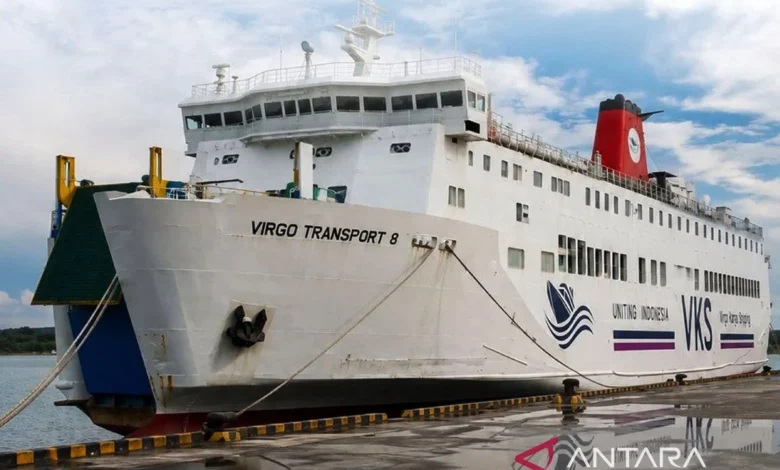
The maritime sector in Indonesia is currently grappling with a significant tragedy following the capsizing of the passenger ferry KMP Virgo Transport 8 in the volatile waters of the Java Sea. The incident, which occurred during a routine transit from Surabaya, East Java, to Banjarmasin, South Kalimantan, has triggered a massive, multi-agency search and rescue operation. As of the latest reports, authorities are contending with the dual challenges of adverse weather conditions and the logistical complexities of locating over 100 individuals who remain missing in the aftermath of the vessel’s catastrophic loss of stability.
The ferry, a vital link for inter-island logistics and passenger travel, went missing during the early hours of Sunday, September 13, 2026. With 243 souls aboard—comprising 213 passengers and 30 crew members—the sinking represents one of the most serious maritime accidents in the region in recent years. While emergency teams have successfully rescued 108 survivors, the discovery of six fatalities has cast a somber shadow over the operation, as the search for the remaining 129 missing persons enters a critical phase.
A Chronology of the Disaster
The timeline of the disaster began on Saturday, September 12, 2026, when KMP Virgo Transport 8 departed from the port of Surabaya at approximately 10:13 GMT. The vessel was carrying not only hundreds of passengers but also a significant cargo of 89 vehicles, a common sight on the busy sea lane connecting the industrial hubs of Java to the resources of Kalimantan.
Conditions at sea appeared manageable during the initial phase of the journey. However, as the vessel moved further into the Java Sea, the maritime environment deteriorated rapidly. By midnight, the vessel encountered severe weather, characterized by high swells and turbulent winds. According to internal reports, the captain initiated contact with the company’s shore-based agents to report the deteriorating conditions.
The situation reached a critical breaking point at approximately 02:00 WITA on Sunday, September 13. In what would become the final distress communication, the bridge reported that the ship had begun to list dangerously. The vessel subsequently lost all contact with shore authorities. It was not until 04:10 WITA that the General Manager of PT Virgo Karya Shipping, Yoel Rihi, officially alerted the Banjarmasin Search and Rescue Office, prompting an immediate mobilization of assets.
The Search and Rescue Operation
The response to the distress signal was rapid, involving a coalition of maritime stakeholders. The Kantor Pencarian dan Pertolongan (SAR) Kelas A Banjarmasin immediately deployed the KN SAR Laksmana 241, a vessel specifically equipped for long-range search and rescue operations.
As of the latest updates, the operation has scaled into a major mobilization involving 622 personnel and a fleet of 12 vessels, including assets from the Indonesian Navy (TNI AL), the Water Police, and the Port Authority (KSOP) of Banjarmasin. The search has been further bolstered by aerial surveillance provided by Basarnas helicopters, which have been instrumental in scanning the vast, debris-strewn area of the Java Sea.
A notable contribution to the rescue efforts came from the private sector, specifically a Pertamina tanker navigating near the incident site. The crew of the tanker demonstrated exceptional initiative, successfully pulling 16 survivors from the water, highlighting the importance of the maritime community’s adherence to the "duty to assist" under international maritime law.
Technical Profile of the Vessel
KMP Virgo Transport 8 was a vessel with a long operational history. Built in Japan in 1987, the ship was part of the older generation of roll-on/roll-off (RoRo) ferries that have historically served as the backbone of Indonesian domestic sea travel. Following its acquisition by PT Virgo Karya Shipping, the vessel underwent various inspections to ensure it met the standards for local sea routes.
The age of the vessel has inevitably led to questions regarding the structural integrity of older ferries operating in high-demand lanes. Maritime experts note that while age is not the sole determinant of seaworthiness, it necessitates more stringent maintenance and load-management protocols. The vessel was carrying 89 vehicles at the time of the incident; in RoRo operations, the distribution of heavy cargo is a critical factor in maintaining stability during heavy weather. Investigators will likely focus on whether the shifting of cargo or mechanical failure exacerbated the impact of the high seas.
Official Inquiries and Safety Implications
The Indonesian government has launched a formal investigation into the sinking. While environmental factors such as severe weather and high waves are confirmed to have played a role, the Ministry of Transportation is expected to conduct a thorough audit of the vessel’s safety certifications, the company’s operational standards, and the adherence to safety protocols during the voyage.
The tragedy has reignited national debates regarding maritime safety in the Indonesian archipelago. Indonesia, as the world’s largest archipelagic nation, relies heavily on these ferry routes. Frequent incidents involving inter-island ferries often point to systemic challenges, including the enforcement of passenger manifests, the monitoring of cargo loads, and the ability of older vessels to withstand the increasingly unpredictable weather patterns caused by climate variability in the Java Sea.
For the families of the 129 missing individuals, the wait for news is agonizing. The search area, located roughly 80 nautical miles from the Basirih SAR pier in Banjarmasin, remains a site of intense activity. SAR teams are currently prioritizing the identification of the recovered victims and the continued search for survivors, acknowledging that the window for rescue narrows with every passing hour.
Broader Socio-Economic Impact
The loss of KMP Virgo Transport 8 is not merely a tragedy of lives lost but a disruption to the economic connectivity between Java and Kalimantan. The ferry route is essential for the movement of goods, including agricultural products, industrial supplies, and household items. The suspension of operations on this route, combined with the ongoing investigation, will likely lead to short-term logistical delays in the region.
Furthermore, the accident serves as a somber reminder of the inherent risks in maritime transportation. The incident has prompted calls for a comprehensive review of the national ferry fleet’s safety standards. Industry analysts suggest that replacing aging vessels with modern, purpose-built ferries with improved ballast systems and advanced weather-tracking technology is essential to preventing future disasters of this magnitude.
The Path Forward
As the sun sets on the third day of the search, the focus remains laser-focused on the rescue and recovery phase. The synergy between the various government bodies—TNI AL, Basarnas, and local port authorities—will be crucial in the coming days. The government has pledged full transparency in the investigation, with the National Transportation Safety Committee (KNKT) expected to play a central role in analyzing the technical data recovered from the vessel’s logs and the testimony of the rescued crew.
The loss of the KMP Virgo Transport 8 will undoubtedly be remembered as a dark chapter in Indonesian maritime history. As the nation mourns the victims, the demand for accountability and enhanced safety measures will likely intensify. For now, the priority remains the humanitarian mission: bringing the missing home and providing clarity to the families affected by this devastating maritime calamity. The investigation will eventually reveal the precise chain of events, but the immediate imperative is the preservation of life in the turbulent waters of the Java Sea.