Tragic Wedding Celebration Crash in Lumajang: Out-of-Control Truck Leaves Two Dead and Nine Injured

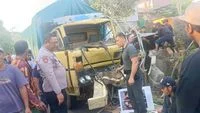
A festive wedding celebration in East Java turned into a scene of unimaginable horror on Thursday afternoon when a heavy-duty truck suffered a catastrophic brake failure on a descending roadway, ploughing indiscriminately through a gathering of guests, multiple parked vehicles, and surrounding roadside infrastructure. The devastating multi-vehicle collision, which occurred in Dusun Sidomakmur, Gucialit Village, Gucialit District, Lumajang Regency, has left two people dead and nine others nursing various injuries, instantly shattering the joyous atmosphere of what was supposed to be a celebratory community milestone.
Local law enforcement authorities, medical responders, and disaster management teams were immediately mobilized to the scene to manage the chaos, transport the wounded, and secure the perimeter. The incident has since sparked renewed discussions regarding road safety regulations, vehicle maintenance compliance, particularly for aging commercial trucks operating in hilly terrain, and the inherent hazards of hosting large social gatherings along major regional thoroughfares.
Chronology of the Disaster
According to official incident reports released by the Lumajang Regency Police, the sequence of events began unfolding at approximately 15:00 Western Indonesia Time (WIB) on Thursday. The primary vehicle involved was a yellow Mitsubishi truck bearing the license plate N 8187 YH, which was navigating a sloping stretch of public road heading from west to east. The truck was being operated by a 69-year-old male resident from the Sukodono area, identified by his initials KSM.
As the commercial vehicle descended the grade, it experienced a sudden and total mechanical failure within its primary braking system, commonly referred to as a brake blowout or "rem blong." Stripped of its stopping power and gaining momentum due to the gravity of the downward slope, the heavy truck quickly became an uncontrolled projectile.
The driver was unable to steer the vehicle away from traffic or utilize emergency maneuvering lanes, as the road topography offered little margin for error. Moments later, the runaway truck struck the rear of a black Suzuki Carry pickup truck, bearing registration number L 8060 AA, which was traveling ahead of it in the same direction. The Suzuki Carry was driven by a 38-year-old man from Ngawi, identified as ETS.
The kinetic energy of the initial impact was severe enough to thrust the Suzuki Carry forward violently, directly into a cluster of eleven pedestrians who were standing near the roadside as invited guests of the wedding celebration. Instead of coming to a halt after this collision, the massive truck continued its destructive path down the easterly gradient.
Seconds later, the truck slammed into a parked Mitsubishi L300 pickup truck with the license plate N 8157 YA, owned by a 49-year-old resident identified as SA. The momentum carried the truck forward yet again, enabling it to aggressively sideswipe and crush a row of five motorcycles belonging to local villagers and attendees that were parked neatly along the shoulder of the road. The motorcycles included a red-and-black Honda Scoopy (N 2092 YAG), a brown Honda Scoopy (N 6139 YBD), a black Honda Beat (N 2515 YAD), and two black Honda Vario motorcycles bearing registration plates N 4855 YBF and W 4126 BI, respectively.
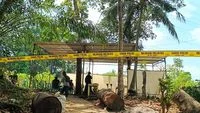
The catastrophic run only concluded when the truck plowed directly into the wedding reception’s mobile sound system setup, which had been positioned along the left-hand side of the road. The sheer weight and force of the truck flattened the audio equipment, scattering debris across the tarmac and bringing the chaotic journey to a brutal stop.
Casualties and Medical Response
The human toll of the Gucialit disaster became immediately apparent as emergency services arrived at the heavily congested scene. First responders found a chaotic landscape of overturned motorcycles, crushed vehicle chassis, and distraught wedding guests attempting to assist the victims.
Head of Public Relations for the Lumajang Police, Inspector Suprapto, provided official updates detailing the casualties. Among the crowd of wedding guests struck by the vehicles, two individuals succumbed to their traumatic injuries. The first fatality was identified as MRN, a 46-year-old resident of Probolinggo, who suffered severe cranial trauma. He was rushed to the Gucialit Community Health Center (Puskesmas) but was pronounced dead upon arrival or shortly thereafter by attending medical personnel.
The second fatality was a 20-year-old individual identified by the initials AMV, who initially sustained severe, life-threatening injuries during the impact. Emergency medical teams transferred AMV to the dr. Haryoto General Hospital in an urgent bid to save their life, but the severity of the trauma proved insurmountable, and the victim passed away while receiving intensive medical treatment at the facility.
In addition to the two fatalities, nine other individuals sustained injuries ranging from minor cuts and bruises to severe fractures. The identified survivors dealing with non-fatal injuries include individuals with the initials TR (40), YAI (29), SMY (63), YDR (30), MST (63), MSH (39), MDC (49), and DM (31). Medical reports from local clinics indicate that these survivors suffered from lacerations, severe facial contusions, and broken upper and lower extremities.
The driver of the runaway truck, KSM, did not escape the incident unscathed. Investigators confirmed that the 69-year-old driver sustained internal and external injuries, specifically localized around the abdominal region, resulting from the force of the collision within the cabin. He was subsequently placed under police guard while receiving necessary medical attention.
Investigation and Law Enforcement Action
In the wake of the tragedy, the Traffic Accident Unit (Unit Gakkum Satlantas) of the Lumajang Regency Police took full operational control of the investigation. Forensic traffic accident analysts were deployed to the scene to conduct comprehensive mapping, take photographic evidence, and reconstruct the final moments of the truck’s descent.
Preliminary assessments by the investigating team point heavily toward mechanical failure—specifically, unmaintained or overheated brake linings—as the primary root cause of the accident. Investigators are currently examining the maintenance logs, vehicle registration validity, and load weight of the Mitsubishi truck to determine whether it was operating beyond its certified capacity or if negligence played a role in the brake system’s sudden failure.
Furthermore, authorities are reviewing the logistical arrangements of the wedding celebration itself. Investigators are evaluating whether the placement of the event infrastructure, including parking configurations and the reception area’s proximity to a high-risk descending roadway, contributed to the severity of the casualties. Under Indonesian traffic regulations, operators of commercial vehicles found negligent in maintaining their braking systems can face severe criminal charges under the Road Traffic and Transportation Law, potentially leading to lengthy prison sentences if found culpable of causing death through negligence.
Broader Implications for Road Safety in Hilly Terrain
The incident in Gucialit has once again cast a harsh spotlight on the systemic vulnerabilities of vehicular safety standards on rural and semi-mountainous roads across Indonesia. Hilly terrains, such as those found throughout the Lumajang region of East Java, present constant hazards for heavy commercial transport, particularly older trucks that may lack modern auxiliary braking systems like exhaust brakes or retarders.
Transport safety experts note that frequent braking on long descents can cause brake fluid to boil and brake pads to glaze, rendering standard hydraulic or pneumatic braking systems completely ineffective. When drivers encounter such failures on narrow village roads bordered by community activities, the potential for mass-casualty incidents multiplies exponentially.
The tragedy also underscores the ongoing debate regarding the use of public infrastructure for private social functions. In many rural communities across the archipelago, utilizing road shoulders for wedding tents, parking zones, and community gatherings is a deeply ingrained cultural practice. However, urban planners and safety advocates have repeatedly warned that hosting crowded gatherings along active thoroughfares—especially those characterized by heavy vehicle traffic or dangerous topography—creates severe public safety risks.
Community Response and Support
Following the accident, local community leaders and religious figures in Gucialit mobilized to support the grieving families and assist those injured. The village administration coordinated with local health authorities to ensure that surviving victims received psychological trauma counseling alongside their physical rehabilitation, given the deeply distressing nature of witnessing a celebration transform into a fatal disaster.
Local authorities have utilized this tragic event to issue renewed safety advisories to transport operators and local residents alike. Truck owners operating in high-altitude or sloping regions of Lumajang have been strongly urged to subject their fleets to rigorous, routine inspections, with a particular focus on brake integrity, tire tread depth, and load limitations. Simultaneously, local village heads have been advised to exercise greater caution when granting permits for roadside social events, encouraging organizers to utilize enclosed community halls, open fields, or spaces safely distanced from primary vehicular arteries.
As the legal proceedings advance under the jurisdiction of the Lumajang Police, the community of Gucialit remains in mourning. The incident serves as a grim reminder of the delicate balance between daily commerce, community celebration, and the unforgiving physics of vehicular safety on Indonesia’s challenging roadways.